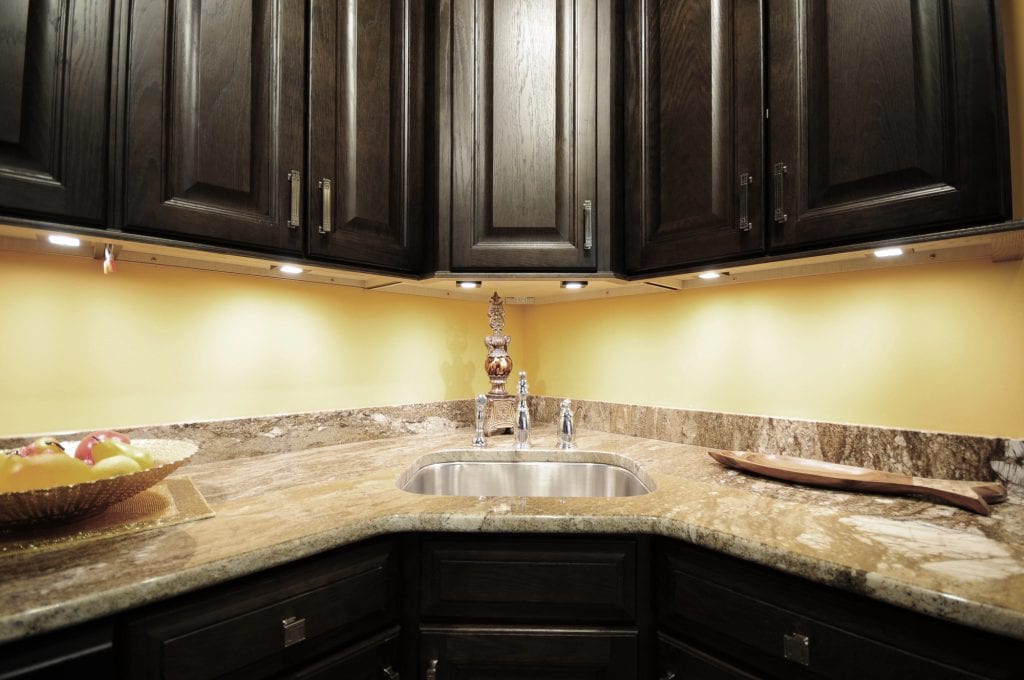
Kitchen corner with dark cabinets and a light-colored countertop.
A dull laminate countertop may need only careful cleaning. Peeling laminate, open seams, or swelling near a sink can point to adhesive failure or moisture reaching the substrate. Identify the condition before choosing polish, a countertop coating, or replacement.
Option 1: Clean and Assess the Laminate
Start with the surface manufacturer’s care instructions. Formica and Wilsonart both recommend nonabrasive routine cleaning rather than sanding the factory laminate finish.
Clean gently: Use a damp, soft cloth or sponge with mild soap or detergent. Rinse away cleaner residue and dry the surface.
Avoid abrasives: Do not use sandpaper, steel wool, abrasive pads, or abrasive cleaners to remove ordinary scratches. They can damage the decorative surface.
Protect seams: Do not flood seams or edges. Wipe spills promptly and use cutting boards and trivets to limit new scratches and heat damage.
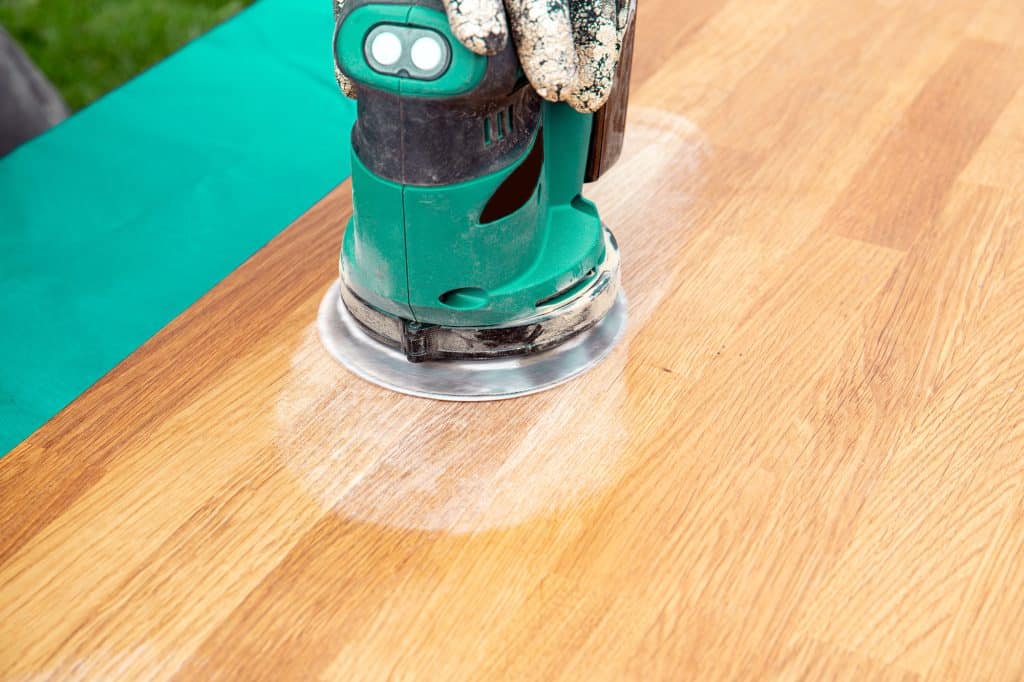
Illustration of sanding a work surface. Routine laminate cleaning does not include sanding; coating preparation is product-specific.
Option 2: Use a Manufacturer-Specified Countertop Coating
Refinishing is a separate project from cleaning. Use only a complete countertop-coating system whose manufacturer lists your countertop material as compatible.
Follow one product system: Use the specified cleaner, base coat, topcoat, preparation method, and coat sequence. Do not substitute an unspecified sealant.
Test adhesion: Follow the coating manufacturer’s test and preparation instructions. Sanding requirements can depend on that exact product and the adhesion-test result.
Respect cure and use limits: The selected product controls when the counter can be cleaned, loaded, or used. Check its current food-contact or food-preparation limitation and use a cutting board when required.
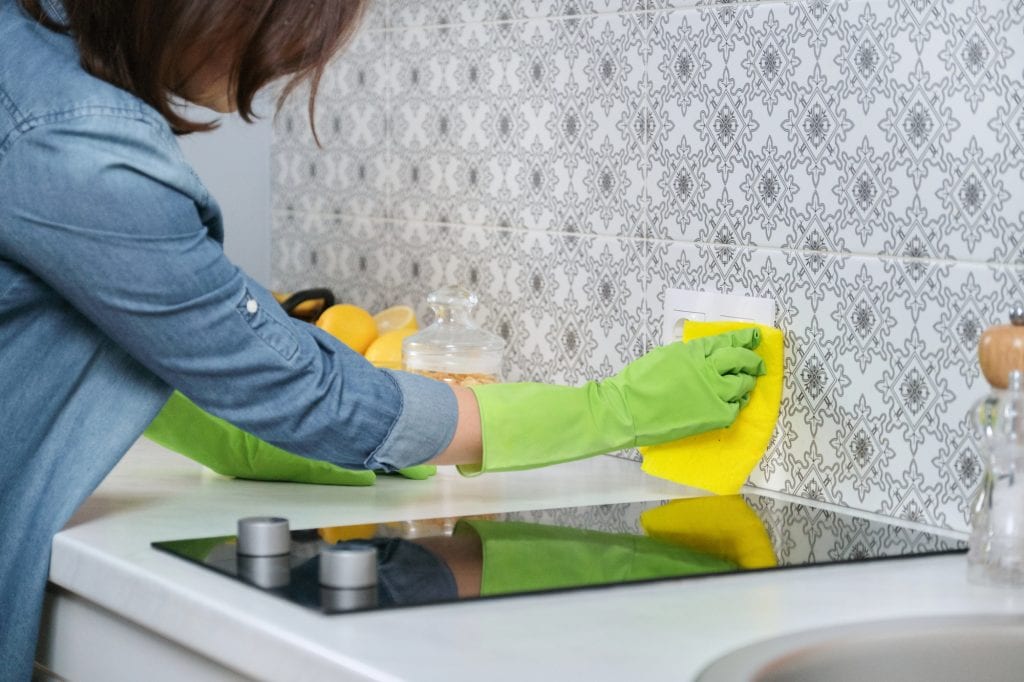
Cleaning the kitchen tiles with a bright yellow sponge and green gloves.
Option 3: Assess Peeling or Water-Damaged Countertops
A coating changes the visible finish; it does not establish that loose laminate, a swollen substrate, a failed seam, or a leak has been repaired.
Stop the moisture source: Check plumbing, sink edges, backsplash joints, and other nearby water paths before cosmetic work.
Assess the assembly: Ask a qualified countertop installer or contractor whether loose laminate, deep damage, or a swollen substrate can be repaired or should be replaced.
Document visible conditions: If staining or swelling raises concern about moisture elsewhere in the home, a residential home inspection can document visible conditions and recommend further evaluation.
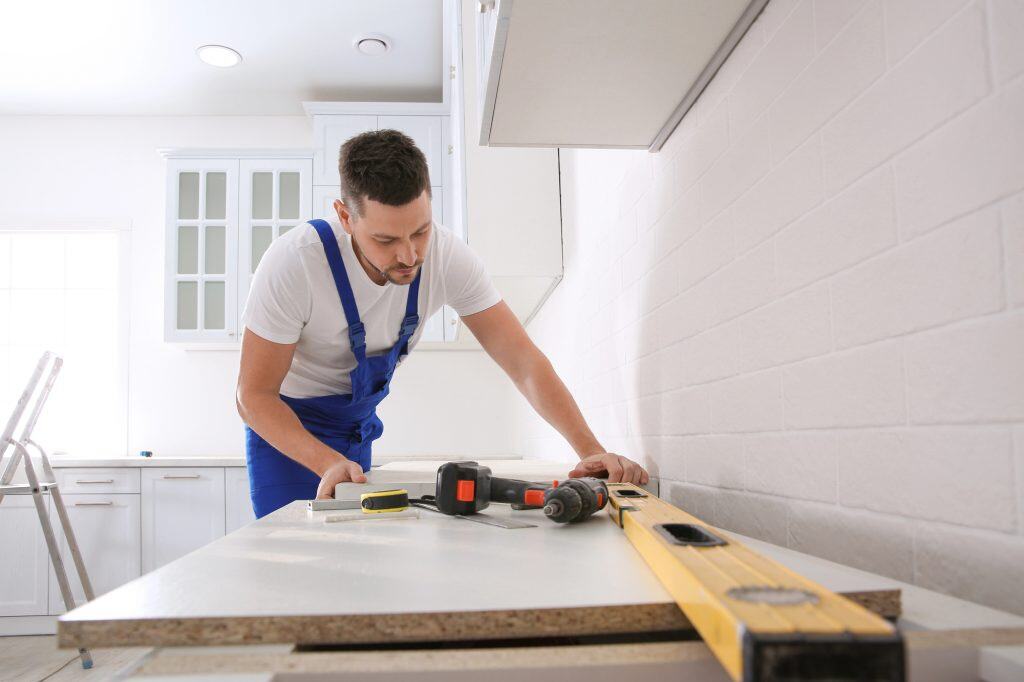
A carpenter meticulously installs a new kitchen countertop, ensuring precision with his tools.


 Skip to content