
Fraud Blocker
Environmental Services

Air Quality
Testing

Detect. Measure. Breathe Easy.

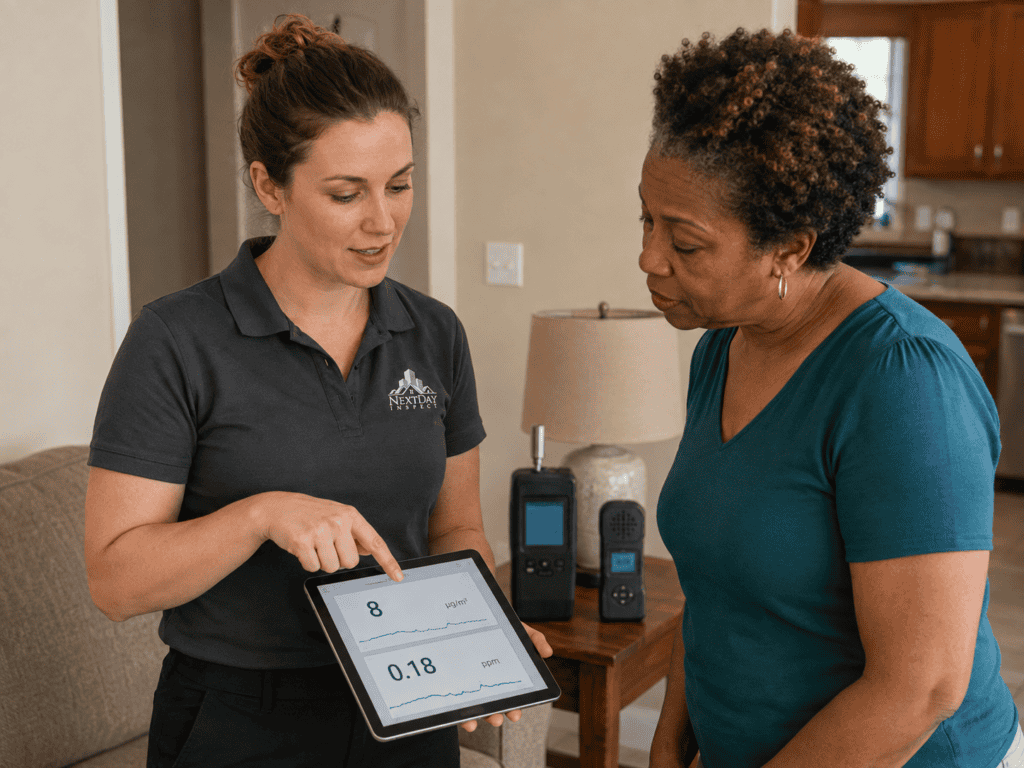
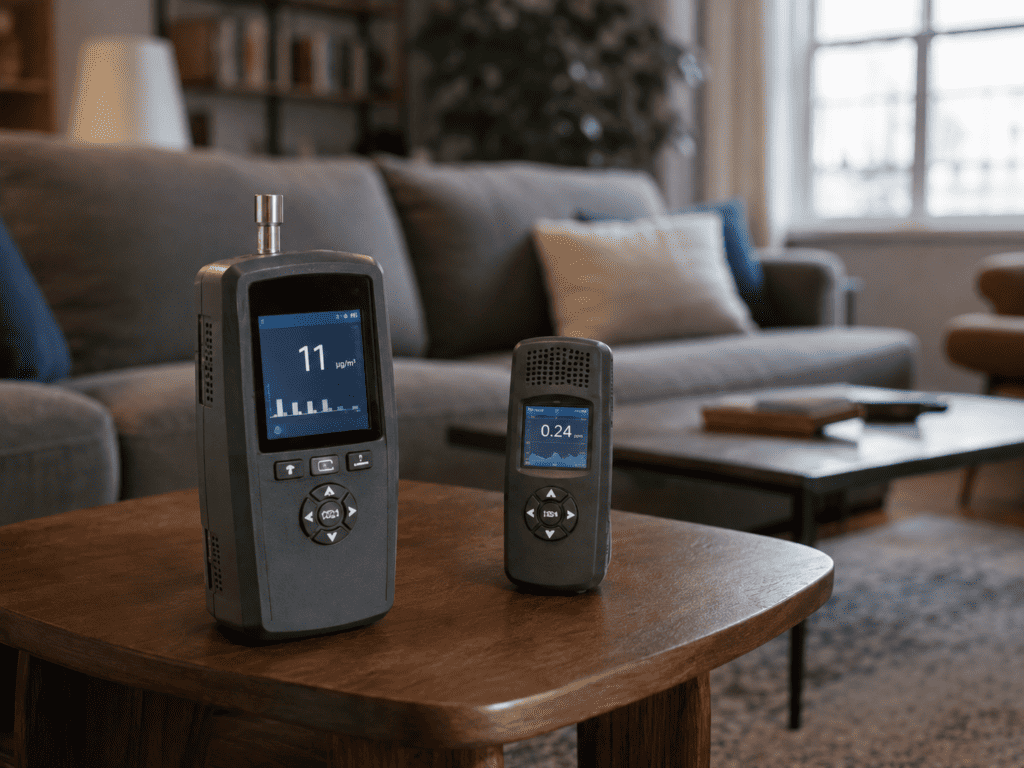
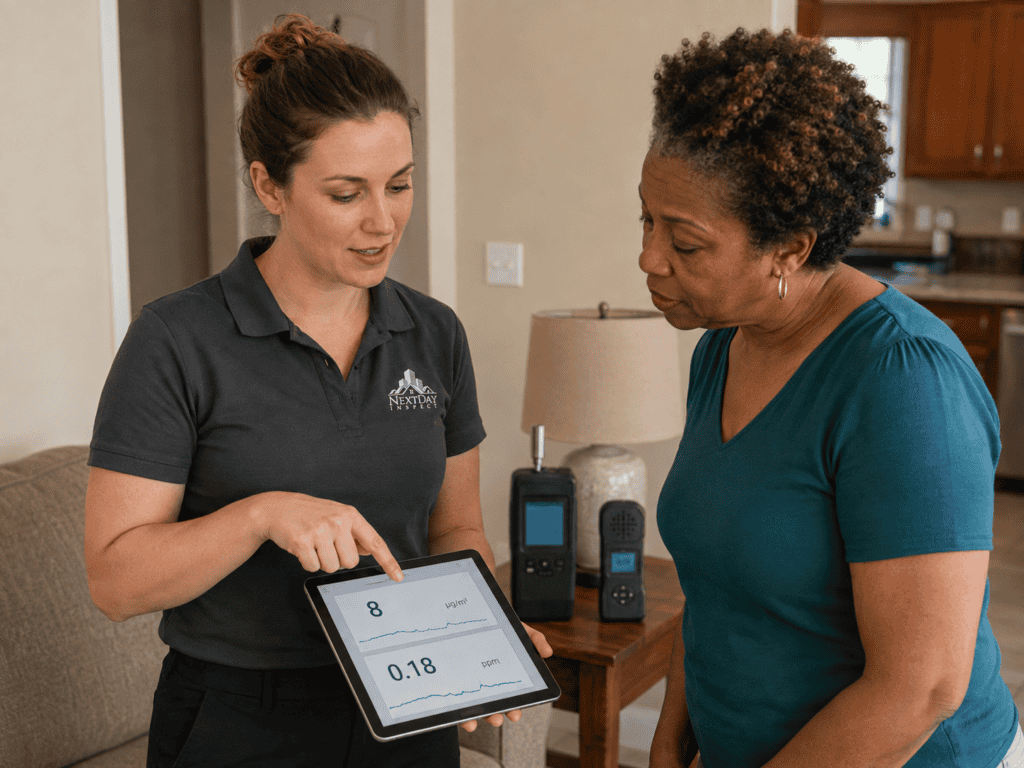
An indoor air quality (IAQ) test helps determine if the air in your home could be causing health problems — from asthma and allergies to migraines and more severe respiratory issues. If you're experiencing symptoms, testing can pinpoint the source. Even without symptoms, proactive IAQ testing is essential — because the air you breathe every day directly impacts your long-term health. Our certified inspectors deploy professional-grade monitoring equipment to measure pollutant concentrations across your entire living space.

2–5× Indoor vs Outdoor Pollution
90% Time Spent Indoors
EPA Guideline Standards
Indoor Air Pollutants IAQ Index
VOCs (Volatile Organic Compounds) Off-gassing from paint, furniture, cleaning products Elevated
Particulate Matter (PM2.5) Fine inhalable particles — lung & heart risk High
Carbon Monoxide (CO) Odorless gas from combustion appliances Normal
Formaldehyde (CH₂O) Common in pressed wood, insulation, adhesives High
Biological Contaminants Mold spores, dust mites, pet dander, pollen Moderate
Carbon Dioxide (CO₂) Ventilation adequacy indicator Normal
Indoor Air Quality Association Corporate Member Badge

Indoor Air Quality Association — Corporate Member

Certified by the Indoor Air Quality Association, our environmental specialists are trained to provide detailed indoor air quality services following IAQA standards and best practices.

What We Measure

NextDay Inspect® Air Quality Testing Includes

Professional-grade analysis of the four key indoor air quality indicators.

Particulate Matter

PM2.5 / PM10

Particulate matter comes from both outdoor sources — vehicle exhaust, power plants, forest fires — and indoor sources like smoking, cooking, fireplaces, and fuel-burning space heaters. These fine particles are inhaled deep into the lungs and can enter the bloodstream.

Harmful Health Effects
  • Coughing
  • Difficult Breathing
  • Asthma Symptoms
  • Reduced Lung Function
  • Respiratory Aggravation
  • Heart Conditions

Total Volatile Organic Compounds

TVOCs

TVOCs are chemicals found in many household goods and products — paints, cleaning supplies, furniture, and building materials. They are a mixture of volatile organic compounds that impact indoor air quality and can cause serious health issues if not reduced.

Harmful Health Effects
  • Eye, Nose & Throat Irritation
  • Headaches
  • Dizziness
  • Nausea
  • Liver & Kidney Damage
  • Central Nervous System

Formaldehyde

HCHO / CH₂O

Formaldehyde is a colorless, poisonous, highly water-soluble gas with a strong odor. It is used in the manufacture of disinfectants, preservatives, adhesives, carpeting, decorative paneling, foam insulation, drapery, particle boards, and permanent press fabrics.

Harmful Health Effects
  • Allergic Sensitization
  • Eye & Mucous Irritation
  • Nasopharyngeal Cancer Risk
  • Respiratory Impairment
  • Respiratory Damage

Total Air Pollution

AQI INDEX

The Air Quality Index (AQI) provides a numeric value representing overall air pollution levels. We measure your home's indoor AQI to determine whether the air you're breathing falls within safe ranges or requires immediate remediation.

0 – 30 Satisfactory
31 – 100 Marginal
100+ Poor
Assessments

Air Quality Assessments

Indoor Air Quality (IAQ)

Indoor air quality refers to the air within a building structure — your home or workplace — especially as it relates to the health and comfort of occupants. Health effects from indoor pollutant exposure may be experienced soon after exposure or, possibly, years later.

Immediate Effects

Short-term exposure

Some health effects may show up shortly after a single exposure or repeated exposures to a pollutant. These include irritation of the eyes, nose, and throat, headaches, dizziness, and fatigue. Such immediate effects are usually short-term and treatable. Sometimes the treatment is simply eliminating the person's exposure to the source of pollution, if it can be identified.

Long-Term Effects

Chronic exposure

Other health effects may show up either several years after exposure has occurred or only after long or repeated periods of exposure. These effects — which include some respiratory diseases, heart disease, and cancer — can be severely debilitating or fatal. It is prudent to try to improve indoor air quality even if symptoms are not noticeable.

Outdoor Air Quality & AQI

Local air quality affects how you live and breathe, and it can change from day to day. The U.S. Environmental Protection Agency (EPA) and local air quality agencies provide information about outdoor air quality using the Air Quality Index (AQI) — a scale from 0 to 500 where higher values indicate greater health concern.

The AQI is divided into six categories, each corresponding to a different level of health concern. Monitoring the AQI helps individuals plan outdoor activities and reduce exposure to harmful pollutants.

AQI Range Health Concern Color
0 – 50 Good Green
51 – 100 Moderate Yellow
101 – 150 Unhealthy for Sensitive Groups Orange
151 – 200 Unhealthy Red
201 – 300 Very Unhealthy Purple
301 – 500 Hazardous Maroon
Take Action

Concerned With Your Home's Air Quality?

If you're worried about your home's air quality, getting your home tested for pollution will ensure you know exactly what you're breathing. Once you understand the results, you can take targeted steps to fix and improve your indoor air. The article below outlines four common ways your home could be affecting your health — and how to address them.

Recommended Reading Four Ways Your Home Could Be Making You Sick (And How To Fix Them) porch.com — Home Health & Air Quality
Residential & Commercial

Explore Our Inspection Reports

HD Photography
Commentary & Recommendations
Grading Scale
Repair, Safety & Maintenance
View Sample Reports
INSPECTION REPORT ASHI NACHI