
-
Inspection Services
-
Environmental Services
-
Team
-
Resources
- Service Area
Next Day Inspect © 2026

Four Systems. One Comprehensive Report.
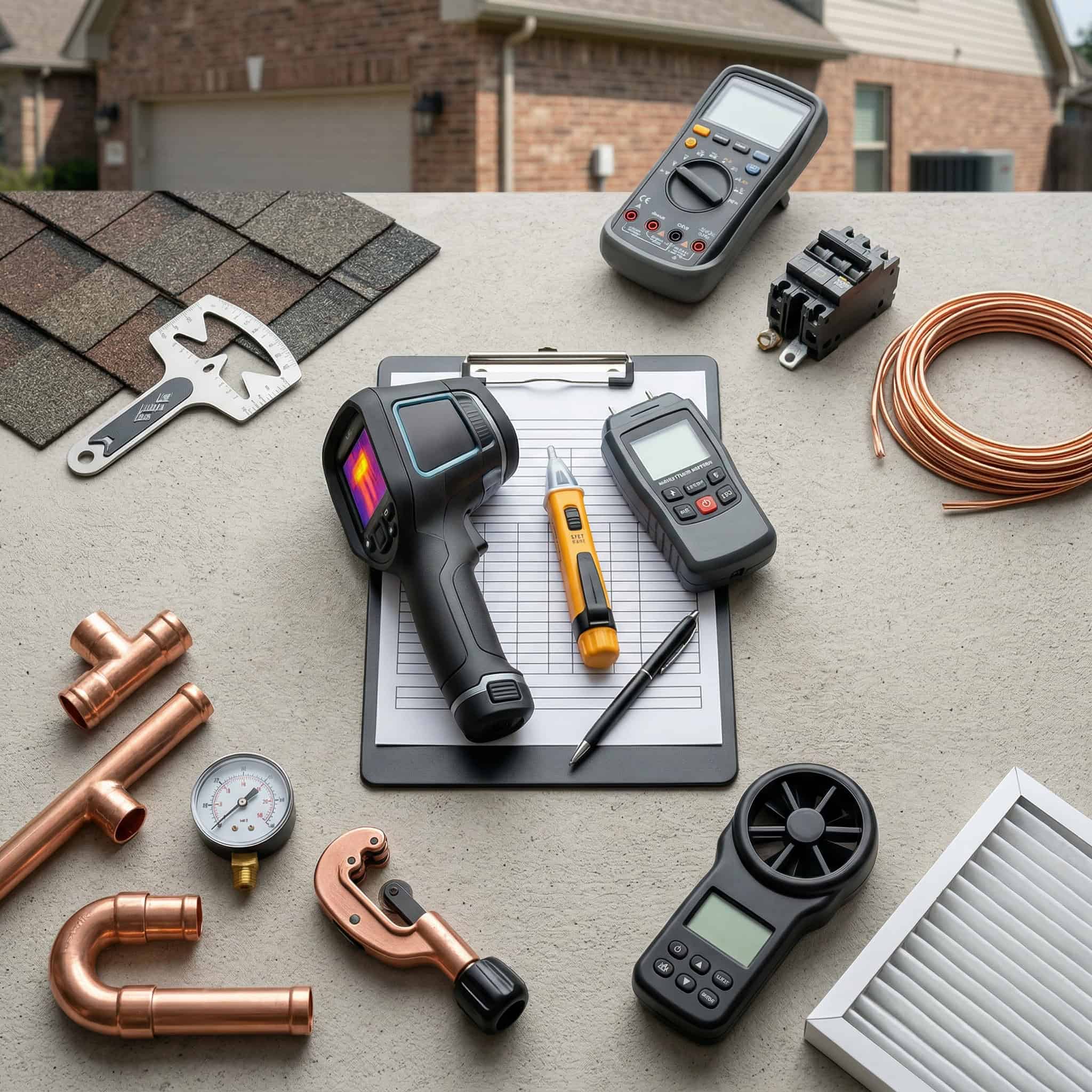
Our certified InterNACHI and ASHI inspectors are trained to evaluate the four critical systems that insurance companies and underwriters assess most closely: Electrical, Plumbing, HVAC, and Roof. Each component is inspected against its own specific requirements — evaluating age, condition, and remaining service life.
Whether required for insurance purposes or requested for personal due diligence, a four-point inspection delivers a concise, system-by-system overview of your property's core infrastructure. For homeowners and contractors, a new construction inspection checklist ensures compliance with industry standards. Our detailed reports empower you with a clear understanding of each system's condition and any necessary repairs.
Before scheduling, please check with your insurance company if something specific is needed in the report. Requirements can vary by carrier and policy type.
The inspector will evaluate your electrical panel, water heater, HVAC system, roof and attic, and foundation in detail. The duration for the on-site portion of a four-point inspection is typically shorter than a full home inspection, as the inspector focuses exclusively on these core systems rather than the entire property.
Each system is assessed independently against its own specific requirements, including age, condition, material type, and code compliance — providing the focused evaluation that insurance underwriters require.

Once the inspector finishes the on-site evaluation, a detailed report will be generated and delivered to you by email. The report provides in-depth insight into the condition of each system inspected. Any defects found at the time of the inspection will be clearly documented within the report. You can preview the format in our sample reports section.
The report may also include recommendations for necessary repairs or maintenance to address any issues identified. Our thorough inspection and testing services are designed to ensure you have a complete understanding of the property's systems — allowing you to make informed decisions and proceed with confidence, whether for insurance compliance or your next real estate move.