Skip to content
Samples drawn from your own taps by a trained technician and analyzed by an accredited laboratory: bacteria, lead and nitrate, and the quality of the water itself. Test one thing or all four, on a private well or on city water. Serving Northern Virginia, Maryland and Washington DC. Book online in a couple of minutes, or ask for a price first.
Because the things worth finding do not announce themselves. None of them changes how the water looks, and the two situations most likely to put them there, a private well and old plumbing, are both invisible from the kitchen. A laboratory is the only instrument that answers the question.
No tasteno color and no smell either
Lead, nitrate and bacteria are all undetectable at the tap. Water with a problem pours exactly like water without one, which is why nobody finds these by noticing.
6 monthsand under, where nitrate does its harm
Nitrate interferes with the way an infant's blood carries oxygen, at concentrations that would not affect an adult drinking from the same tap.
1986when lead plumbing was banned
Lead pipe, solder and flux were legal until that year. Lead comes from the plumbing rather than the source, so the age of the house decides the risk, not the utility.
Your neighbor's result is not yours. On a well, the answer depends on how deep the casing goes, what sits on the land upslope, and how the septic field drains. On city water, the utility treats and tests what it delivers to the street. The pipe from there into the house, and the plumbing inside it, is yours, and that is the stretch where lead usually lives.
Water testing is not one thing. Each panel below is a separate laboratory analysis with its own sample bottle and its own method, and you pay for the ones you choose. Most people start with one, and well owners usually take two.
The first test on any well
Total coliform, E. coli, and the hydrogen sulfide producing bacteria behind a rotten egg smell. Coliform means surface water is reaching the supply somewhere. E. coli means that water has been in contact with waste, which is the one result that needs acting on straight away.
The three with a health line
Nitrate and nitrite arrive from fertilizer, manure and failing septic systems, and they are a specific risk to infants under six months old. Lead comes from the plumbing rather than the source, so it shows up on city water as readily as on a well.
Taste, staining and scale
pH, conductivity, total dissolved solids and salinity. This is the panel that explains a metallic or sour taste, blue-green staining around a drain, scale building on a kettle, or a water heater that is failing years early.
Clarity, measured
How much suspended material the water is carrying. Cloudy water is not only unpleasant to drink: particles give bacteria and viruses somewhere to shelter from disinfection, which is why clarity gets measured rather than eyeballed.
Not sure which one? Start here
The water smells of sulfur, or tastes metallic or sour
Start with bacteria, then add water quality. A rotten egg smell usually points at bacteria; a metallic or sour taste usually points at pH.
The water looks cloudy, or leaves sediment in the glass
Start with turbidity. If there is also a smell, add bacteria, because particles and bacteria tend to travel together.
The house was built before 1986, or there are young children in it
Take nitrate, nitrite and lead. Lead is invisible in water and there is no level of it that is considered safe for a child.
You are buying the house, or it is on a private well
Take bacteria and nitrate, nitrite and lead together. If the loan is FHA, VA or USDA, see the panel below.
Water testing
From $325one panel, all in
From $275 when it is added to a home inspection. The samples are drawn during the inspection visit, so there is nothing extra to arrange.
How many panels you take. One is the price above. Taking two, three or all four costs less per panel than buying them one at a time, because the visit and the chain of custody are shared and only the laboratory work multiplies.
Where the property is. A single panel is the same price across Northern Virginia, Maryland and Washington DC. Beyond one, the laboratories serving Maryland and DC charge more than the Virginia ones do, and that difference is passed through rather than averaged out.
Tell us which panels you want and we will price the whole thing in writing before anything is booked.
If the property draws from a private well and the loan is FHA, VA or USDA, the lender will normally want a potability test from a third party before it closes. It is one of the quiet items that holds up a settlement, because nobody thinks about it until the underwriter asks.
A single collection visit covering what these programs usually ask for, sampled and documented the way a lender expects: an accredited laboratory, a chain of custody, and a report in the buyer's name.
Check the panel with your lender first. FHA, VA and USDA each set their own rules, and the local health authority can add to them, so the exact list is not ours to promise. Tell us what the letter asks for and we will collect it in one visit.
Same glass of water, completely different risk. Where the water comes from decides which tests are worth buying, and it decides how the samples have to be taken.
Nothing upstream is treating or monitoring this water. The land around the well is the whole story: a septic field, a neighbor's failing system, pasture or cropland upslope, an old fuel tank, or simply a wet spring that raises the water table into ground it does not usually touch.
The utility treats the water and tests it against federal limits, and publishes the results every year. What that testing cannot see is your house: the service line from the street and every pipe, joint and fixture after it, which is where lead and copper enter and where water sits still overnight.
One at the tap closest to the well and one at the tap furthest from it. That pair is what makes a result traceable. If both come back the same, the answer is in the supply. If only the far tap is affected, the answer is in the plumbing between them, and those are two entirely different problems with two entirely different fixes.
One short visit to your house, then a laboratory, then a report you can read without a chemistry degree.
Step 1
At the house
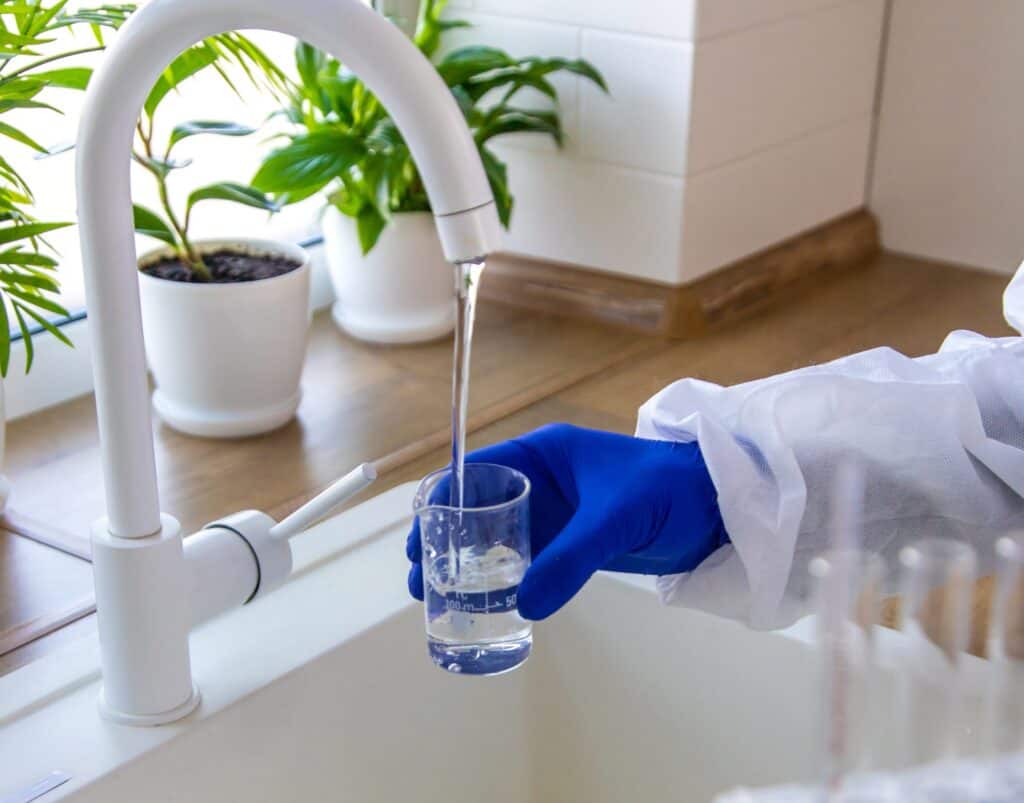
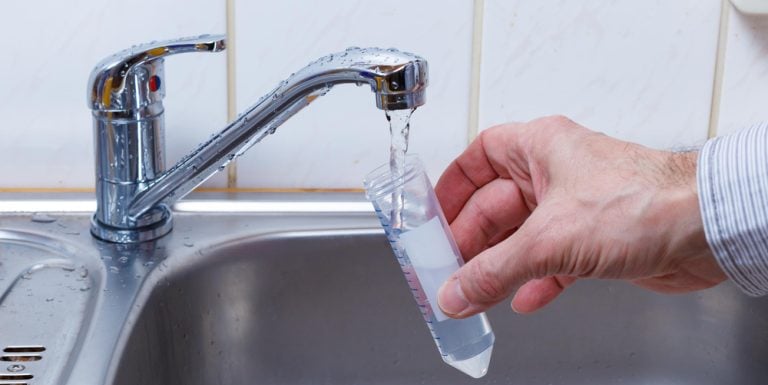
A technician collects at your own taps, into sterile containers supplied by the laboratory, one bottle per test, each labeled and logged on a chain of custody form. On a well that means the closest tap and the furthest. It is a short visit, and booking it alongside a home inspection folds it into that appointment.
Step 2
At the laboratory
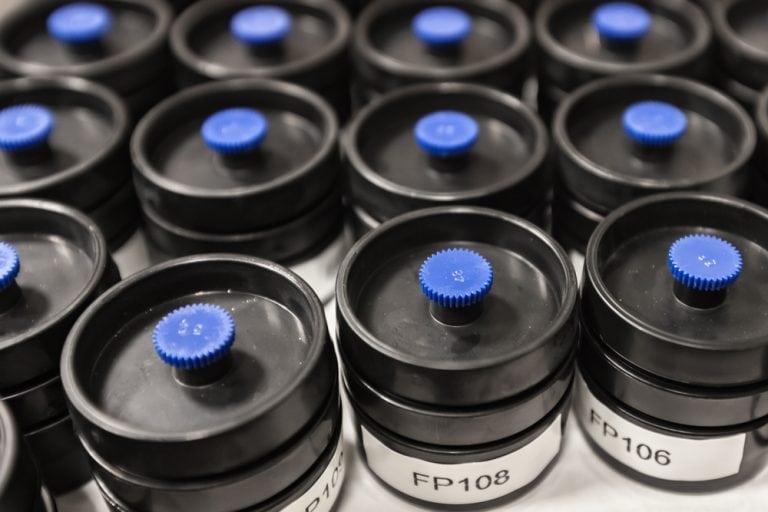
Not us, and not a field meter. Every test has its own method and its own holding time, and bacteria in particular has to reach the bench quickly, which is why the sampling day is set rather than chosen at random. The schedule for your results is confirmed when you book, because it depends on which tests you took.

Step 3
In writing
Every result printed beside the limit it is measured against, so nothing needs interpreting and nothing is buried. Where a result sits over a limit, the report says what the contaminant is and what usually puts it there, which is the part that tells you whether to call a well contractor, a plumber or the county.
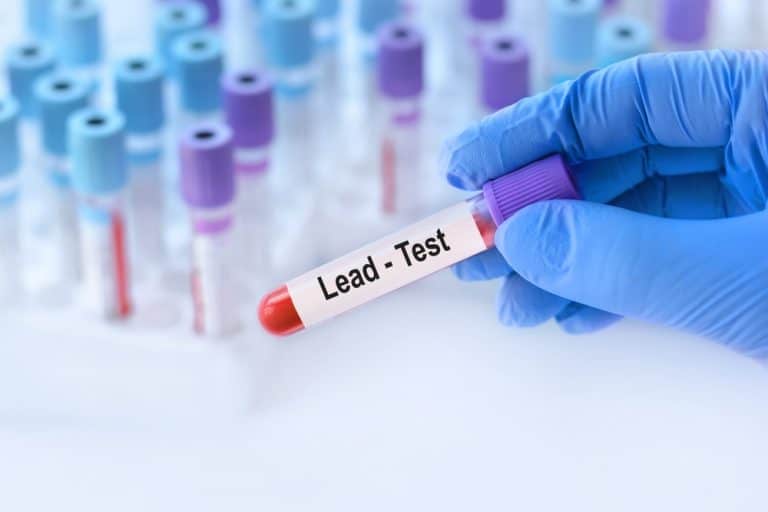
If something comes back over a limit, testing again is part of the answer. A bacteria result on a well is usually followed by disinfecting the well and re-sampling to confirm it took; a lead result is followed by finding which part of the plumbing is the source. Either way the second test is what proves the first problem is gone, and we do that the same way we did the first one.
We collect the samples and write the report. The analysis is done by an accredited laboratory, under its own methods and its own chain of custody, so the result is not ours to shade in either direction. NextDay Inspect is a member of the Water Quality Association, and what you receive is the laboratory's data with every result set against the limit that applies to it.
The questions people actually ask us, answered without the hedging.
Water testing starts at $325 for one laboratory panel, or $275 when it is added to a home inspection on the same property. That price is the same across Northern Virginia, Maryland and Washington DC.
From there it depends on how many panels you take and where the property is. Two, three or all four cost less per panel than buying them one at a time, and the laboratories serving Maryland and DC charge more than the Virginia ones beyond a single panel. Tell us which panels you want and we will price the whole thing in writing before anything is booked.
On a private well, start with bacteria. It is the test that finds the problem most likely to make someone ill, and it should be repeated after any work on the well or the pump. Add nitrate, nitrite and lead if there is farmland or a septic system nearby, or an infant in the house.
On city water the supply itself is already tested, so the useful test is the one that looks at your plumbing: nitrate, nitrite and lead in a house built before 1986. If the complaint is a taste, a stain or a scale problem, that is the water quality panel, and if it is cloudiness, that is turbidity.
Yes, because the utility's testing stops at the street. Your water supplier treats the water and tests it against federal limits, and publishes those results every year. What no one tests is the service line into your house and the pipes, joints and fixtures inside it, and that is exactly where lead and copper come from.
If the house was built before 1986 it can have lead pipe, lead solder or lead in the fixtures, all of which were legal then. Nothing about the water will tell you.
FHA, VA and USDA loans normally require a potability test from a third party before closing. The usual panel covers bacteria, nitrate and nitrite, lead, iron and turbidity, collected in one visit, with the report issued in the buyer's name. It starts at $450, or $400 when it is collected during the home inspection on the same property.
Each program sets its own rules and the local health authority can add to them, so ask your lender what the letter requires and tell us before we sample. It is easier to collect one extra bottle on the first visit than to go back.
It depends on which tests you took. Each analysis has its own laboratory method and its own holding time, and the bacteria culture in particular sets its own pace, so a bacteria panel and a pH reading do not come back together. We confirm the schedule for your results when you book, once we know what is being tested.
If you are working to a settlement date or a contingency deadline, say so and we will tell you plainly whether it fits before you pay for anything.
Someone has to let us in, but it does not have to be you. An agent, a lockbox or anyone you trust works, arranged the same way it would be for a home inspection. The visit is short, and the taps we need are ordinary indoor taps.
On a well we take two samples, one at the tap closest to the well and one at the furthest, so we do need access to both ends of the house.
For your own curiosity, yes. For anything that has to be believed by somebody else, no. A strip kit gives you a color to read by eye at one moment, with no record of how the sample was taken or handled.
A lender, a buyer, a landlord or a county health department is asking for an accredited laboratory result with a chain of custody behind it, showing who drew the sample, when, and how it reached the bench. That is what we deliver, and it is the reason a test that matters costs what it does.
The report tells you what was found, what it usually means, and who normally deals with it. Bacteria on a well is commonly handled by disinfecting the well and re-sampling to confirm it worked. Lead points at the plumbing rather than the source, so the question becomes which run of pipe or which fixture. Nitrate near farmland or a septic field is a different conversation again.
Whichever it is, the second test is what proves the problem is gone, and we run it the same way we ran the first.