
Home/Mold Testing/Towson, MD
Mold testing
Samples taken in your home, analysed by an accredited laboratory. We do not sell remediation, so the report has nothing to sell you.
4.9 rating, over 4,000 reviews NAMRI-certified inspectors Serving Baltimore County
Four options, depending on how much of the home you need looked at. Not sure which one fits? Start with the thirty minute visit and a technician will tell you what is actually worth testing. Decide to test while they are there and the visit is written up as a Mold Plus.
No sampling
"Something feels off and I do not know if testing is worth it."
$175
30 minutes on site
One area, tested
"I can see it, or I know exactly where to look."
$345
One targeted area, 1 to 2 hours
One area, plus the source
"There was a leak and I want to know where the water went."
$495
One targeted area, 1 to 2 hours
The whole home
"It could be anywhere, or it keeps coming back."
From $550
Priced by home size, 1 to 2 hours
* Prices shown are for Virginia and Maryland. In Washington DC, Mold Basic is $425, Mold Plus is $575, and Mold Advanced starts at $630, with $80 added to every home-size tier. Mold Walk & Talk is $175 everywhere.
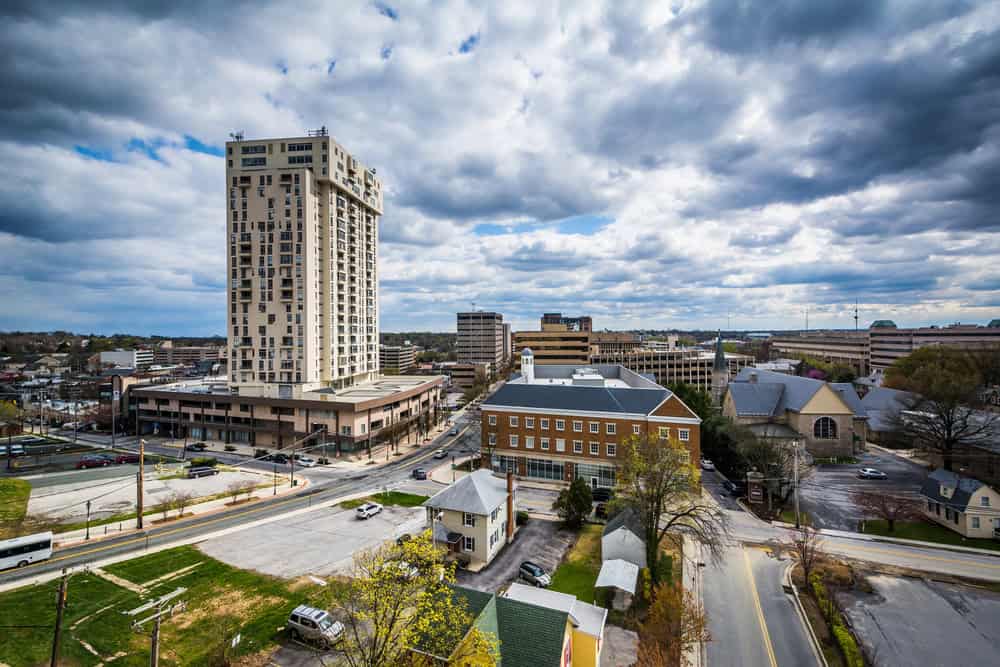
The Towson area includes several well-documented residential settings. Maryland's historic records describe detached houses in Stoneleigh and Anneslie and brick rowhouses in nearby Rodgers Forge. Downtown Towson adds a different context for residents in managed buildings. For a mold request, these local distinctions help describe the property, while the actual leak, odor or stain determines what should be evaluated.
In a detached house with a later extension, explain how the roof and foundation connect to the original building. In an attached home, identify the affected wall and shared service routes. A condominium ceiling stain may involve a room or pipe outside your control, so management records and access matter. Include the dates of earlier repairs and whether the concern returned. A useful report separates observations in accessible areas from laboratory findings and from questions that remain unresolved behind finishes or beyond the unit.
Local background: Maryland Historical Trust: Anneslie and neighboring residential districts.

01
A change in roof height or foundation may be relevant to a stain at the junction. Explain when the addition was built and what happened before the concern appeared.
02
Odors may be noticed in occupied rooms while accessible evidence lies in a utility or storage area. Identify both spaces and arrange access without disturbing suspected material.
03
Record when the stain changes and any repairs in the room above. An agreed visit should state whether that adjoining space was accessible and how its absence limits conclusions.
Where we test in Towson, and what to tell us
Stoneleigh and Anneslie
Describe additions, enclosed porches and changes to lower-level finishes. Older neighborhood documentation helps explain the setting but does not establish a defect in an individual house.
Rodgers Forge area
For a rowhouse concern, identify the cellar or finished basement, rear extension and adjoining walls. Bring a history of roof and plumbing repairs relevant to the affected room.
Downtown Towson and managed residences
Clarify building access, unit boundaries and maintenance responsibility. Ask for available records when the suspected water route involves a common roof, exterior wall or shared pipe.
No version of your result is worth more to us than another one. If the report says you need work, you choose the remediator. A separate post-remediation assessment can document conditions after the work within its agreed scope.
For a Maryland property, define the question before ordering samples: a particular stain, persistent odor, water event or follow-up after repairs. Keep dated observations and laboratory findings with the repair history. A report does not determine health risks, insurance coverage or legal responsibility. Montgomery County also publishes separate radon requirements for covered home sales; confirm which rules apply to your transaction.
EPA sampling guidance; Montgomery County radon guidance. Current as of September 2026. General information, not legal advice.
Yes. Describe whether it is finished, where the concern occurs and any water or renovation history. Plus can address a targeted area with moisture evaluation and testing; broader concerns should be discussed before choosing a whole-home scope.
No. They describe the neighborhood and building history. Current observations, documented water events and appropriately selected samples are the relevant evidence for an individual property.
Arrange entry to your unit and identify any shared spaces that are relevant to the concern. Coordinate additional access with the manager. The report should clearly distinguish the evaluated area from inaccessible neighboring or common construction.
Not necessarily. Describe both sides of the junction and its repair history. Moisture observations may help frame the source question, while a sample addresses a particular air or surface location. The scope should follow the evidence rather than a fixed room count.
Real availability on the next screen. No call back required.
Schedule a mold test Request a price
NextDay Inspect
46179 Westlake Dr, Ste 200, Sterling, VA 20165
(703) 450-6398