

Home inspections for first-time buyers

Your first home.
Know what
you’re buying.

Your inspector examines the home’s accessible systems, documents visible problems, and explains what may need repair or further evaluation. Here’s what to expect from your first inspection.

What to expect before, during, and after the inspection.

Illustrative scene of a home inspector in a dark gray NextDay Inspect polo discussing findings with a young blonde home buyer.
Recognize safety concerns
Understand the property
Make sense of the findings

01 / Why an inspection matters

What you can learn from an inspection.

Buying a home means taking on its repairs and upkeep. An inspection helps you understand the property’s condition and plan your next steps.

Find safety concerns.

Learn about visible problems that may need prompt attention, such as electrical hazards or unsafe components.

Understand major repairs.

Find out which problems need a specialist’s evaluation and a repair estimate before your contract deadline.

Prepare for upkeep.

Learn about routine maintenance and repairs you may need to plan for after moving in.

Illustrative scene of a home inspector examining the roof edge and gutter from a deck while taking notes on a tablet.

Outside the home

The inspection includes the outside of the home.

Your inspector checks visible roofing, drainage, and exterior conditions. If an area cannot be reached safely, the report explains that limitation.

02 / What’s inspected

What your inspector checks.

A home inspection covers visible, accessible systems and components. Your inspection agreement defines the scope.

Explore our home inspections ↗

Roof, exterior & drainage

Visible roof coverings, flashing, gutters, siding, decks, and drainage near the home. Roof access depends on safety and conditions.

Structure & foundation

Accessible foundation walls and framing, with attention to visible movement, damage, and signs of water entry.

Electrical systems

Accessible panels, visible wiring, and a sample of outlets and switches.

Plumbing & water heating

Visible supply and drain pipes, fixtures, signs of leaks, and accessible water-heating equipment.

Heating, cooling & ventilation

Heating and cooling equipment is operated using normal controls when weather and equipment conditions allow.

Interior, attic & appliances

Accessible rooms, doors, windows, stairs, attic insulation, and ventilation. Built-in appliances are checked as listed in your agreement.
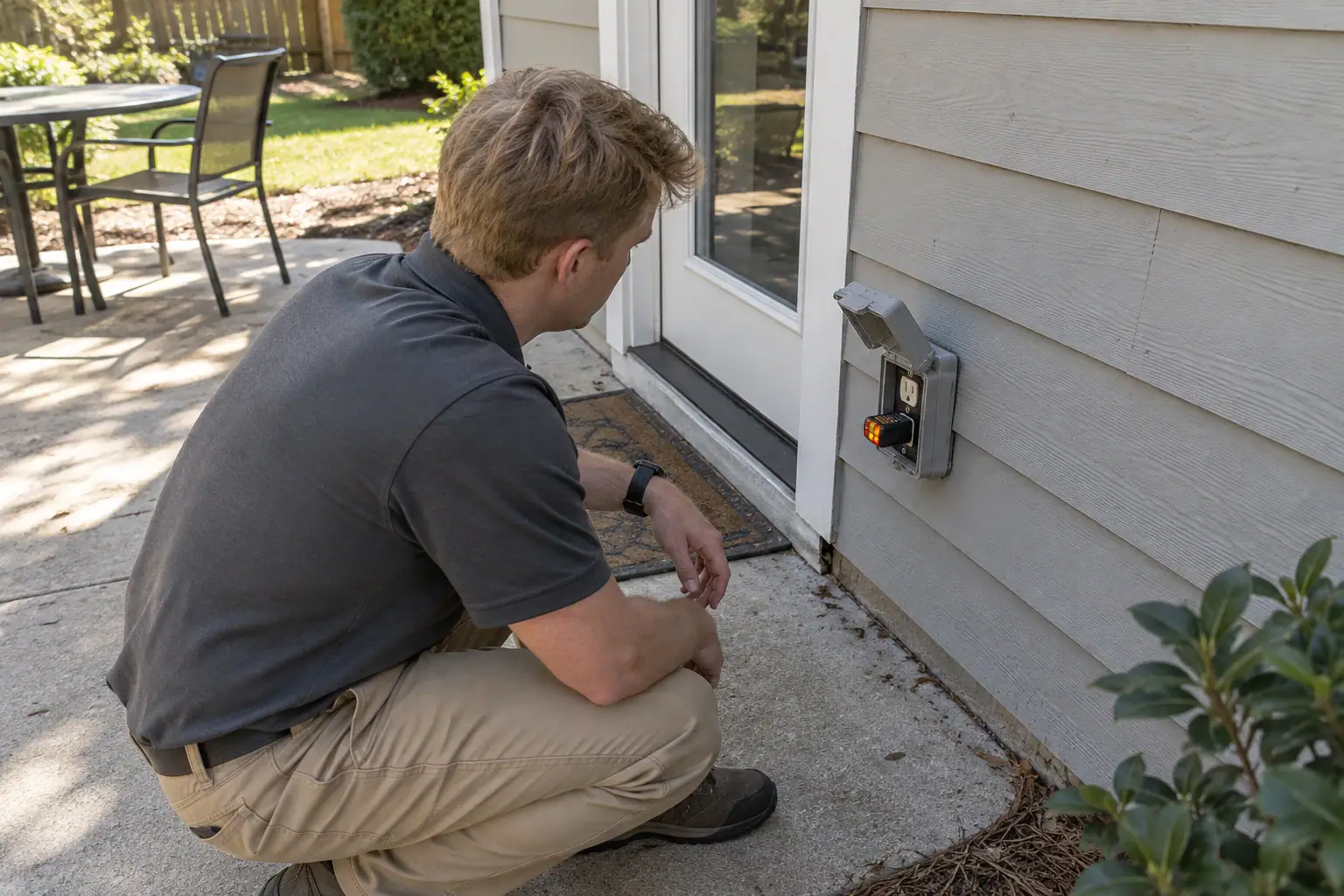
Illustrative scene of a home inspector checking an outdoor outlet with a receptacle tester.

Inspection limits

What an inspection can’t tell you.

An inspection records visible conditions on the day of the visit. It cannot find every hidden problem or tell you how long a system will last. It is not a warranty or a code compliance certification.

The report also notes areas the inspector couldn’t access. Environmental testing and specialist evaluations are separate services.

Scope reference: InterNACHI Standards of Practice · Confirm the specific scope in your inspection agreement.

Buying new construction?

New homes can have problems, too. An inspection before drywall covers areas that will later be concealed. A pre-settlement inspection reviews the more complete home. Arrange access with your builder and keep track of warranty deadlines.

Explore the inspection stages ↗

03 / What to expect

How your inspection works.

We’ll confirm the details before the visit, inspect the home, and document the findings in your report.

Illustrative scene of a home inspector explaining findings on a tablet to two buyers in a kitchen.

Talk with your inspector

Ask questions during the inspection.

You don’t need to know building terms. Ask the inspector to explain a finding, show you where it is, or clarify why it matters.

Talk with our team ↗
01

Book your inspection

Share the address, property details, concerns, and contract deadline. Confirm what’s included, the total fee, property access, and when to expect the report.

02

Attend if you can

You’re welcome to attend, but it isn’t required. Arrange property access with your agent and our team. Agree on a time to discuss the findings and any areas the inspector couldn’t reach.

03

Read the full report

Review the findings, photographs, recommendations, and limitations. Ask your inspector to explain anything you do not understand.

04

Review your options

Get specialist evaluations or repair estimates where needed. Your agent or attorney can explain your options and deadlines under the contract.

Allow time before your deadline. Book once access is confirmed. You’ll need time for the visit, the report, and any additional testing or specialist evaluations.

Further reading: CFPB’s guide to scheduling a home inspection. Inspection rights and response options depend on your contract.

04 / Understanding your report

How to read your inspection report.

Some findings need prompt repair or a specialist’s evaluation. Others are routine maintenance. Read the full report, including its limitations, and ask your inspector about anything unclear.

Explore a real sample report ↗
Safety concerns

Address safety concerns.

Ask your inspector which conditions need prompt attention and whether a specialist should evaluate them before you move in.

EXAMPLEExposed wiring: Have a licensed electrician evaluate the wiring and recommend repairs.
Major repairs

Get repair estimates.

For a major defect or an unclear repair, ask a qualified contractor for an evaluation and a written estimate. Leave time for this before your contract deadline.

EXAMPLESigns of roof leakage: Have a roofing professional find the source and estimate the repair.
Maintenance

Keep up with maintenance.

Use routine findings to plan repairs and upkeep after you move in. Keep the report as a reference, along with records of completed work.

EXAMPLEDebris in gutters: Arrange cleaning and check that runoff drains away from the foundation.

Talk with your agent or attorney. They can explain repair requests, credits, or other options under your contract. The seller is not automatically required to fix every finding. Confirm repair costs and the proposed work with qualified contractors.

Explore the Repair Estimate Report ↗

Learn more: How NextDay Inspect organizes reports · CFPB on inspection findings and next steps.

05 / Additional testing

Testing beyond the standard inspection.

Termite inspections and environmental testing are separate from the standard home inspection. Tell us the property address and your concerns so we can confirm availability, scope, price, and timing.

Explore environmental services ↗

Radon Testing

We place a continuous monitor in the home for at least 48 hours, then collect it and provide a written report. Arrange access for both visits and ask our team how to prepare the home before testing.

Radon testing ↗ · EPA buyer guidance ↗

Termite Inspections

Available as an add-on to a home inspection. The inspector checks for visible signs of termites or other wood-damaging pests and evidence of prior treatment, then provides a report. Ask about availability when booking.

Termite Inspections ↗

Water Testing

We collect water samples from homes on city water or private wells for laboratory testing. Options include bacteria, lead, nitrate, nitrite, and other water-quality measures. Tell us your concerns and any lender requirements so we can confirm the tests to arrange.

Water testing ↗ · EPA well guidance ↗

Mold Testing

A past leak, recurring stain, or musty smell can help guide where to sample. Our mold testing includes indoor sampling, an outdoor comparison, and laboratory results. Moisture and thermal evaluations are available with selected services.

Mold testing ↗ · EPA sampling guidance ↗

Lead Paint & Asbestos Testing

Planning work in an older home? Ask about lead paint testing in Maryland and DC or asbestos material testing in Virginia, Maryland and DC. These are separate services with different sampling needs. Contact our team before disturbing suspect materials.

Lead paint testing ↗ · Asbestos testing ↗

Air Quality Testing

On-site instruments measure particles, chemical vapors, formaldehyde, carbon dioxide, carbon monoxide, combustible gas, temperature, and humidity. You receive a written record of conditions during the visit. Mold and radon testing are separate services.

Air quality testing ↗

Lead paint and drinking-water testing use different methods. Environmental testing is available in Northern Virginia, Maryland, and DC; coverage varies by service. Further reading: EPA on lead exposure at home.

06 / Inspection questions

Common inspection questions.

Answers to common questions about booking, scope, and the report. Contact us if yours isn’t covered here.

Talk with our team ↗
Can a home “fail” an inspection?

A general home inspection doesn’t give a pass or fail. It describes the home’s condition. You decide what the findings mean for your plans and budget, with help from your agent, attorney, or qualified specialists.

When should I book, and how long does it take?

Book as soon as property access and your contract deadline are confirmed. The time on site depends on the home’s size, age, condition, and the services you select. Confirm report timing when you book. Additional testing can take longer.

How much should I budget for an inspection?

The fee depends on the property and the services you choose. Request a quote or check the scheduler for your home. Prices on the packages page are added to the base home inspection fee, so confirm the full total.

Is a Walk and Talk the same as a full inspection?

No. A Walk and Talk is a limited consultation without a written report. It may help with questions during a showing, but it is not a substitute for a full home inspection and report. A four-point inspection also has a narrower scope.

Does a condo need an inspection?

A condo inspection can help you understand the unit’s condition. Confirm what the inspection covers and which items are the association’s responsibility. Review association fees, reserves, and planned work with your agent. See a condominium sample report.

What if the home is being sold “as is”?

An inspection can still help you understand the home’s condition. Your rights to request repairs or cancel depend on the contract and applicable law. Ask your agent or attorney to explain those terms before you sign.

Can I ask questions after I receive the report?

Yes. Contact NextDay Inspect if you need help understanding a finding or recommendation. Your inspector can explain the report; a qualified contractor can quote repairs, and your agent or attorney can advise you on the contract.

Contact NextDay Inspect

Need a home inspection?

Send us the property address and your inspection deadline. We’ll confirm availability, the services you need, and the cost.

Call Schedule