

Home/Home Inspection/Leesburg, VA
Home inspection
Home Inspection in Leesburg, VA
A Loudoun County inspector treats an eighteenth-century West Market Street house and a newer Leesburg condominium the same way, delivering a photo report you can act on.
Read client reviews Licensed and insured inspectors Serving Leesburg and all of Loudoun County
What we check in a Leesburg home
The inspection follows the same 12 areas, from the roof down to the grounds, within the agreed scope and safe access available. It is visual and non-invasive: finishes are not removed, and personal belongings are not moved. Select an area to see what is checked.
- Range, oven and wall oven run normally
- Dishwasher, disposer and microwave run
- Kitchen exhaust fan and the dryer vent exit
- Service entrance, meter and main disconnect
- Panels, breakers, grounding and bonding
- Sampled outlets and switches; GFCI, AFCI, smoke and CO detectors
- Siding, flashing, trim, eaves, soffits and fascia
- Every exterior door and a sample of windows
- Walkways, driveway, stoops, porches, decks and railings
- Foundation walls, slabs and the basement
- Any accessible crawlspace
- Signs of movement, water penetration and wood touching soil
- Vehicle door and opener on their normal controls
- Auto reverse and photo eye safety sensors
- Walls, ceiling, floor and the fire door into the house
- Grading and drainage at the foundation
- Retaining walls and vegetation against the house
- Downspout discharge, walkways, driveway and steps
- Heating and cooling run on their normal controls
- Energy source, method and thermostat location noted
- Visible ducts, filter, condensate drainage and equipment condition
- Floors, walls, ceilings, stairs and railings
- A sample of doors and windows opened and closed
- Accessible attic: insulation depth, ventilation and framing; fireplace and damper
- Sink, faucet, drain and disposer run
- Dishwasher connection checked for leaks
- Cabinets, drawers, counters, floors, walls, ceiling and exhaust fan
- Main water and fuel shut-offs located
- Water heater, its venting and TPR valve; pipe materials
- Every toilet flushed; every sink, tub and shower run
- Coverings, flashing, vents, skylights and chimney
- Gutters, downspouts, eaves and rake
- Roof structure from inside the attic where accessible
- Visible framing, beams, posts and joists
- Masonry walls and the chimney structure
- Settlement signs: cracks, out of square openings, unlevel floors
Every inspection follows a written standard of practice. Need additional testing? Explore radon testing, termite inspection, mold testing and water testing, then confirm your selected services and timing when booking.
Add a package to the inspection
Three packages built around the home inspection. Package prices are for the add-on services only and are added to the inspection price. The savings are against booking the same services one by one.
Home Essentials
The perfect starting point
Home Advantage
Most popular for homebuyers
Home Enhanced
The ultimate peace of mind
Warranties must be requested when you book, not after the inspection. Radon and thermal imaging can also be added on their own. Read more about each package.
What a home inspection actually involves
No jargon, no surprises. Here is the whole visit, start to finish, so you know what you are booking before you book it.

You book, we confirm
Online or by phone, in a few minutes. Your agent can book for you. Add radon, termite or a package at the same time, and we confirm the appointment with you before the visit.
The walk-around
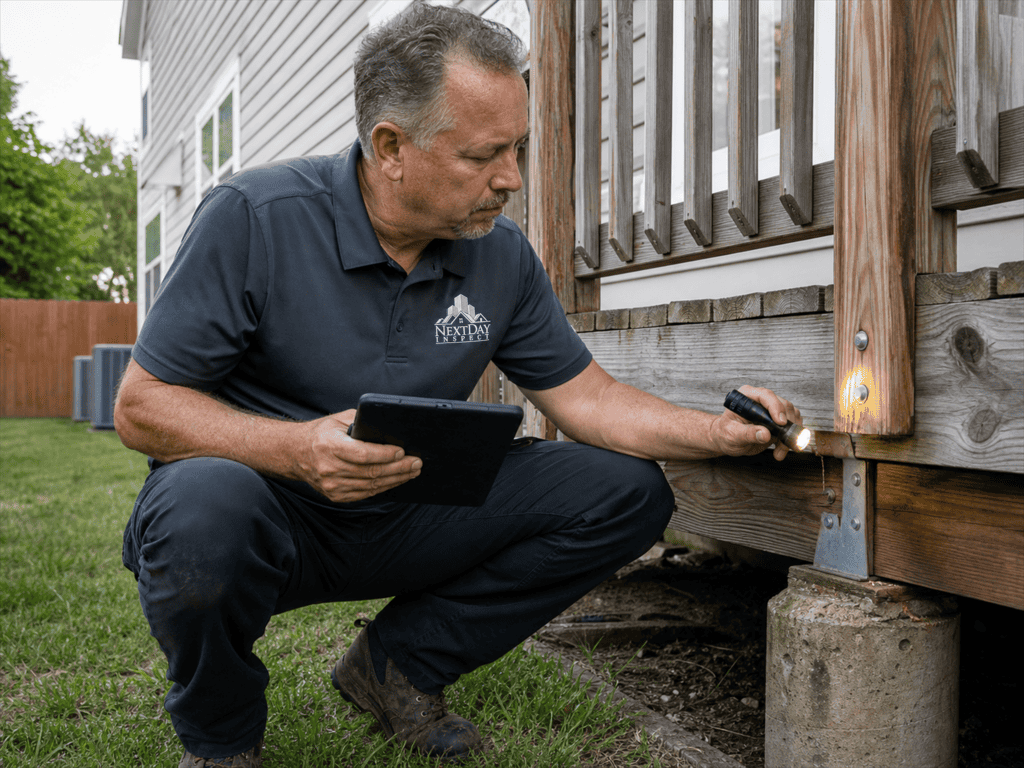
Roof, siding, grading, decks, the garage and the grounds first. The inspector photographs what they find as they go, so the report shows you exactly where each item is.

Systems and accessible spaces
The inspector checks accessible electrical, plumbing, heating and cooling components and operates equipment with normal controls when conditions allow. The report identifies areas that could not be inspected and any recommended follow-up.

The walkthrough and the report
You see the main findings in the house itself. The written report follows online with photos, priorities and what to do about each item.
Leesburg, three centuries at once
Leesburg was established in 1758 and became the seat of Loudoun County soon after, laid out in a sixty-acre grid around Nicholas Minor's tavern. Its Old and Historic District now holds buildings spanning three centuries, from West Market Street to Vinegar Hill and the Town Branch area. The inspection reads each house on its own construction era rather than assuming one standard age for the whole district.
Older houses inside the grid
West Market Street sits inside Leesburg's original 1758 grid, so a house here may be one of the district's oldest or a later infill built once the surrounding lots filled in. The inspection identifies the cellar's access point, follows any addition to where its framing meets the original structure, and checks whether repointing, waterproofing or an interior wall finish was done recently enough to explain a concern that only appeared afterward. A converted building here may hold more than one unit, which changes what the visit can access directly.
The Virginia Landmarks Register lists Leesburg's Old and Historic District across thirty-six blocks of largely tree-lined streets, first listed in 1969 and expanded in 2002.
Divided buildings and later rooflines
North King Street and Vinegar Hill include buildings that have been extended or divided into separate living spaces since they were first built, so the inspection asks who controls access to each part before it begins. It follows a rear addition to where its roofline meets the original structure, checks whether a gutter or valley was added along with that addition, and reads the foundation on both sections for consistency. A stain near a former exterior wall, now enclosed by later construction, is often worth tracing to the roof or plumbing route above it.
Virginia's Old and Historic District boundary was enlarged in 2002 specifically to include more late-nineteenth and early-twentieth-century buildings, well beyond the original 1963 district lines.
Home inspections around Leesburg
Leesburg sits in Loudoun County, and the same inspectors cover the whole county. Every place below has its own page.
Leesburg home inspection, old town to new
What Leesburg buyers ask about the historic district, permits, and additions.
Leesburg is the Loudoun County seat. Does that mean the county handles my permits?
Not for an in-town address. Leesburg is an incorporated town with its own government, and a house inside town limits gets its building permits and historic-district design review from the town rather than the county, even though the county courthouse and many county records sit in Leesburg because it is the county seat. Confirm with the town directly if you are inside the Old and Historic District, since exterior work there needs a separate design review before a permit is issued.
Does an eighteenth-century Leesburg house get a different inspection than a newer one?
The categories the inspection checks stay the same: roof, foundation, electrical, plumbing, heating and cooling, attic and structure. What changes is what the inspector expects to find. An older house inside the historic grid is more likely to have a cellar with limited access, older framing techniques and more than one renovation layered on top of each other, while a newer building nearby may raise questions about a more recent addition or conversion instead.
Does a newer Leesburg condominium or townhouse inspection work differently?
The inspection still covers your own unit: electrical, plumbing, heating and cooling on normal controls, windows, doors, and any attic or crawlspace access that belongs to the unit. A shared roof, exterior wall or building system belongs to the condominium association or the building owner, and the report notes clearly which items sit outside what a unit-only visit can address, whether the building sits inside the historic district or in a newer part of town.
Can the inspection open up a wall in our historic Leesburg house to check for damage?
No. A home inspection is visual and non-invasive, so it does not include cutting, drilling or removing plaster, siding or trim to look behind a finished surface, historic or not. The inspector uses accessible views, panel covers, hatches and normal operating controls, and notes where a finish or a delicate historic material limits what can be seen without disturbing it.
Should I plan to be in Leesburg for the whole appointment?
It helps but is not required. Being there for the walkthrough at the end is when most buyers get their questions answered directly, in the house, before the full written report follows online. You can also attend the entire visit, or have an agent stand in through the scheduler's agent option, and the report is the same either way.
What should I prepare for a home inspection in Leesburg?
If the home is in or near the historic district, identify later alterations. A condition report can guide maintenance questions without deciding whether prior work was approved.
Explore Our Inspection Reports
- HD Photography
- Commentary & Recommendations
- Grading Scale
- Repair, Safety & Maintenance