
Home/Home Inspection/Baltimore, MD
Home inspection
A Maryland licensed inspector walks the house with you, then writes a photo report that says what matters, what can wait, and what to ask for before you close.
4.9 rating, over 4,000 reviews Licensed and insured inspectors Serving Baltimore City
Every inspection covers the same 12 areas, from the roof down to the grounds, and the report is organized the same way. It is visual and non-invasive: nothing is opened up, and nothing you own is moved. Tap any area to see what is checked.
Every inspection follows a written standard of practice. Radon, termite, mold and water testing can be added to the same visit.
Three packages built around the home inspection. Package prices are for the add-on services only and are added to the inspection price. The savings are against booking the same services one by one.
The perfect starting point
Most popular for homebuyers
The ultimate peace of mind
Warranties must be requested when you book, not after the inspection. Radon and thermal imaging can also be added on their own. Read more about each package.
No jargon, no surprises. Here is the whole visit, start to finish, so you know what you are booking before you book it.

Online or by phone, in a few minutes. Your agent can book for you. Add radon, termite or a package at the same time, and we confirm the appointment with you before the visit.
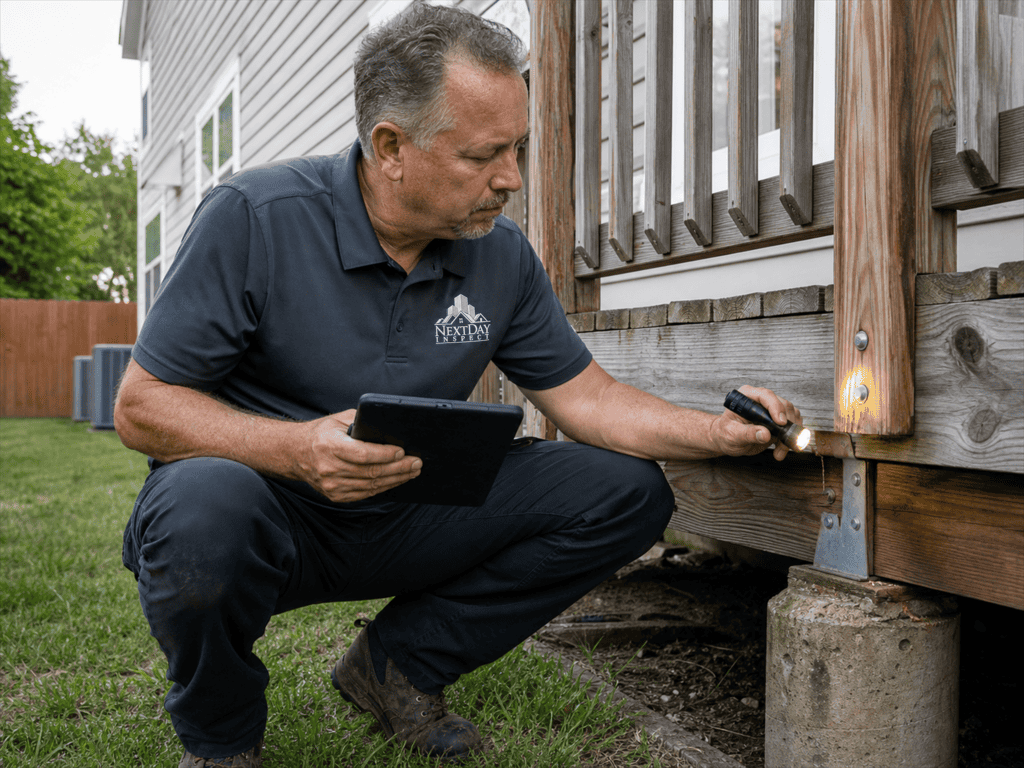
Roof, siding, grading, decks, the garage and the grounds first. The inspector photographs what they find as they go, so the report shows you exactly where each item is.

Panel cover off. Water heater, furnace and air conditioning run with their normal controls. Every fixture, every room, the attic, and the basement or crawlspace.

You see the main findings in the house itself. The written report follows online with photos, priorities and what to do about each item.
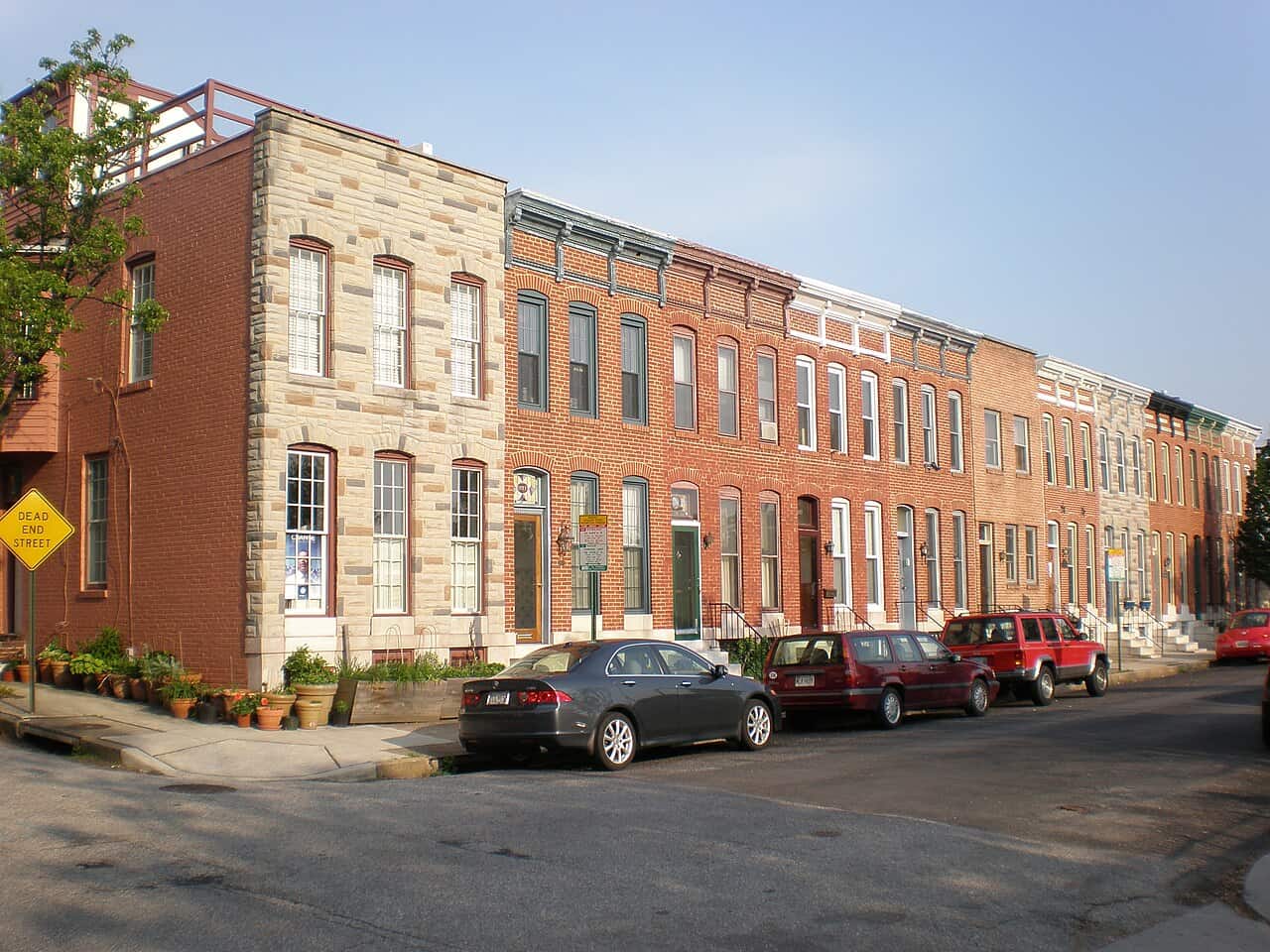
Baltimore is an independent city, separate from Baltimore County, with its own permit records and its own code enforcement. Its housing is unlike anywhere else in Maryland: block after block of rowhouses, from narrow alley houses to three-story townhomes, plus the larger houses and converted buildings north of downtown. Here are the two kinds of home we see most, and what we pay attention to in each.
Federal Hill, Baltimore. Photo: Steelplug, Wikimedia Commons, public domain.
Baltimore Heritage's anatomy of a rowhouse describes the range: compact two-story alley houses, wider homes with a rear wing, and three-story houses with a full third floor. Each shares walls with its neighbors, so the inspection reads the party walls, the rear roof and the cellar as one system, and looks closely at where a Formstone or brick front meets the original masonry.
Baltimore City requires a rental property to be licensed, and the license needs a passing inspection by a Maryland-licensed inspector registered with the City. NextDay Inspect performs those inspections as a separate service from the home inspection on this page.
Mount Vernon and Bolton Hill hold tall brick houses that were often divided into apartments and later turned back into single homes or condominiums, so the question is what each conversion left behind: how the systems were split, where the original plumbing was rerouted, and what the association owns in a condo. Roland Park and Hampden add detached and semi-detached houses with the roofs, porches and basements of their era.
Some Baltimore homes carry a ground rent, a small annual payment to whoever owns the land under the house. It is a title matter rather than an inspection item, but ask about it before you close. Maryland keeps a ground rent registry for exactly this reason.
Baltimore County wraps around the city, with Howard and Anne Arundel counties to the west and south, and the same inspectors cover all of them. Every place below has its own page.
The questions Baltimore buyers and landlords actually ask us, answered without the hedging.
No. Baltimore is an independent city with its own permit records and its own code enforcement, and Baltimore County is a separate government that surrounds it. We inspect in both, with the same inspectors, so nothing changes about the visit itself.
Yes. Baltimore City requires a passing inspection by a Maryland-licensed inspector who is registered with the City before it issues or renews a rental license, and we are registered. That inspection follows the City's own checklist and form and is pass or fail, so it is a different service from the home inspection described on this page. Book it from our Baltimore City rental inspection page.
Shared walls change where water goes and where it shows up. We look at the rear roof and its drainage, the flashing where the roof meets the party walls, the cellar or basement for moisture and structure, and any rear addition, and we note where a Formstone or brick front covers the original masonry so you know what could not be seen.
Yes. A building with two to four units is inspected unit by unit, plus the shared heating, electrical service, roof and common areas, and the report is organized the same way so each unit's findings stand on their own.
Yes. The scheduler has an agent option, prices the inspection the same way, and sends the report to both of you. If a lockbox or the listing agent is involved, tell us at booking so we can arrange access.