

Home/Home Inspection/Parkville, MD
Home inspection
A Baltimore County inspector reads a Loch Raven bungalow and a Harford Park rambler the same way, then hands you a photo report built around what needs attention first.
4.9 rating, over 4,000 reviews Licensed and insured inspectors Serving Parkville and all of Baltimore County
Every inspection covers the same 12 areas, from the roof down to the grounds, and the report is organized the same way. It is visual and non-invasive: nothing is opened up, and nothing you own is moved. Tap any area to see what is checked.
Every inspection follows a written standard of practice. Radon, termite, mold and water testing can be added to the same visit.
Three packages built around the home inspection. Package prices are for the add-on services only and are added to the inspection price. The savings are against booking the same services one by one.
The perfect starting point
Most popular for homebuyers
The ultimate peace of mind
Warranties must be requested when you book, not after the inspection. Radon and thermal imaging can also be added on their own. Read more about each package.
No jargon, no surprises. Here is the whole visit, start to finish, so you know what you are booking before you book it.

Online or by phone, in a few minutes. Your agent can book for you. Add radon, termite or a package at the same time, and we confirm the appointment with you before the visit.
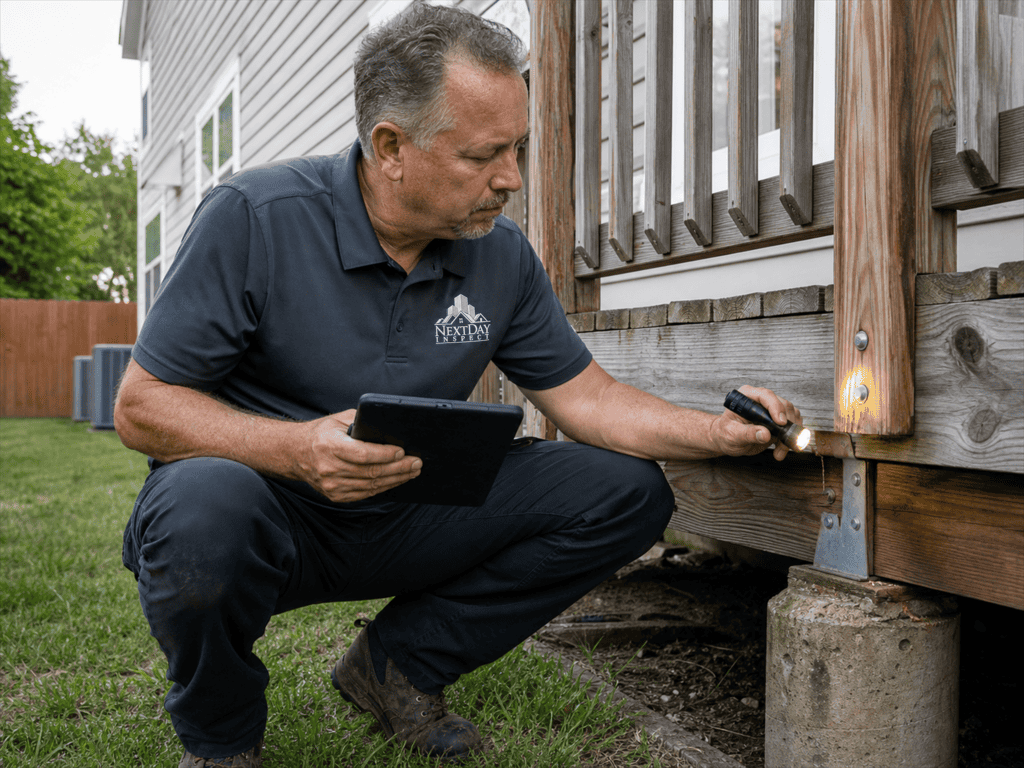
Roof, siding, grading, decks, the garage and the grounds first. The inspector photographs what they find as they go, so the report shows you exactly where each item is.

Panel cover off. Water heater, furnace and air conditioning run with their normal controls. Every fixture, every room, the attic, and the basement or crawlspace.

You see the main findings in the house itself. The written report follows online with photos, priorities and what to do about each item.
Parkville sits where the built-up city grid gives way to the wooded Gunpowder Falls valley, with Cromwell Valley Park marking the edge. A house closer to that valley sits differently on the land than one further into the grid toward the city line. The inspection reads each the same way: age first, then the roof, the foundation and how water moves around it.
Loch Raven Heights and Cub Hill sit closest to the wooded valley that runs north from Cromwell Valley Park, so mature trees often stand close to the roof and the foundation. The inspection checks gutters and downspouts for leaf blockage, looks at grading around the foundation for a slope that carries water away rather than toward the house, and follows any addition back to where it meets the original framing. A crawlspace here is read for standing water and vent condition rather than assumed to be dry because the lot looks well kept.
Baltimore County's Cromwell Valley Park sits in the Lower Gunpowder Falls watershed, where the county's own mapping places Parkville and Carney in the developed, southern part of that watershed.
Hillendale and Carney mix older bungalows with newer construction along the same streets, so the inspection cannot assume a house's age from its neighbors. It identifies the home's actual construction period from the framing, foundation type and finish details, then checks whether a later renovation changed a bedroom, a kitchen or a bathroom without changing the roofline. Electrical panels in an older bungalow are checked alongside any newer subpanel added for a renovation, and the report notes whether wiring types differ between the original rooms and any addition.
Baltimore County lies across two land regions, hard Piedmont rock to the northwest and softer Coastal Plain sediment to the southeast, split by the boundary the Maryland Geological Survey calls the Fall Line.
Parkville sits in Baltimore County, and the same inspectors cover the whole county. Every place below has its own page.
What Parkville buyers ask about the valley, bungalows, and shared buildings.
No. Parkville is an unincorporated community inside Baltimore County, so permit records, past inspections and zoning questions for a Parkville address run through the county rather than a town office. That is true whether the house sits closer to Cromwell Valley Park or further along the grid toward the city line, and the county's own property records search covers both areas the same way, without a separate town hall to check first.
It treats each house on its own evidence rather than assuming age from the block. The inspector identifies the home's actual construction period from the foundation, framing and finish details, checks whether later work changed the kitchen, a bathroom or a bedroom without changing the roofline, and compares the electrical panel and any subpanel for wiring that does not match between the original rooms and a later addition.
It changes who owns what, not how the accessible parts are checked. In an apartment or condominium unit, the inspection covers the unit's own electrical, plumbing, heating and cooling, windows and doors, the same as a detached house nearby. A roof, a shared hallway or a building-wide system belongs to the association or the building owner, and the report says plainly which items fall outside what a unit-only visit can address.
Not directly. The inspection is visual, so it can identify where an addition meets the original house through a change in framing, foundation type or roofline, and it can note whether wiring or plumbing in that section looks newer than the rest of the house. Whether the work was permitted is a records question, best answered through Baltimore County's own property and permit search rather than through the visit itself.
It means the inspection pays closer attention to grading and surface drainage, since a wooded lot near the valley can shed water differently than a flat lot further into the grid. The inspector looks at the slope near the foundation, the condition of the gutters and downspouts under tree cover, and any sign of past water reaching the crawlspace or basement, then describes what was observed rather than what the surrounding land might suggest.