
Home/Home Inspection/Manassas Park, VA
Home inspection
Home Inspection in Manassas Park, VA
Manassas Park incorporated as an independent city in 1975, and today the same inspector's report reads a Bloom's Crossing townhome and a Belmont Station rowhouse on one uniform checklist.
Read client reviews Licensed and insured inspectors Serving the City of Manassas Park and Prince William County
What we check in a Manassas Park home
The inspection follows the same 12 areas, from the roof down to the grounds, within the agreed scope and safe access available. It is visual and non-invasive: finishes are not removed, and personal belongings are not moved. Select an area to see what is checked.
- Range, oven and wall oven run normally
- Dishwasher, disposer and microwave run
- Kitchen exhaust fan and the dryer vent exit
- Service entrance, meter and main disconnect
- Panels, breakers, grounding and bonding
- Sampled outlets and switches; GFCI, AFCI, smoke and CO detectors
- Siding, flashing, trim, eaves, soffits and fascia
- Every exterior door and a sample of windows
- Walkways, driveway, stoops, porches, decks and railings
- Foundation walls, slabs and the basement
- Any accessible crawlspace
- Signs of movement, water penetration and wood touching soil
- Vehicle door and opener on their normal controls
- Auto reverse and photo eye safety sensors
- Walls, ceiling, floor and the fire door into the house
- Grading and drainage at the foundation
- Retaining walls and vegetation against the house
- Downspout discharge, walkways, driveway and steps
- Heating and cooling run on their normal controls
- Energy source, method and thermostat location noted
- Visible ducts, filter, condensate drainage and equipment condition
- Floors, walls, ceilings, stairs and railings
- A sample of doors and windows opened and closed
- Accessible attic: insulation depth, ventilation and framing; fireplace and damper
- Sink, faucet, drain and disposer run
- Dishwasher connection checked for leaks
- Cabinets, drawers, counters, floors, walls, ceiling and exhaust fan
- Main water and fuel shut-offs located
- Water heater, its venting and TPR valve; pipe materials
- Every toilet flushed; every sink, tub and shower run
- Coverings, flashing, vents, skylights and chimney
- Gutters, downspouts, eaves and rake
- Roof structure from inside the attic where accessible
- Visible framing, beams, posts and joists
- Masonry walls and the chimney structure
- Settlement signs: cracks, out of square openings, unlevel floors
Every inspection follows a written standard of practice. Need additional testing? Explore radon testing, termite inspection, mold testing and water testing, then confirm your selected services and timing when booking.
Add a package to the inspection
Three packages built around the home inspection. Package prices are for the add-on services only and are added to the inspection price. The savings are against booking the same services one by one.
Home Essentials
The perfect starting point
Home Advantage
Most popular for homebuyers
Home Enhanced
The ultimate peace of mind
Warranties must be requested when you book, not after the inspection. Radon and thermal imaging can also be added on their own. Read more about each package.
What a home inspection actually involves
No jargon, no surprises. Here is the whole visit, start to finish, so you know what you are booking before you book it.

You book, we confirm
Online or by phone, in a few minutes. Your agent can book for you. Add radon, termite or a package at the same time, and we confirm the appointment with you before the visit.
The walk-around
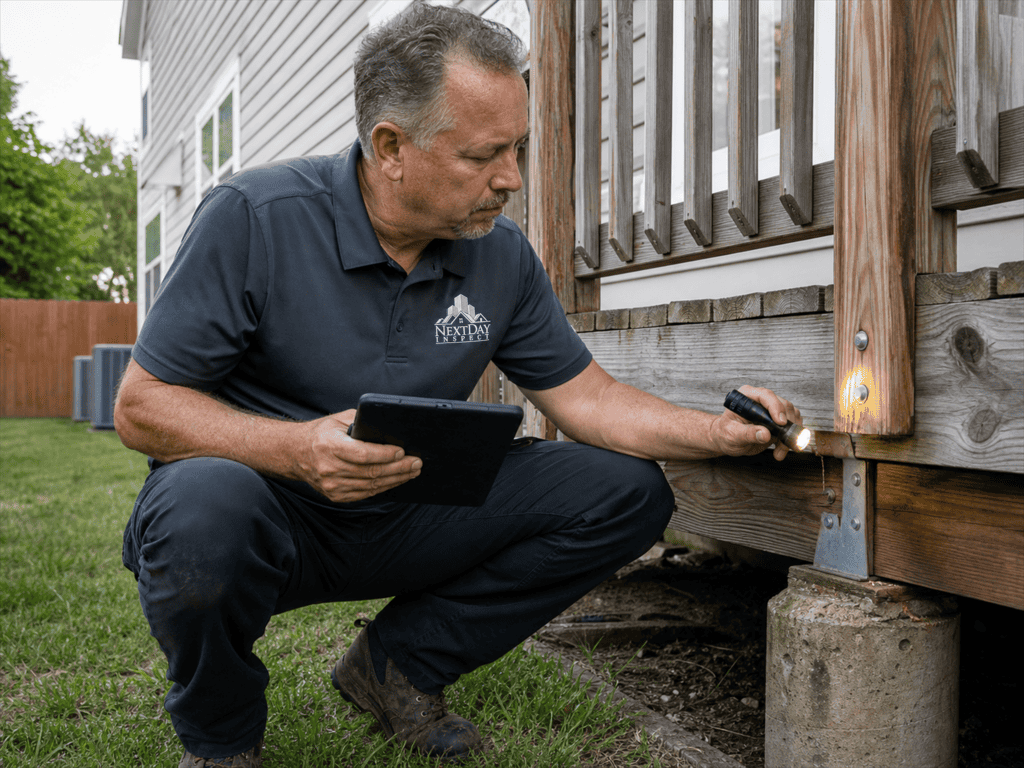
Roof, siding, grading, decks, the garage and the grounds first. The inspector photographs what they find as they go, so the report shows you exactly where each item is.
Systems and accessible spaces
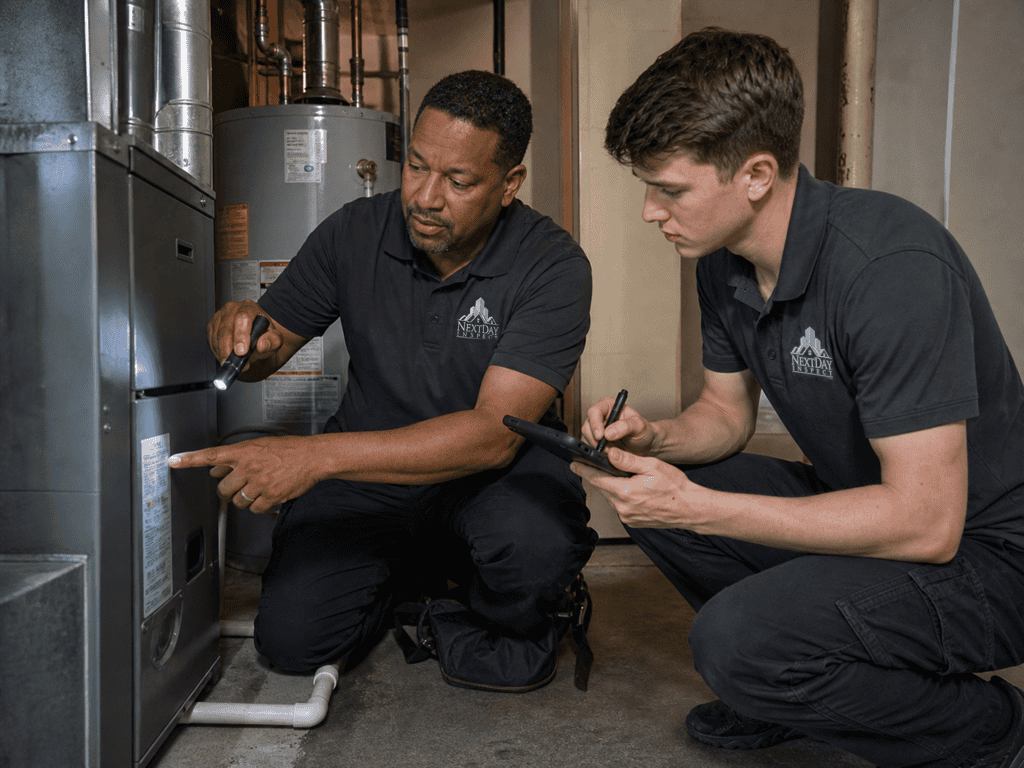
The inspector checks accessible electrical, plumbing, heating and cooling components and operates equipment with normal controls when conditions allow. The report identifies areas that could not be inspected and any recommended follow-up.

The walkthrough and the report
You see the main findings in the house itself. The written report follows online with photos, priorities and what to do about each item.
Manassas Park, one era of growth
Manassas Park traces to a 1955 subdivision, one of the earliest in Prince William County, and reached independent city status in 1975 after annexing about 600 acres. Because so much of the city went up within a short span, most homes share a similar age of framing and finishes, so the inspection leans on foundation type and unit layout more than on any single defining construction era.
Townhomes near the rail station
Bloom's Crossing sits close to the Virginia Railway Express station and mixes single-family houses with townhouses built around the same years. The inspection reads the foundation type present, whether slab, crawlspace or basement, checks grading near any walking trail or retention area bordering the lot, and traces downspouts to their actual discharge point. Electrical panels, plumbing fixtures and the heating and cooling system get checked on their normal controls the same way as anywhere else, regardless of how close the lot sits to the tracks.
The City's own history places its start at a 1955 subdivision, among the earliest in Prince William County at the time, followed by incorporation as an independent city in 1975 after annexing roughly 600 acres.
Shared walls, slab utility closets
Manassas Park Village holds established townhomes and single-family houses that have often been updated at least once, while Belmont Station's newer townhomes commonly place the water heater and laundry connections in an interior slab closet with no floor drain beneath them. The inspection checks those utility connections and the equipment's condition, reads any shared structural wall from your own side for cracking, and follows an updated basement or crawlspace to see how it was finished. The same walkthrough applies whether the unit backs to a common area or another townhome.
The City of Manassas Park runs its own Development, Zoning, and Code Enforcement Services department, which issues building permits and performs inspections independently of Prince William County, the county that surrounds the city on every side.
Home inspections around Manassas Park
Manassas Park sits in City of Manassas Park, and the same inspectors cover the whole county. Every place below has its own page.
Home inspections by city
Virginia
Maryland
Washington DC
Manassas Park home inspection, city hall to townhome
What Manassas Park buyers ask about the city's own permits and its townhomes.
Does the City of Manassas Park have its own permit office, separate from Prince William County?
Yes. The city runs its own Development, Zoning, and Code Enforcement Services department, which issues building permits and performs inspections on its own, even though Prince William County surrounds the city on every side. A permit history search for a Manassas Park address should start with the city rather than the county, which matters if you are researching an addition or a finished basement before making an offer.
What should we mention about a Bloom's Crossing home near the VRE station?
Your foundation type first: slab, crawlspace or basement, since that decides where the inspector starts. If the lot borders a walking trail or a retention area, mention it, since grading near shared green space can change how water moves toward or away from the foundation. Proximity to the rail station itself does not change the inspection; the same systems get checked regardless of how close the tracks sit.
Our Belmont Station townhome keeps the water heater in a hallway closet. Is that a problem?
Not by itself. Many newer townhomes here place the water heater and laundry connections in an interior slab closet, and the inspector checks that equipment, its connections and its age the same way as a water heater anywhere else. What is worth noting is whether a floor drain exists beneath it, since a slab closet without one has nowhere for an overflow to go if the equipment ever fails.
Since most of Manassas Park went up around the same years, is there anything the inspection skips?
No, the full walkthrough still applies: roof, exterior, foundation, electrical panel, plumbing, heating and cooling, attic insulation and interior. What a similar construction era does change is the value of comparing notes with a neighbor, since a roof or plumbing issue that shows up on one unit sometimes points to something shared across several homes built in the same stretch of years.
We suspect a shared wall issue in Belmont Station. Can the inspection tell us whose side it started on?
Not definitively. The inspector documents your side of the party wall, including where staining or damage appears and how far it extends, but confirming an origin on the neighboring side usually needs that owner's cooperation or their own repair records. Identify which side of the wall shows the concern when you book, and mention any recent work you already know about next door.
Explore Our Inspection Reports
- HD Photography
- Commentary & Recommendations
- Grading Scale
- Repair, Safety & Maintenance