Insurers often ask for a four-point report on an older home. We evaluate the roof, electrical, plumbing and HVAC, then document the age and condition of each one in a report you can hand to your carrier.
Or call (703) 450-6398 and we will book it for you.
A four-point inspection is a focused assessment of the systems that matter most to insurers and to buyers. Each one is assessed independently, against its own requirements for age, condition and material type, and what we find is documented system by system.
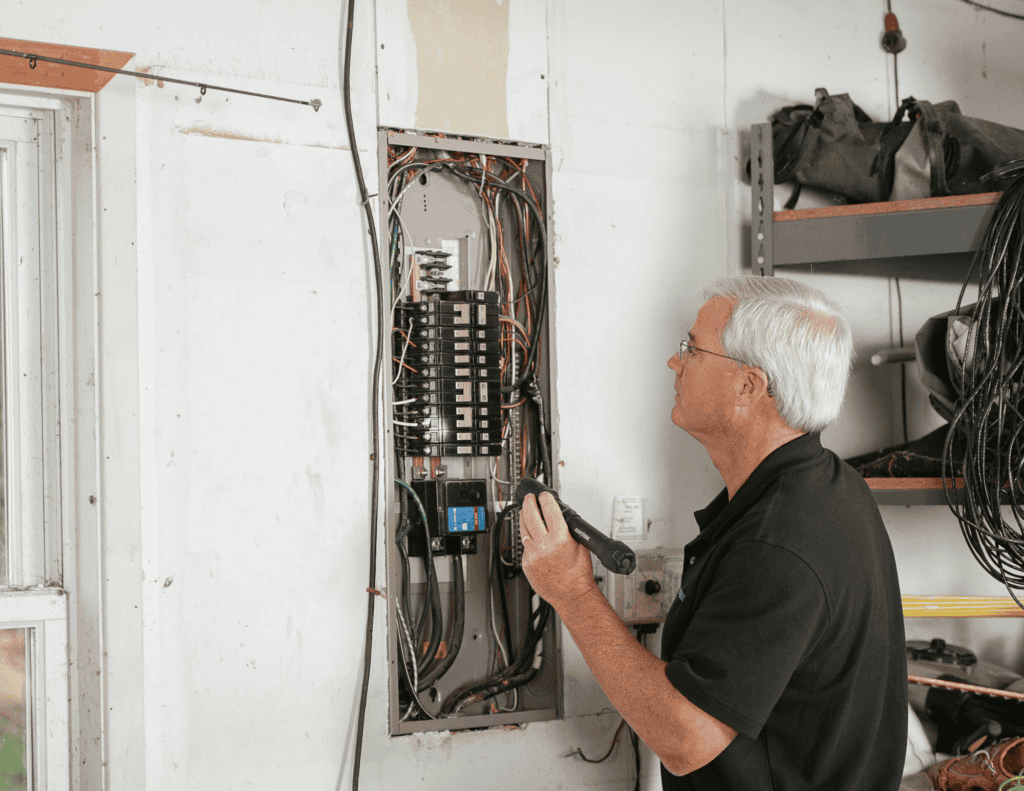
The inspector checks the age and the condition of the electrical panel, evaluating wiring type, breaker condition, grounding and overall panel capacity.
The inspector checks the age and the condition of the water heater, whether it is a tank or a tankless unit, along with the lines and the venting that serve it.
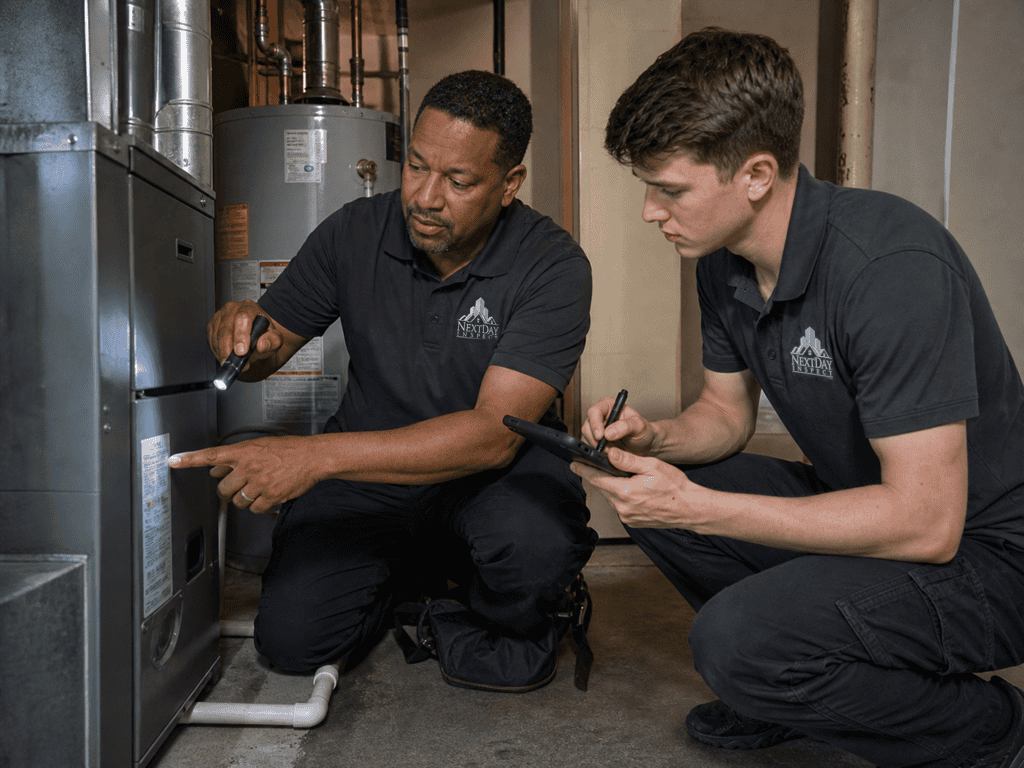
The inspector checks the age and the condition of the HVAC system, assessing both the heating and the cooling side of it on their normal controls.
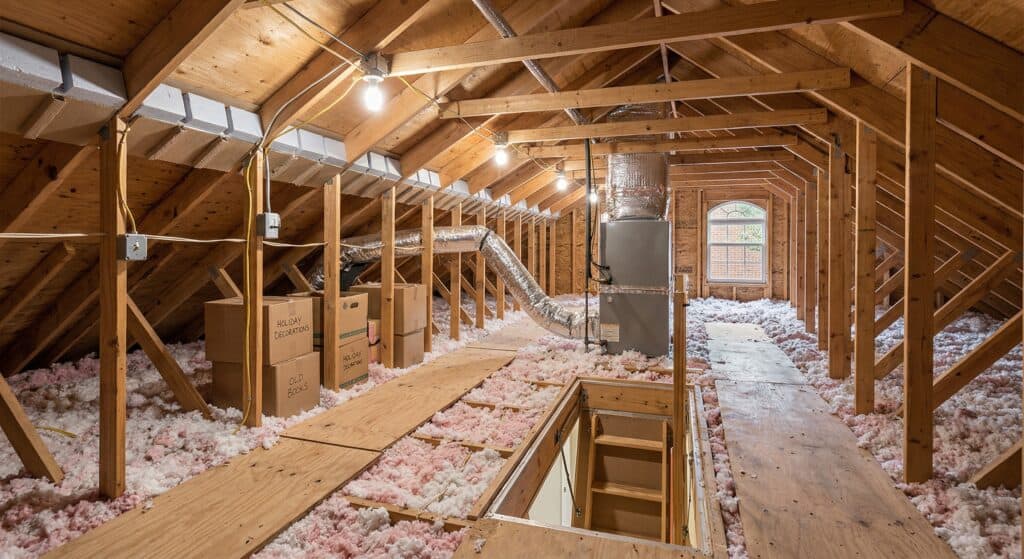
The inspector checks the roof and the foundation from the exterior, then goes inside: we access the attic and the basement to evaluate what holds the house up.
This is not a full home inspection. If you want the whole property evaluated, roof to foundation, that is a residential home inspection. Some limitations apply to a four-point inspection; call the office for the details.
Carriers often require a four-point inspection on older homes, whose components are more likely to fail than those in a newer property. It is also a quick way to see what the major systems are worth before you commit to a house.

Carriers generally ask for a four-point inspection once a property reaches 25 years, to see the current condition of the major systems rather than assume it from the build date.
A four-point report is commonly what an insurance company wants in hand before it writes a homeowners policy, and again when it decides whether to keep one in force.
A four-point inspection can also be ordered before an offer goes in. It identifies the condition of the major components while you still have room to move, so you negotiate on what the report says rather than on what the listing says.
Before you schedule, check with your insurance company whether anything specific is needed in the report. Requirements vary by carrier and by policy type, and it is easier to cover it on the same visit than to send an inspector back.
Three steps from the first call to the report your carrier is waiting on, and no time limit on questions once you have it.
Step 1
Call our office or book online, whichever you prefer. Give us the property address and a few details about the home, and if your carrier asked for something specific, tell us then. We will confirm the appointment and assign your inspector.
Step 2
Your assigned inspector works through the electrical panel, the water heater, the HVAC equipment and the roof, attic and foundation in detail, recording the age and condition of each as they go. The visit is shorter than a full home inspection, because the scope is these systems rather than the whole property.
Step 3
The written report is delivered by email, with every defect found at the time of the inspection documented, and recommendations for the repairs or maintenance needed where they apply. Forward it to your carrier or your agent as it is; you can see the format first in our sample reports. If anything in it needs explaining, reach out at any point afterward. There is no cutoff.
Our inspectors are licensed, insured and continuously trained, and every one is backed by general liability and errors and omissions insurance. These are the credentials that stand behind a four-point report; the full roster of certifications, awards and association memberships is a click away.
See every credential we hold: inspector certifications and accreditations, awards and association memberships.

What a four-point inspection covers, why your carrier wants one and what you get at the end of it, in plain language.
A focused evaluation of the four systems an insurance underwriter looks at hardest: the electrical panel, the plumbing and water heater, the HVAC equipment, and the roof and structure. Each one is assessed against its own requirements for age, condition and material type, and the report documents what we found in each.
Carriers often require a four-point inspection on older homes, because their components are more likely to fail than those in a newer property. It is commonly what an insurance company wants in hand before it writes a homeowners policy, and again when it decides whether to keep one in force.
Carriers generally ask for a four-point inspection once a property reaches 25 years, though that is their practice rather than a rule, and it varies. Your carrier is the one to confirm it with.
No. A four-point inspection is a focused assessment of four systems; a residential home inspection evaluates the whole property, roof to foundation, against the InterNACHI Standards of Practice. The four-point visit is shorter for that reason. If you want the whole house looked at, book the home inspection.
The electrical panel, including wiring type, breaker condition, grounding and panel capacity. The water heater, its relief valve, supply lines and venting. The HVAC equipment on both the heating and the cooling side, its ductwork and thermostat, and whether it runs on a refrigerant that may no longer be serviceable. The roof and foundation from outside, then the attic and basement from inside for framing, insulation, ventilation, settlement and moisture.
It is shorter than a full home inspection, because the scope is these systems rather than the whole property. We do not quote one number for every house, since it depends on the size, age and type of the home. Our office can estimate it for your property when you book.
The written report is delivered by email in 24 to 48 hours. Every defect found at the time of the inspection is documented in it, with recommendations for the repairs or maintenance needed where they apply, and you can forward it to your carrier or your agent as it is. You can see the format first in our sample reports.
No. It is not a pass or fail test. The report documents the condition of the four systems on the day of the inspection; what your insurance company does with that is their decision, and what needs repair or replacement is yours.
Requirements vary by carrier and by policy type, so check with your insurance company before you schedule whether anything specific is needed in the report, and tell us when you book. It is easier to cover it on the same visit than to send an inspector back.
It depends on the property. Request a free quote and we will price it for your home, or call the office on (703) 450-6398. You can also build the appointment in our online scheduler.
Still have a question? Call (703) 450-6398 or see our full FAQ.