-
Our Services
-
Environmental Services
-
Team
-
Resources
- Service Area
Next Day Inspect © 2026
 Skip to content

Air and swab samples collected on site by a NAMRI-certified technician, then analyzed by an accredited laboratory. Enter the address and property type, and finish booking on the next screen.
No jargon, no surprises. Here is the whole thing, start to finish, so you know what you are buying before you book it.
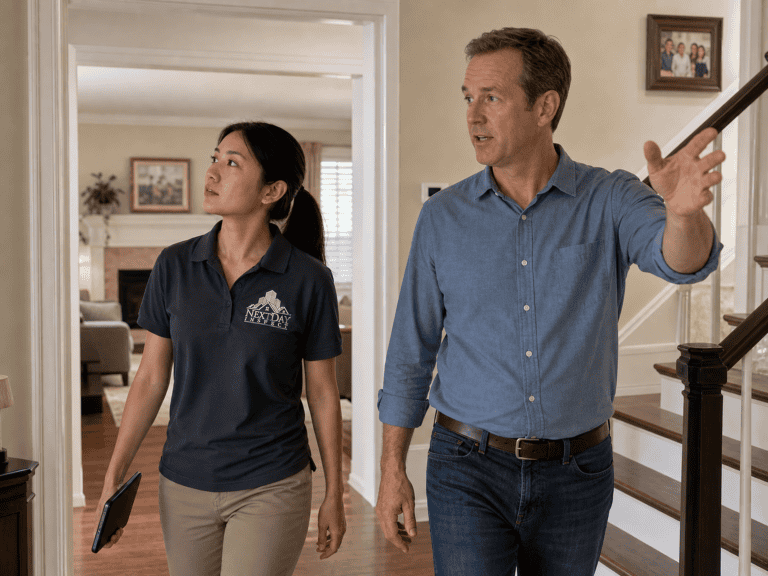
A musty smell, a stain that came back, a leak last winter. You point at what is bothering you and we start there.
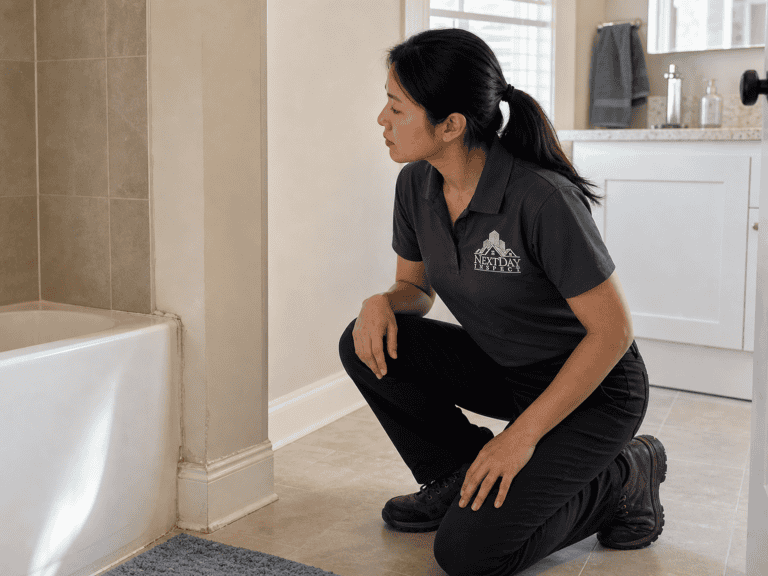
The technician examines the area you are worried about and works out where a sample will tell you the most. Placement is what decides whether a result means anything.
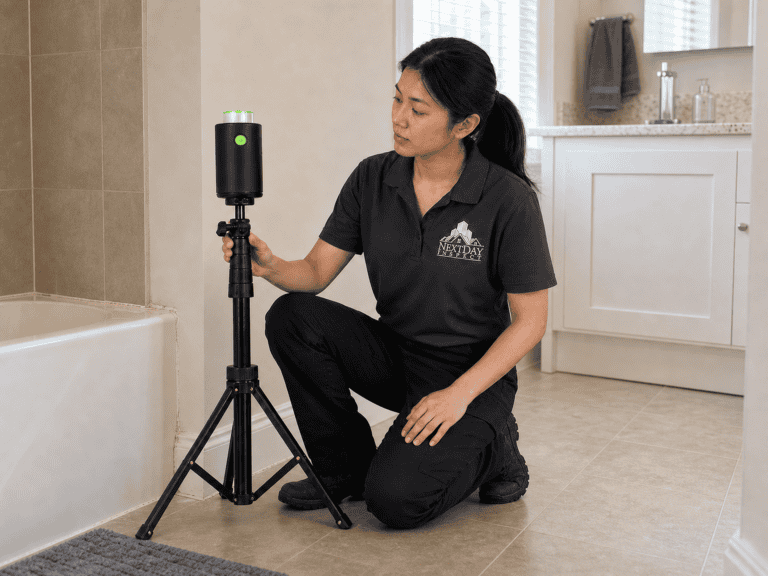
We collect from the areas that need it, plus one sample from outside. That outdoor sample is what makes your result readable, so it is always included.
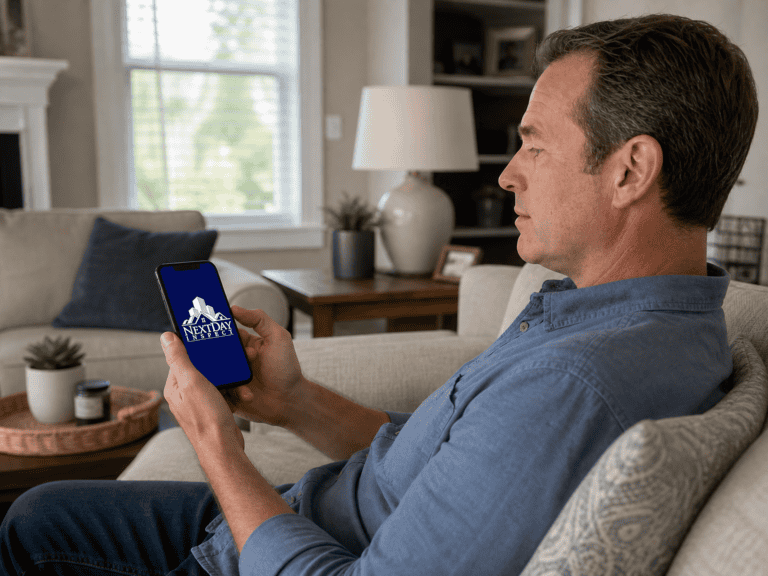
The written report comes to you with the full laboratory results in it. We do not add an interpretation or a recommendation. If you would rather have the findings condensed into a short summary, we can prepare one for an additional fee.
NextDay Inspect does no mold remediation, so there is no version of your results that pays us better than another. We will not quote you for removal, and we will not hand you to a contractor who pays us for the introduction.
The company reading your results should not be the one selling the repair.
If work does turn out to be needed, you take the report to whoever you choose. Bring us back afterwards and we will re-test independently, which is the one job the company that did the removal cannot honestly do for itself.
Our technicians work out of the DMV. Virginia and Maryland share the same pricing; the District runs separately, so it is shown on its own.
Virginia
From $345Mold Basic, one targeted area
Counties we cover
Maryland
From $345Mold Basic, one targeted area
Counties we cover
Washington DC
From $425Mold Basic, one targeted area
Coverage
The whole city, river to river.
Every neighborhood in the District, from Georgetown to Anacostia. See our Washington DC page
The questions people actually ask us, answered without the hedging.
In Virginia and Maryland, testing one targeted area starts at $345, which covers an indoor sample, the outdoor comparison sample and the laboratory analysis. Adding a moisture and thermal evaluation of that area is $495. Whole home coverage starts at $550 and is priced by the size of the house. In Washington DC, Mold Basic is $425, Mold Plus is $575, and Mold Advanced starts at $630, with $80 added to every home-size tier.
If you are not sure testing is needed at all, $175 buys half an hour with an environmental technician who will tell you, and each additional half hour is $95. If you decide during that visit that you do want testing, the job is written up as a Mold Plus, since the moisture meter and the thermal camera are already out.
Looking tells you mold is there. It does not tell you how much of it there is, what kind it is, or whether it has spread past the patch you can see, and those are the answers that decide how big the job turns out to be.
So even when you have already decided to have it removed, testing first is worth it. It gives you a measured starting point, which is the only way to show afterwards that the problem was actually dealt with rather than that the visible patch is gone. Mold spores are in every building. The question is never whether you have any, it is whether you have more than you should, and that is only answerable by comparing indoors against outdoors on the same day.
Because the comparison is the result. A single indoor spore count on its own cannot be read. Two hundred spores of a given type might be unremarkable on a damp spring morning and a genuine finding in midwinter, and the only way to know which is to sample the outdoor air the same day.
That is why we never sell the outdoor sample as an extra. A report without it is a number nobody can interpret, including us.
A trained environmental technician from our own team, not a subcontractor. They carry NAMRI certification, they do this work full time, and the person who takes your samples is the person who was in your house, not a name on a form. Collecting a sample well is the part that decides whether the laboratory result is worth anything, because a sample taken in the wrong place answers the wrong question.
No, and that is deliberate. We earn nothing from remediation, so there is no version of your results that pays us better than another. We will not quote you for removal and we will not refer you to a contractor who pays us.
If work is needed, you take our report to whoever you choose. If you want us back afterwards to confirm the work was done, we do that as an independent re-test, which is a job the company that did the removal cannot honestly do for itself.
A Mold Walk & Talk is the half hour it says it is. Mold Basic, Mold Plus and Mold Advanced each run 1 to 2 hours on site.
Anything we measure on site you hear about during the visit itself. Samples that go to the laboratory come back in 3 to 5 business days.
The term black mold is not a species, it is a color, and several very common molds are dark. The one people usually mean is Stachybotrys, which does warrant attention, but color alone tells you nothing reliable and neither does a photograph.
The report tells you what was found, in what concentration, and how that compares to outdoors. What it cannot tell you is whether it is making you ill, because that is a question for a doctor and anybody in our industry who answers it is overstepping.
Yes. Every option that includes sampling produces a written laboratory report you can hand to a landlord, a buyer, an agent or an insurer. Because we do no remediation, that report comes from a party with nothing to gain from the outcome, which is usually the point of asking for one.