Skip to content
See what the eye can't.

Thermal imaging maps surface temperature patterns that can help investigate insulation gaps, heat loss, electrical hot spots and possible moisture. Findings depend on access and conditions at the time of the inspection.
Tell us about the property, the rooms or systems of concern, and any known leaks or comfort issues. We can confirm whether thermal imaging fits your needs, which areas can be evaluated and how the findings will be documented.
A thermal camera displays differences in surface temperature using a color palette. It does not see through walls. The colors depend on the selected palette and temperature scale; a cool-looking area is not proof of water. Suspected moisture needs confirmation with an appropriate moisture measurement or further evaluation.
When conditions are suitable, thermal imaging can highlight patterns associated with the following concerns. A pattern may need another inspection or test to establish its cause:
Thermal imaging can help identify areas that warrant a closer look during a property inspection. For a business property, review our commercial building inspections. Share the address, areas of concern, access details and preferred timing when you request a quote, so the team can confirm the appropriate inspection scope.
Four thermal-image examples, with observations and questions that may need follow-up. A temperature pattern alone does not establish the cause.
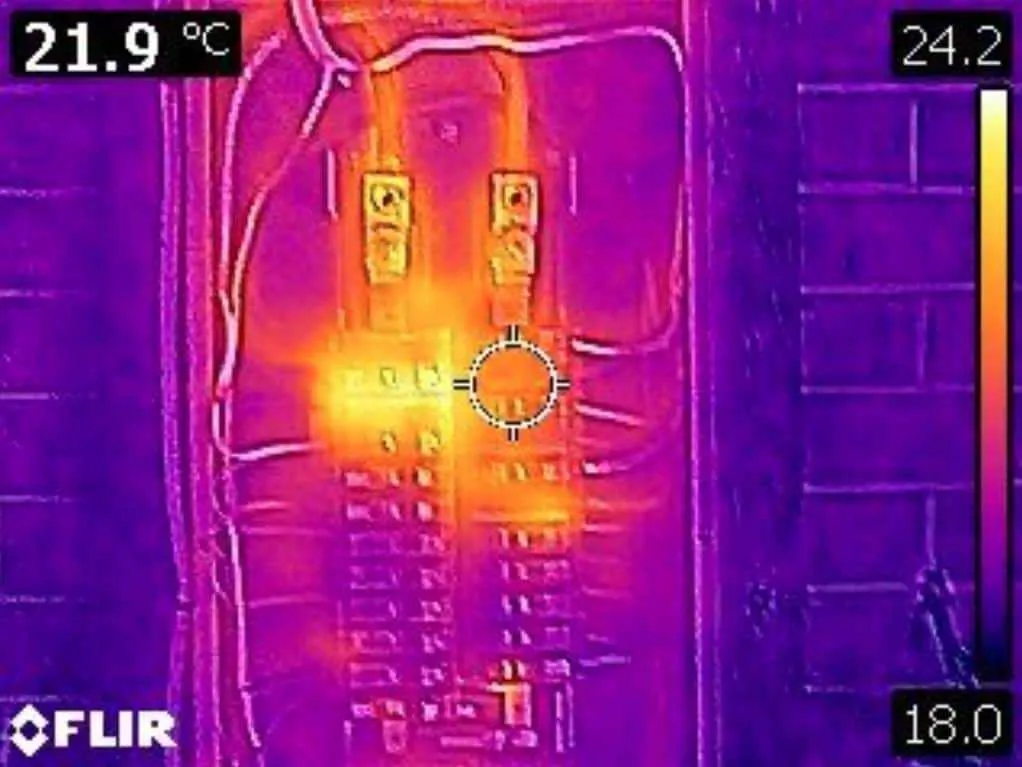
Thermal imaging can highlight unusual temperature differences at accessible electrical components while equipment is operating. An image alone does not identify the cause.
The brighter area warrants closer evaluation alongside visible conditions and equipment load. A qualified electrician can determine the cause and any needed correction.
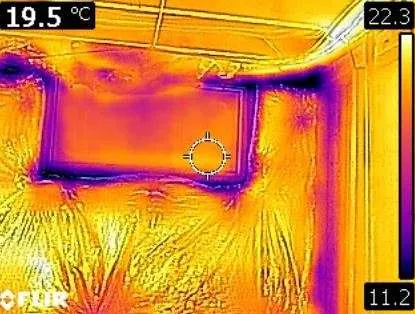
The image shows a temperature contrast around the window frame. Air leakage or insulation differences may be contributing factors, depending on the conditions during the inspection.
The inspector considers indoor and outdoor temperatures, access and visible conditions when deciding what needs follow-up. Thermal imaging alone does not quantify energy savings.
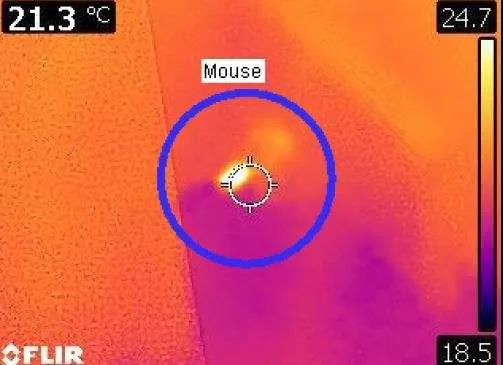
A thermal image alone cannot confirm an infestation or identify a pest species. Surface temperature differences can have several causes. For a broader review of the property, see our residential home inspection service.
The annotation marks an area to investigate; it is not evidence that the camera sees through a wall. Suspected pest activity requires a separate pest evaluation.
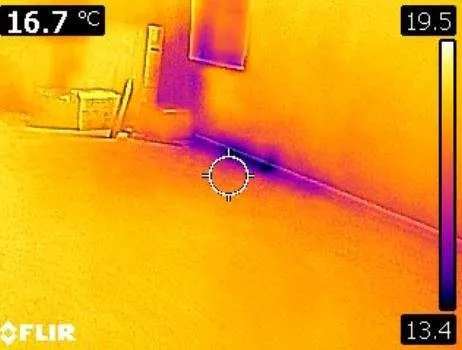
You may also have heat loss around your walls/flooring.
A temperature difference near the wall and floor can point to an area needing a closer look. Insulation and air leakage are possible explanations; the displayed color alone does not establish the cause.
See how thermal images, photographs and written observations are organized in a sample report. The scope and documentation for your appointment depend on the service selected.