

Home/Home Inspection/Pasadena, MD
Home inspection
Home Inspection in Pasadena, MD
Pasadena runs from Magothy waterfront cottages to inland streets on well and septic, and the inspector's photo report ranks what to address before you close either way.
Read client reviews Licensed and insured inspectors Serving Pasadena and all of Anne Arundel County
What we check in a Pasadena home
The inspection follows the same 12 areas, from the roof down to the grounds, within the agreed scope and safe access available. It is visual and non-invasive: finishes are not removed, and personal belongings are not moved. Select an area to see what is checked.
- Range, oven and wall oven run normally
- Dishwasher, disposer and microwave run
- Kitchen exhaust fan and the dryer vent exit
- Service entrance, meter and main disconnect
- Panels, breakers, grounding and bonding
- Sampled outlets and switches; GFCI, AFCI, smoke and CO detectors
- Siding, flashing, trim, eaves, soffits and fascia
- Every exterior door and a sample of windows
- Walkways, driveway, stoops, porches, decks and railings
- Foundation walls, slabs and the basement
- Any accessible crawlspace
- Signs of movement, water penetration and wood touching soil
- Vehicle door and opener on their normal controls
- Auto reverse and photo eye safety sensors
- Walls, ceiling, floor and the fire door into the house
- Grading and drainage at the foundation
- Retaining walls and vegetation against the house
- Downspout discharge, walkways, driveway and steps
- Heating and cooling run on their normal controls
- Energy source, method and thermostat location noted
- Visible ducts, filter, condensate drainage and equipment condition
- Floors, walls, ceilings, stairs and railings
- A sample of doors and windows opened and closed
- Accessible attic: insulation depth, ventilation and framing; fireplace and damper
- Sink, faucet, drain and disposer run
- Dishwasher connection checked for leaks
- Cabinets, drawers, counters, floors, walls, ceiling and exhaust fan
- Main water and fuel shut-offs located
- Water heater, its venting and TPR valve; pipe materials
- Every toilet flushed; every sink, tub and shower run
- Coverings, flashing, vents, skylights and chimney
- Gutters, downspouts, eaves and rake
- Roof structure from inside the attic where accessible
- Visible framing, beams, posts and joists
- Masonry walls and the chimney structure
- Settlement signs: cracks, out of square openings, unlevel floors
Every inspection follows a written standard of practice. Need additional testing? Explore radon testing, termite inspection, mold testing and water testing, then confirm your selected services and timing when booking.
Add a package to the inspection
Three packages built around the home inspection. Package prices are for the add-on services only and are added to the inspection price. The savings are against booking the same services one by one.
Home Essentials
The perfect starting point
Home Advantage
Most popular for homebuyers
Home Enhanced
The ultimate peace of mind
Warranties must be requested when you book, not after the inspection. Radon and thermal imaging can also be added on their own. Read more about each package.
What a home inspection actually involves
No jargon, no surprises. Here is the whole visit, start to finish, so you know what you are booking before you book it.

You book, we confirm
Online or by phone, in a few minutes. Your agent can book for you. Add radon, termite or a package at the same time, and we confirm the appointment with you before the visit.
The walk-around
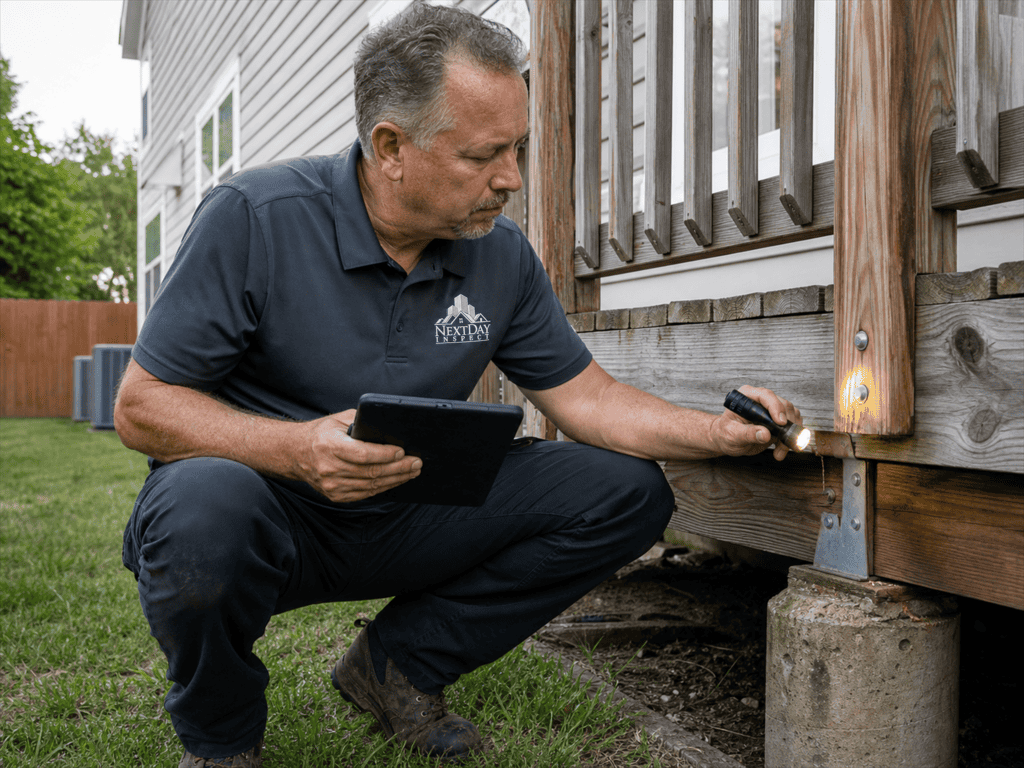
Roof, siding, grading, decks, the garage and the grounds first. The inspector photographs what they find as they go, so the report shows you exactly where each item is.

Systems and accessible spaces
The inspector checks accessible electrical, plumbing, heating and cooling components and operates equipment with normal controls when conditions allow. The report identifies areas that could not be inspected and any recommended follow-up.

The walkthrough and the report
You see the main findings in the house itself. The written report follows online with photos, priorities and what to do about each item.
Pasadena, waterfront to inland
Hancock's Resolution, the 1785 farmhouse Stephen Hancock built on a working farm, stayed in his family until the 1960s and is now a county park, apart from the beach communities that later grew along the Magothy. That range, from an eighteenth century farmhouse to a beach cottage, gives an inspector very different framing and foundations to read depending on the block.
Waterfront framing and crawlspaces
Along the Magothy, many houses sit close to a bulkhead or a dock, and the crawlspace beneath them often sits closer to the water table than a typical inland lot. The inspection reads the crawlspace clearance and any framing above it, checks the foundation walls for cracking or movement, and traces grading and downspout discharge to see whether runoff actually moves away from the house or pools beside it. An older cottage expanded for year round use gets a second look at where new framing meets the original structure.
Anne Arundel County's wet season septic testing rules flag February through April as the high water table stretch countywide, the same weeks a Magothy-front crawlspace in Pasadena is most likely to show standing moisture.
Cottages expanded for year-round living
Sunset Beach and Green Haven sit back from the immediate shoreline, and many houses here started as small seasonal cottages before an owner enclosed a porch or added a bedroom for full time living. The inspection follows that seam: where newer framing ties into the original walls, whether attic insulation and ventilation were added when the house was converted, and how the windows and exterior doors installed during an addition compare to the originals. Grading around a house built up in stages gets checked the same way as any other lot, since drainage does not care how old a wall is.
Historic Hancock's Resolution, run by Anne Arundel County as a park, preserves the 1785 farmhouse Stephen Hancock built on a working farm, a benchmark for how differently an original structure and a modern addition can be framed.
Home inspections around Pasadena
Pasadena sits in Anne Arundel County, and the same inspectors cover the whole county. Every place below has its own page.
Pasadena home inspection, the practical answers
The questions Pasadena buyers ask most about waterfront homes and inland wells.
Pasadena is not a town. Who keeps its building and permit records?
Pasadena is an unincorporated community, so Anne Arundel County keeps its permit and zoning history rather than a separate town hall. The county's Land Use Navigator lets you search permits and licensing by address before you book, which is useful for a waterfront addition or an older cottage that has been expanded more than once. The inspection itself does not change based on jurisdiction; the same inspectors and scope apply whether the address reads Pasadena, Glen Burnie or Annapolis.
How does the inspection handle a house built right up to a bulkhead on the Magothy?
The inspector checks the crawlspace or lowest floor for clearance above the water table, looks at the foundation for cracking or past water penetration, and traces grading and downspouts to see where rainwater actually goes. A dock, bulkhead or seawall itself is a separate structure outside the scope of a home inspection, but any water reaching the house through that connection shows up in the same report as any other drainage finding.
My Pasadena house is inland on a private well. Does the inspection test the water?
No. A home inspection does not test well water or evaluate a septic system anywhere we work, waterfront or inland. The inspector notes what is visible, such as a wellhead or a septic cleanout near the house, and photographs it for the report. Confirm well and septic requirements for the sale with Anne Arundel County or your agent, and ask separately about water testing if you want a result before you close.
The cottage was expanded years ago into a full time home. Does that change the inspection?
It changes what the inspector looks for, not the walkthrough itself. Point out which part is the original cottage and which is the addition, since the seam between them, where new framing meets old, insulation was added, or a window was reset, is where problems are easiest to spot. The same roof, electrical panel, plumbing and heating systems get checked whether the house is one era or three stitched together.
Should we walk the whole inspection or just show up at the end?
Either works. Attending the whole visit lets you see a crawlspace or an attic firsthand rather than only reading about it later, which helps more on an older Magothy cottage carrying several additions than on a newer build. Short on time. Join for the final walkthrough instead, when the inspector points out the priorities in person, and bring your agent along either way.
Explore Our Inspection Reports
- HD Photography
- Commentary & Recommendations
- Grading Scale
- Repair, Safety & Maintenance