

Home/Home Inspection/Fairfax County, VA
Home inspection
Home Inspection in Fairfax County, VA
For a Fairfax County home inspection, identify additions, shared components, and lower-level access so the visit fits your house or unit. A photo report helps you plan your next steps.
★★★★★4.9 rating, over 4,000 reviews Licensed and insured inspectors Serving all of Fairfax County
What our customers say
From our customer reviews.
They were available as a last minute request and did a thorough and extremely efficient job for my home inspection.
His knowledge and expertise gave me great confidence in understanding the condition of the home.
That level of responsiveness and professionalism truly helped keep the transaction moving smoothly and allowed me to meet critical deadlines on time.
Great service, very thorough inspection and highlighted items in a very approachable and organized manner.
Where we inspect in Fairfax County
Fairfax County runs in rings, from the streets inside the Beltway to the Dulles corridor and the county's rural southern edge. The same licensed inspectors book across every community listed below.
Inside and near the Beltway
- Annandale
Ramblers with rear additions on wooded lots, and apartment blocks along Little River Turnpike.
- Falls Church
The Little City's small lots, plus condominiums close to the two Metro stations.
- McLean
Established colonials, teardown rebuilds and finished lower levels on large lots.
- Tysons
High-rise condominiums beside older single-family streets such as Pimmit Hills.
- Vienna
Ranches and split-levels under heavy tree cover, with newer infill toward Tysons.
North county and the Dulles corridor
- Reston
Lakeside clusters, townhouse courts and the towers around the Town Center.
- Herndon
A historic downtown core ringed by planned townhouse and single-family neighborhoods.
- Great Falls
Custom homes on wooded acreage, many of them on private wells and septic systems.
- Oakton
Large wooded lots, converted older structures and townhouse sections along Route 123.
- Chantilly
Planned communities near Dulles, from Franklin Farm to the newer streets by Route 28.
Central county
- Fairfax
The City of Fairfax's older streets and the county neighborhoods that share its mailing address.
- Fair Oaks
Townhouses and condominiums around the mall, with golf-course homes in Penderbrook.
- Centreville
Large planned subdivisions around the historic village, built tight and well insulated.
South county
- Burke
Burke Centre's cluster homes and the lakeside neighborhoods around Lake Braddock.
- Springfield
Block-foundation houses in the original sections and later streets around West Springfield.
- Fairfax Station
Estate lots on well and septic, with stream valleys and detached outbuildings.
- Lorton
New construction around Laurel Hill and Lorton Station, and tidal frontage at Mason Neck.
Fairfax City and Falls Church are independent cities inside the county's footprint, and the same team, packages and prices reach both.
Add a package to the inspection
Three packages built around the home inspection. Package prices are for the add-on services only and are added to the inspection price. The savings are against booking the same services one by one.
Home Essentials
The perfect starting point
Home Advantage
Most popular for homebuyers
Home Enhanced
The ultimate peace of mind
Warranties must be requested when you book, not after the inspection. Radon and thermal imaging can also be added on their own. Read more about each package.
What a home inspection actually involves
No jargon, no surprises. Here is the whole visit, start to finish, so you know what you are booking before you book it.

01
You book, we confirm
Online or by phone, in a few minutes. Your agent can book for you. Add radon, termite or a package at the same time, and we confirm the appointment with you before the visit.
02
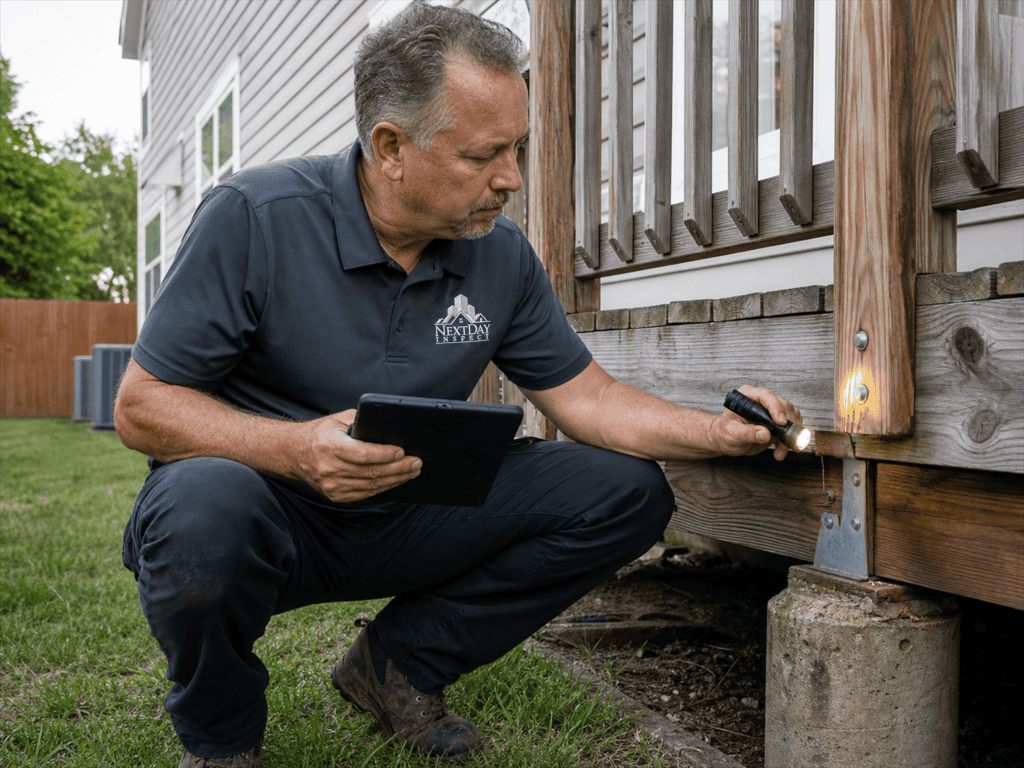
The walk-around
Roof, siding, grading, decks, the garage and the grounds first. The inspector photographs what they find as they go, so the report shows you exactly where each item is.
03
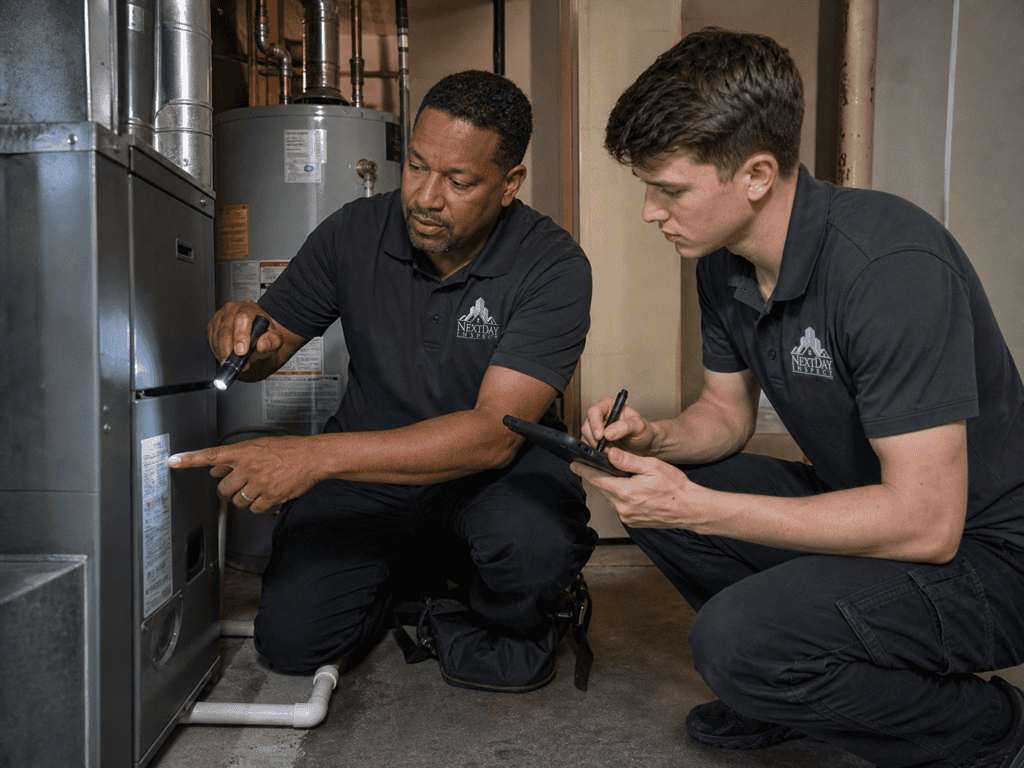
Systems and accessible spaces
The inspector checks accessible electrical, plumbing, heating and cooling components and operates equipment with normal controls when conditions allow. The report identifies areas that could not be inspected and any recommended follow-up.

04
The walkthrough and the report
You see the main findings in the house itself. The written report follows online with photos, priorities and what to do about each item.
Fairfax County home inspections: planning the visit
The inspection of a Fairfax County property follows its accessible systems and visible condition. Describe the home's layout, known changes, and your concerns when booking. The local examples below explain what information helps the inspector and where additional access or a separate scope may be needed.

Foundation access and known repairs
For a house with a basement or crawlspace, show the inspector any recurring water entry, cracking, or previous repairs. The inspection reviews visible foundation surfaces, accessible framing, grading, and downspout discharge. Finished walls and stored belongings can limit what is visible; tell the office about access restrictions before the visit.
Locate all lower-space entrances and share the history of drainage or foundation repairs.

Townhouses and shared components
For a townhouse or condominium, confirm the components included with the property and who maintains the exterior. Arrange access to the electrical panel, heating and cooling equipment, attic, and lower spaces included in the appointment. The report describes observed conditions and any shared or inaccessible components needing follow-up.
Provide association maintenance information and keys for included equipment spaces.
Home inspections around Fairfax County
Fairfax County is one of 10 Virginia counties we cover, and the same inspectors work all of them. Every county below has its own page.
Home inspections by county
Virginia
Maryland
Washington DC
Home inspection questions in Fairfax County
Answers to practical questions before your Fairfax County home inspection.
What does a home inspection in Fairfax County cover?
The agreed visual scope covers safely accessible structure, roof, exterior, electrical, plumbing, heating and cooling, interior, attic, and site drainage. The report describes observed conditions and areas that could not be inspected. Confirm the scope for a condominium, multiple units, or detached structures when booking.
What should I share about additions or earlier repairs?
Give the approximate dates, affected rooms, and any recurring symptoms. Available invoices or construction photos can help explain visible findings. Finished walls and ceilings conceal parts of the building, so the inspection cannot certify hidden workmanship.
How are shared or inaccessible components handled?
Confirm property boundaries and maintenance responsibilities before booking. The inspector reports on the agreed accessible components and records limitations. Another unit, common building equipment, or a detached structure needs specific scope and access arrangements.
Can I join the walkthrough and ask about the findings?
Yes. You can attend the visit or join the final walkthrough. Coordinate the timing and any building-entry requirements with the office. The written photo report documents findings and recommended next steps for you to review afterward.
How should I prepare for a Fairfax County home inspection?
Identify attic, crawlspace or basement entrances, electrical panels, and mechanical equipment. Share known repairs and arrange keys or management access for all included spaces. Tell the office about additional units or detached structures before the visit.
Explore Our Inspection Reports
- HD Photography
- Commentary & Recommendations
- Grading Scale
- Repair, Safety & Maintenance