
Home/Home Inspection/Culpeper County, VA
Home inspection
Home Inspection in Culpeper County, VA
From brick storefronts above the Rappahannock to farms on well water, a Virginia licensed inspector's photo report says what needs attention before you close.
Read client reviews Licensed and insured inspectors Serving all of Culpeper County
Where we inspect in Culpeper County
Culpeper County grew up around its Rappahannock River crossing, and a house's age here still tracks its distance from that original town center. The same licensed inspectors book across every community listed below.
- Culpeper
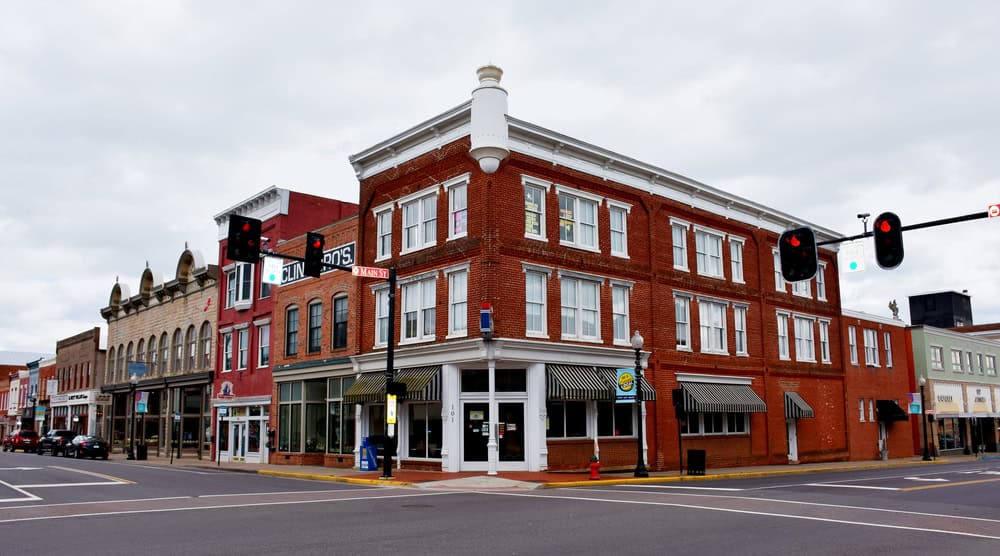
Culpeper's brick Main Street sits above the Rappahannock's floodplain, with newer subdivisions spreading into the surrounding farmland.
Add a package to the inspection
Three packages built around the home inspection. Package prices are for the add-on services only and are added to the inspection price. The savings are against booking the same services one by one.
Home Essentials
The perfect starting point
Home Advantage
Most popular for homebuyers
Home Enhanced
The ultimate peace of mind
Warranties must be requested when you book, not after the inspection. Radon and thermal imaging can also be added on their own. Read more about each package.
What a home inspection actually involves
No jargon, no surprises. Here is the whole visit, start to finish, so you know what you are booking before you book it.

You book, we confirm
Online or by phone, in a few minutes. Your agent can book for you. Add radon, termite or a package at the same time, and we confirm the appointment with you before the visit.
The walk-around
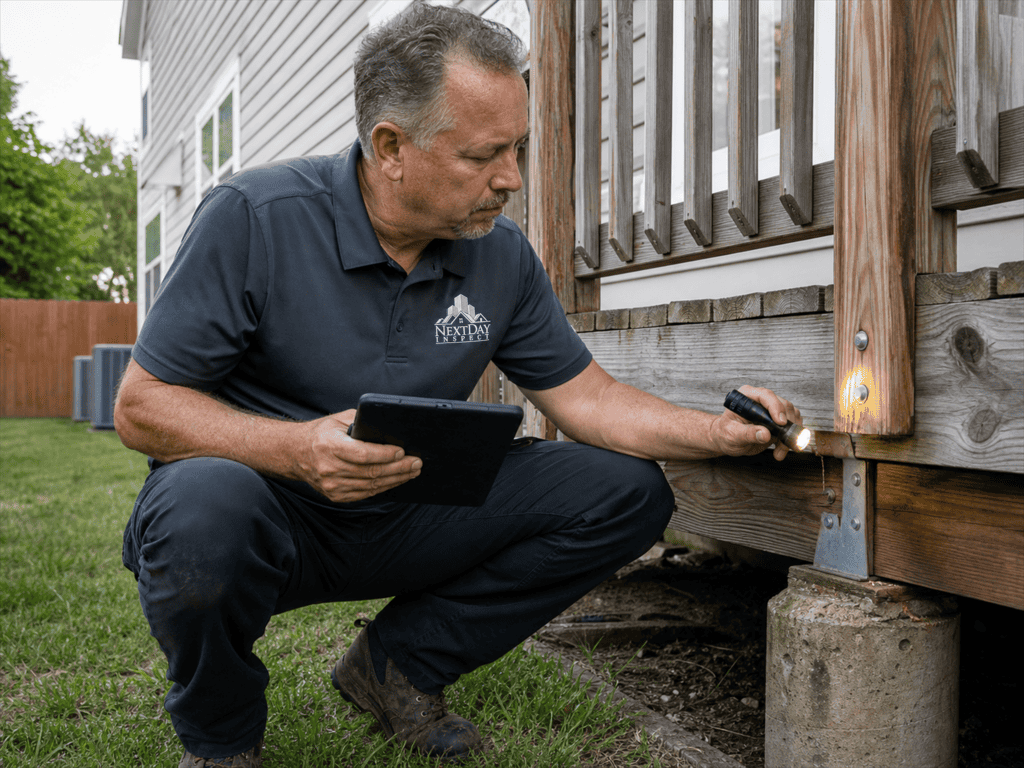
Roof, siding, grading, decks, the garage and the grounds first. The inspector photographs what they find as they go, so the report shows you exactly where each item is.
Systems and accessible spaces
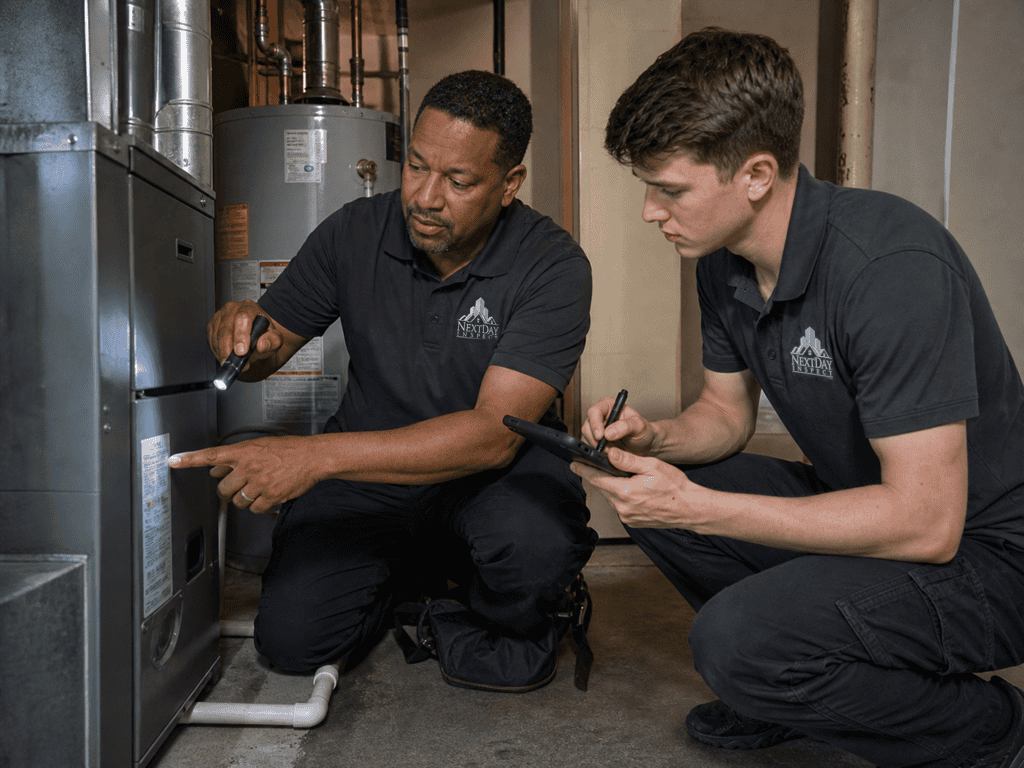
The inspector checks accessible electrical, plumbing, heating and cooling components and operates equipment with normal controls when conditions allow. The report identifies areas that could not be inspected and any recommended follow-up.

The walkthrough and the report
You see the main findings in the house itself. The written report follows online with photos, priorities and what to do about each item.
Culpeper, river town to farmland
Culpeper County grew up around its Rappahannock River crossing, where the brick storefronts and courthouse of the town anchor the county's oldest section. Farms and crossroads communities filled the Piedmont for more than a century before newer subdivisions added streets close to town. A house's age tracks that distance from the river crossing, and so does whether it sits on a well and septic system or on the town's utilities.
Building on expansive clay
Culpeper County's own building department flags expansive clay soils across many parts of the county, ground with a low suitability for basements and foundations unless the design accounts for it. The inspection reads foundation walls for cracking and the crawlspace for a working vapor barrier, checks grading and surface drainage around the house, and looks at how backfill was placed against the foundation where that is visible. Streets closest to the river and its tributaries get an added look at the crawlspace for standing water after recent rain.
Culpeper County's Building Department warns that expansive clay soils exist in many areas of the county and requires extra design for foundation walls, backfill and drainage under Section 1803 of the state construction code.
Wells set into basin rock
Outside the town of Culpeper's own water system, most houses in the county draw from wells drilled into the sedimentary rock of the Culpeper Basin, water a federal survey has studied for its mineral content. The inspection runs the water heater and checks its venting and pressure relief valve, opens fixtures to look for staining or scale at faucets and drains, and flushes every toilet and runs every sink, tub and shower to check for functional drainage. None of that is a water quality test; it is simply what the plumbing looks like on the day of the visit.
Culpeper County's Building Department posts monthly building permit reports going back to 2015, a straightforward way to see what has been permitted in a neighborhood before you buy.
Home inspections around Culpeper County
Culpeper County is one of 10 Virginia counties we cover, and the same inspectors work all of them. Every county below has its own page.
Home inspections by county
Virginia
Maryland
Washington DC
What Culpeper County buyers want to know
What Culpeper County buyers ask, from the historic district to the farms.
My address says Culpeper. Am I in the town or the county?
Both share the same name, which is exactly what causes the confusion: the town of Culpeper sits inside the county, and plenty of rural addresses use the same postal name without being inside town limits. The full street address, not the town name on your mail, is what determines the correct jurisdiction on the report. Either way, the same inspectors, packages and pricing apply.
Is there a public record of building permits in Culpeper County?
Yes. The Building Department posts monthly permit reports online, covering every year back to 2015, so you can see what has been permitted at or near a property before you buy. For a specific address rather than a monthly list, the department's staff can look up individual permit history by phone or in person at their North Main Street office.
Is a rural Culpeper County property likely to be on well and septic?
Outside the town of Culpeper's own water system, yes, most of the county runs on private wells and septic fields. A home inspection does not test either one; both fall outside its scope. The inspector notes what is visible near a wellhead, pressure tank or septic cleanout and photographs it for the report, and we recommend confirming the well and septic requirements for the sale with the county health department. Water testing can be added to the visit as a separate service.
Does a farmhouse cellar or a second dwelling on the property get inspected too?
Only if it is added to the scope beforehand. A standard inspection covers the main dwelling and an attached or built-in garage; a second house, a tenant cottage or a cellar accessed from outside the main structure is treated as a separate item. Tell us about any additional structure, past renovation, or working outbuilding when you book, so the visit can be scoped and timed correctly before the inspector arrives.
What is the radon potential in Culpeper County?
The EPA's zone map places Culpeper County in Zone 2, moderate potential, predicting average indoor screening levels between two and four picocuries per liter. Culpeper sits on Piedmont ground that can still produce elevated readings house to house, so the zone is a starting point rather than a substitute for testing. Radon testing runs as its own add-on alongside the inspection and comes back with a number specific to the house.
Explore Our Inspection Reports
- HD Photography
- Commentary & Recommendations
- Grading Scale
- Repair, Safety & Maintenance