

Home/Home Inspection/Falls Church, VA
Home inspection
In under three square miles, a Falls Church inspector walks a colonial-era house or a Metro-adjacent condo the same way, then writes up exactly what needs your attention.
4.9 rating, over 4,000 reviews Licensed and insured inspectors Serving the City of Falls Church
Every inspection covers the same 12 areas, from the roof down to the grounds, and the report is organized the same way. It is visual and non-invasive: nothing is opened up, and nothing you own is moved. Tap any area to see what is checked.
Every inspection follows a written standard of practice. Radon, termite, mold and water testing can be added to the same visit.
Three packages built around the home inspection. Package prices are for the add-on services only and are added to the inspection price. The savings are against booking the same services one by one.
The perfect starting point
Most popular for homebuyers
The ultimate peace of mind
Warranties must be requested when you book, not after the inspection. Radon and thermal imaging can also be added on their own. Read more about each package.
No jargon, no surprises. Here is the whole visit, start to finish, so you know what you are booking before you book it.

Online or by phone, in a few minutes. Your agent can book for you. Add radon, termite or a package at the same time, and we confirm the appointment with you before the visit.
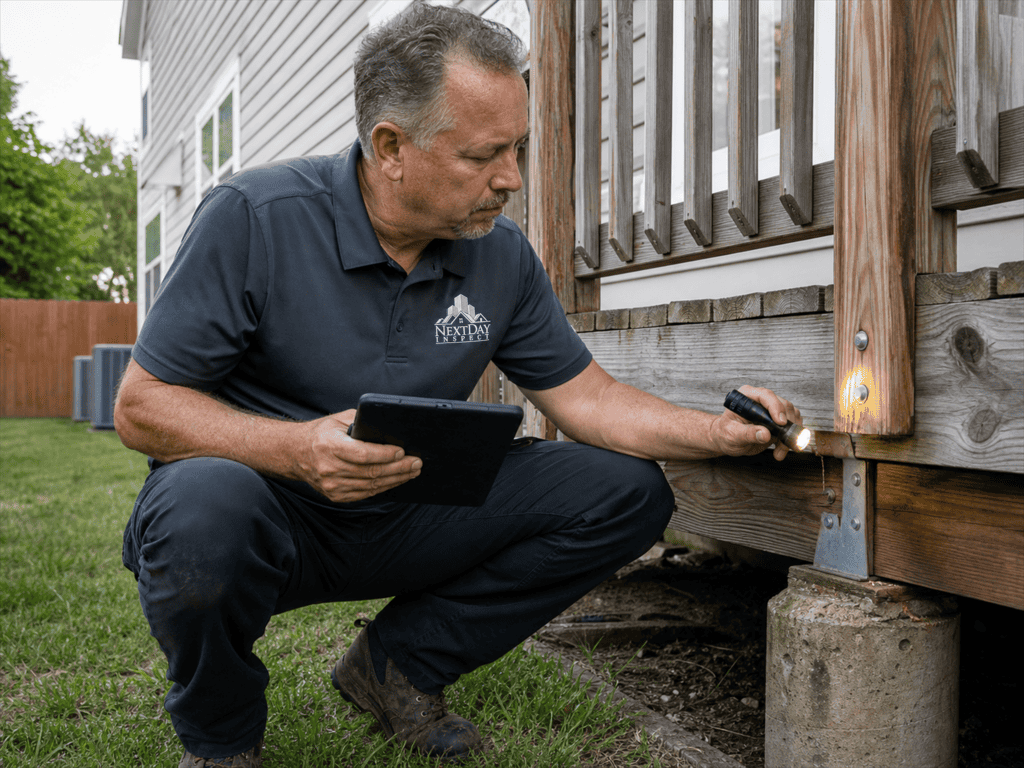
Roof, siding, grading, decks, the garage and the grounds first. The inspector photographs what they find as they go, so the report shows you exactly where each item is.
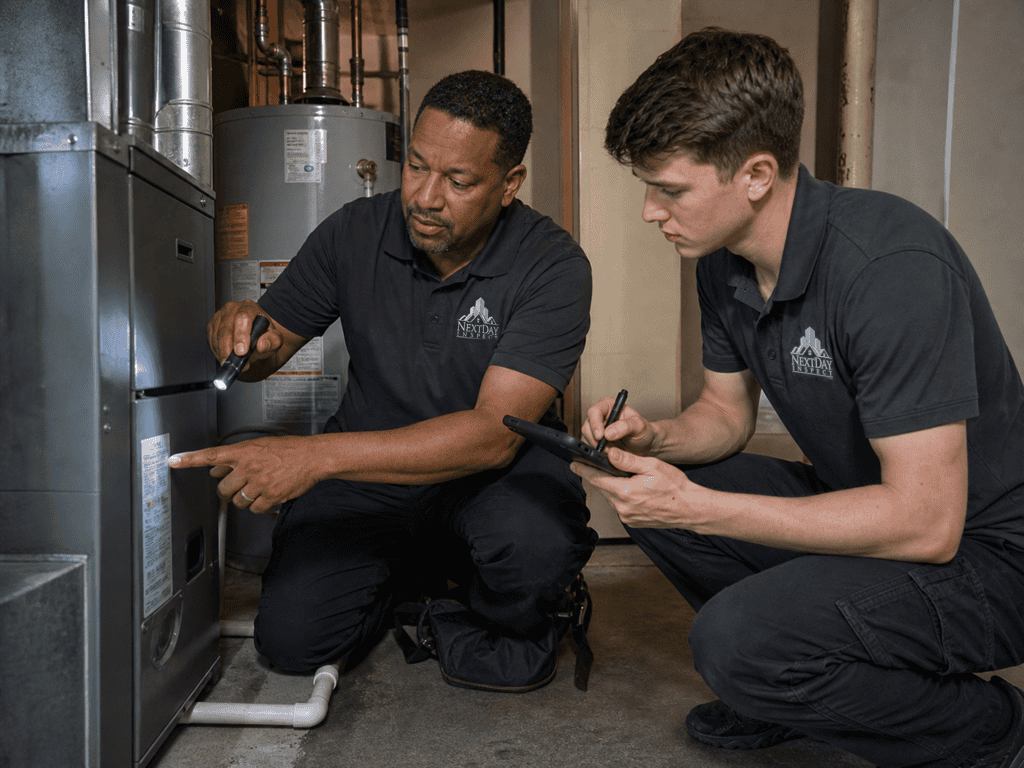
Panel cover off. Water heater, furnace and air conditioning run with their normal controls. Every fixture, every room, the attic, and the basement or crawlspace.

You see the main findings in the house itself. The written report follows online with photos, priorities and what to do about each item.
Falls Church traces to a colonial parish founded in 1734 and became an independent city in 1948, all inside about 2.2 square miles, one of Virginia's smallest cities by area. That small footprint holds an old core near the historic church, Metro-adjacent condominium towers, and Fairfax County neighborhoods that share the Falls Church name without sharing its city government.
A house near the historic core has usually had its systems replaced in layers rather than all at once, so the inspection reads each one on its own terms. The inspector checks the electrical panel and a sample of outlets and switches for age-related issues, follows any addition to the point where its framing meets the original structure, reads the foundation and crawlspace or basement for cracking and staining, and opens the attic access to check insulation depth and ventilation wherever it allows a look.
Falls Church traces to a colonial parish founded in 1734, became a township in 1875, and was chartered as an independent city in 1948, all packed into about 2.2 square miles, one of Virginia's two smallest cities by area.
A condominium near a Falls Church Metro station is inspected as its own unit: the electrical panel or subpanel, plumbing fixtures, the heating and cooling equipment, windows, doors, and any balcony structure that is part of the unit. Bathrooms stacked one above another often share a plumbing chase behind a closet or wall, and the report notes it where visible, but the building's roof, elevators and other shared elements belong to the association rather than to one owner.
Falls Church's official count puts the city's population at almost 14,000 people inside just over two square miles, a density that explains why so much of its newer housing stock is stacked rather than detached.
Falls Church sits in City of Falls Church, and the same inspectors cover the whole county. Every place below has its own page.
What Falls Church buyers ask about mailing addresses, condos, and the historic core.
No. Neighborhoods such as Sleepy Hollow and parts of West Falls Church carry a Falls Church mailing address while actually sitting in Fairfax County, outside the independent city's own government. Give us the exact street address when you book so the paperwork lines up with the correct jurisdiction. The inspection itself, the packages, and the pricing are the same either way.
Mainly what the inspector expects to find layered underneath. A house from the older core has usually had wiring, plumbing or an addition updated at different points rather than all at once, so the report separates what looks original from what was changed later. The visit itself covers the same roof-to-foundation scope as any other house in the city.
Your unit and everything inside it: the electrical panel or subpanel, plumbing fixtures, heating and cooling equipment, windows, doors and any balcony that belongs to your unit. A shared plumbing chase behind a wall gets noted where it is visible. The building's roof, elevators, and other common elements belong to the association, so they sit outside a single-unit inspection.
No. The city's small footprint holds an old core near the historic church alongside recently built condominium towers and townhouses, often within a few blocks of each other. Density, not age, is what the small area actually predicts. Tell us the property type and rough age when you book so the visit is scoped correctly from the start.
You are welcome for the whole visit or just the walkthrough at the end. Many buyers find the walkthrough answers what they actually wanted to know, since the inspector can point at a finding directly in the unit or the house rather than describing it after the fact. The full photo report follows online either way.