

Home/Home Inspection/Reston, VA
Home inspection
A Fairfax County licensed inspector walks Reston's lakeside homes, cluster communities, and Town Center units alike, then writes a photo report on what needs attention before you close.
4.9 rating, over 4,000 reviews Licensed and insured inspectors Serving Reston and all of Fairfax County
Every inspection covers the same 12 areas, from the roof down to the grounds, and the report is organized the same way. It is visual and non-invasive: nothing is opened up, and nothing you own is moved. Tap any area to see what is checked.
Every inspection follows a written standard of practice. Radon, termite, mold and water testing can be added to the same visit.
Three packages built around the home inspection. Package prices are for the add-on services only and are added to the inspection price. The savings are against booking the same services one by one.
The perfect starting point
Most popular for homebuyers
The ultimate peace of mind
Warranties must be requested when you book, not after the inspection. Radon and thermal imaging can also be added on their own. Read more about each package.
No jargon, no surprises. Here is the whole visit, start to finish, so you know what you are booking before you book it.

Online or by phone, in a few minutes. Your agent can book for you. Add radon, termite or a package at the same time, and we confirm the appointment with you before the visit.
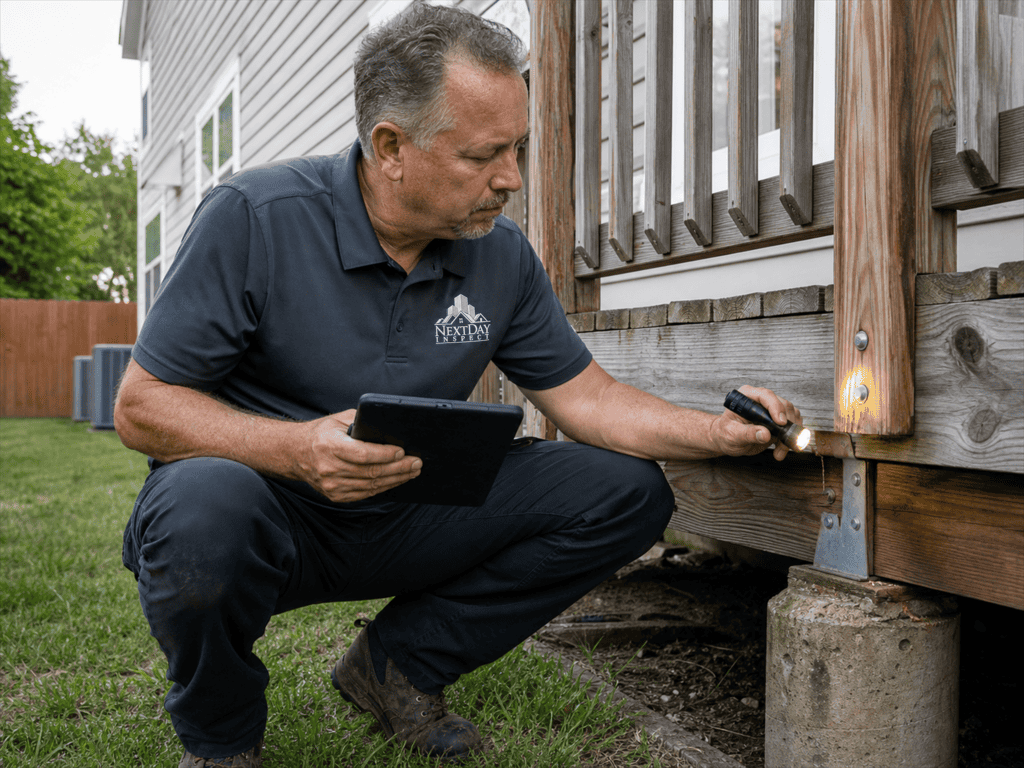
Roof, siding, grading, decks, the garage and the grounds first. The inspector photographs what they find as they go, so the report shows you exactly where each item is.
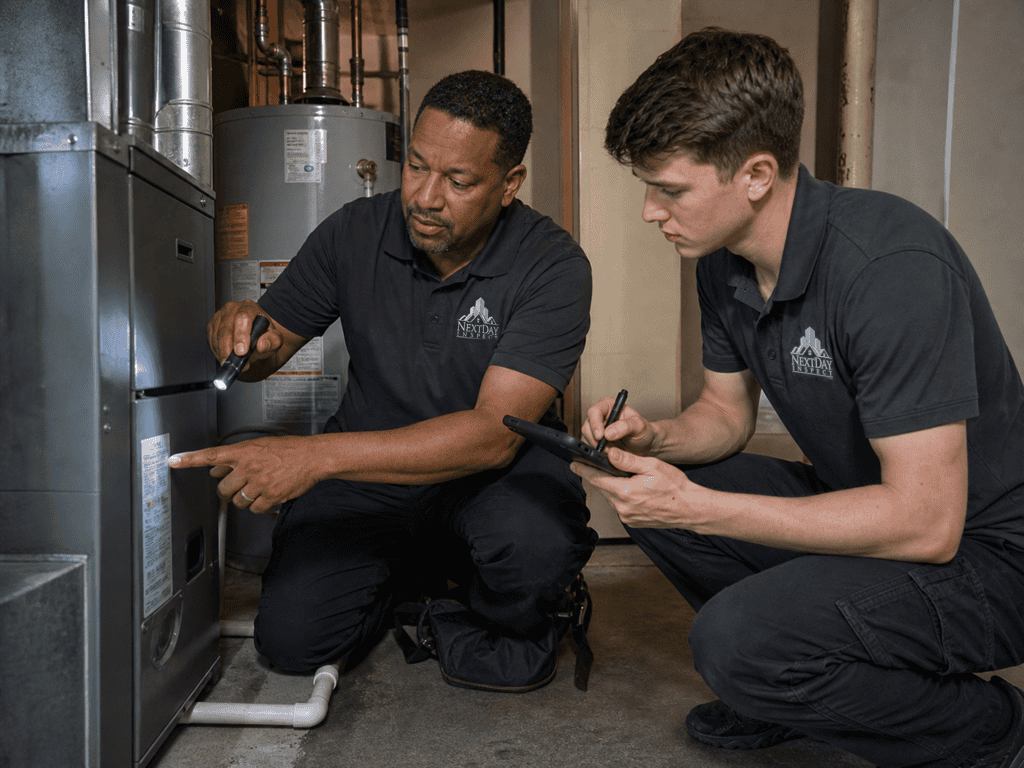
Panel cover off. Water heater, furnace and air conditioning run with their normal controls. Every fixture, every room, the attic, and the basement or crawlspace.

You see the main findings in the house itself. The written report follows online with photos, priorities and what to do about each item.
Reston began in 1964 as Robert E. Simon's planned community, its first village built around Lake Anne. Cluster homes filled in through the 1970s and 1980s, and Town Center's towers came later still. That range means a Reston inspection starts by placing the house or unit in its decade, since the roof, panel, and plumbing behind a similar-looking wall can differ by twenty years.
Lake Anne Village went up first, in the early 1960s, around Robert E. Simon's original lakeside plan. A house here has had six decades to gain a new roof, replacement windows, or a finished lower level, so the inspection reads each system on its own timeline rather than assuming one build date for the whole house. The roof covering, flashing, and any low-slope section get a close look from the eaves, along with the foundation walls and any accessible crawlspace or basement for signs of past water. Electrical panels and plumbing supply lines are checked against what the age of the house would predict.
Fairfax County's Land Development Services runs a free public Site Records Viewer and permit tracker covering the whole county, so a buyer can look up what was permitted on a specific Lake Anne house before the inspection.
These neighborhoods were built as cluster communities, where a group of townhouses or single-family homes shares a common association rather than a typical street-facing HOA. A roof, a shared driveway, or a stretch of siding can belong to the cluster rather than to one owner, so the inspection notes which exterior elements are shared before it gets to the unit itself. Inside, the walkthrough still covers the same ground as anywhere else: the electrical panel and a sample of outlets, the plumbing fixtures run for drainage, the heating and cooling system on its normal controls, and the attic for insulation depth and ventilation.
Reston Association counts more than 160 cluster and condominium sub-associations across the community, according to its own directory, each one responsible for its own shared roofs, exteriors, and grounds.
Reston sits in Fairfax County, and the same inspectors cover the whole county. Every place below has its own page.
The questions Reston buyers actually ask, covering clusters, condos, and the lake.
Fairfax County issues the permit, since Reston is an unincorporated part of the county rather than its own town or city. The county's Land Development Services keeps those records searchable by address through its own online portal, which covers plans, permits, and certificates of occupancy for a specific house. Reston Association handles covenants and architectural review for exterior changes, a separate process from the county's building permit.
The inspection covers your unit the same way it would a detached house: roof covering visible from the eaves, attic insulation and ventilation where accessible, the electrical panel, plumbing fixtures, and the heating and cooling system on its normal controls. Where a roof, wall, or driveway is shared with a neighboring unit, the report notes that it is shared and describes what was visible, since responsibility for repairs usually sits with the cluster association rather than one owner.
The walkthrough is the same checklist either way: roof, exterior, foundation, electrical panel, plumbing, heating and cooling, attic, and interior. What differs is what the inspector expects to find. A Lake Anne house has had decades for a roof replacement, a rewire, or a finished lower level, so the report separates original construction from later work. A newer Reston home gets the same full walkthrough, with more attention paid to workmanship on recent construction.
Reston is served by public water and sewer throughout the community, so a private well or septic system is not something to expect here. The inspection still runs every fixture, flushes every toilet, and checks the water heater and its venting, but it does not test water quality, flow rate, or pressure beyond what running the fixtures shows. Ask your agent to confirm utility accounts at closing, since that is a separate step from the inspection itself.
Either works. Some Reston buyers come for the full visit, especially for an older Lake Anne house where questions come up room by room. Others join just for the walkthrough near the end, where the inspector covers the main findings before the full written report follows online. Your agent is welcome either way, and a cluster or condominium unit's access is arranged the same way a detached house's would be.