
Home/Home Inspection/Centreville, VA
Home inspection
Centreville's planned subdivisions each get the same visit from a Virginia licensed inspector, who checks every major system and delivers a photo report focused on your next steps.
4.9 rating, over 4,000 reviews Licensed and insured inspectors Serving Centreville and all of Fairfax County
Every inspection covers the same 12 areas, from the roof down to the grounds, and the report is organized the same way. It is visual and non-invasive: nothing is opened up, and nothing you own is moved. Tap any area to see what is checked.
Every inspection follows a written standard of practice. Radon, termite, mold and water testing can be added to the same visit.
Three packages built around the home inspection. Package prices are for the add-on services only and are added to the inspection price. The savings are against booking the same services one by one.
The perfect starting point
Most popular for homebuyers
The ultimate peace of mind
Warranties must be requested when you book, not after the inspection. Radon and thermal imaging can also be added on their own. Read more about each package.
No jargon, no surprises. Here is the whole visit, start to finish, so you know what you are booking before you book it.
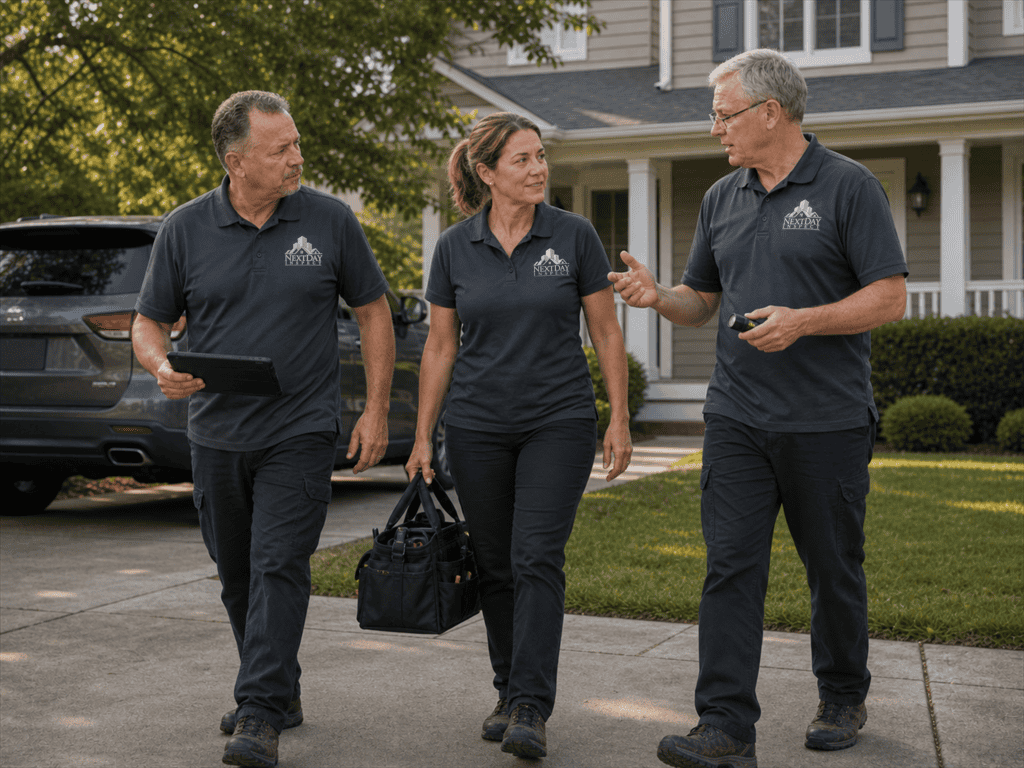
Online or by phone, in a few minutes. Your agent can book for you. Add radon, termite or a package at the same time, and we confirm the appointment with you before the visit.
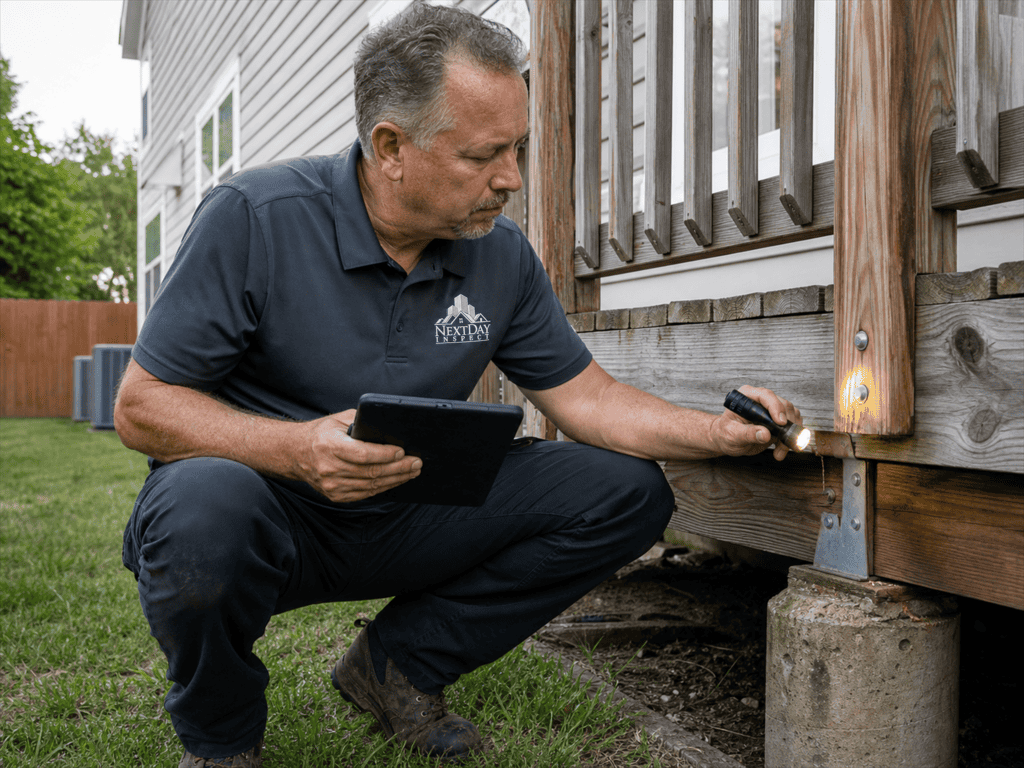
Roof, siding, grading, decks, the garage and the grounds first. The inspector photographs what they find as they go, so the report shows you exactly where each item is.
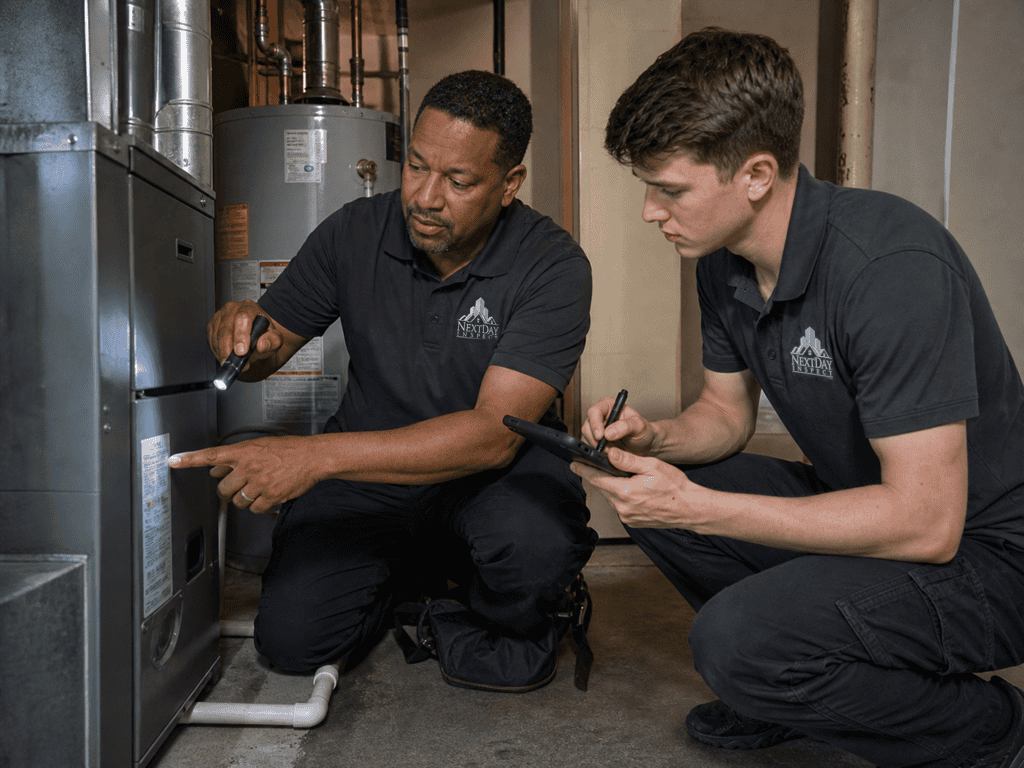
Panel cover off. Water heater, furnace and air conditioning run with their normal controls. Every fixture, every room, the attic, and the basement or crawlspace.

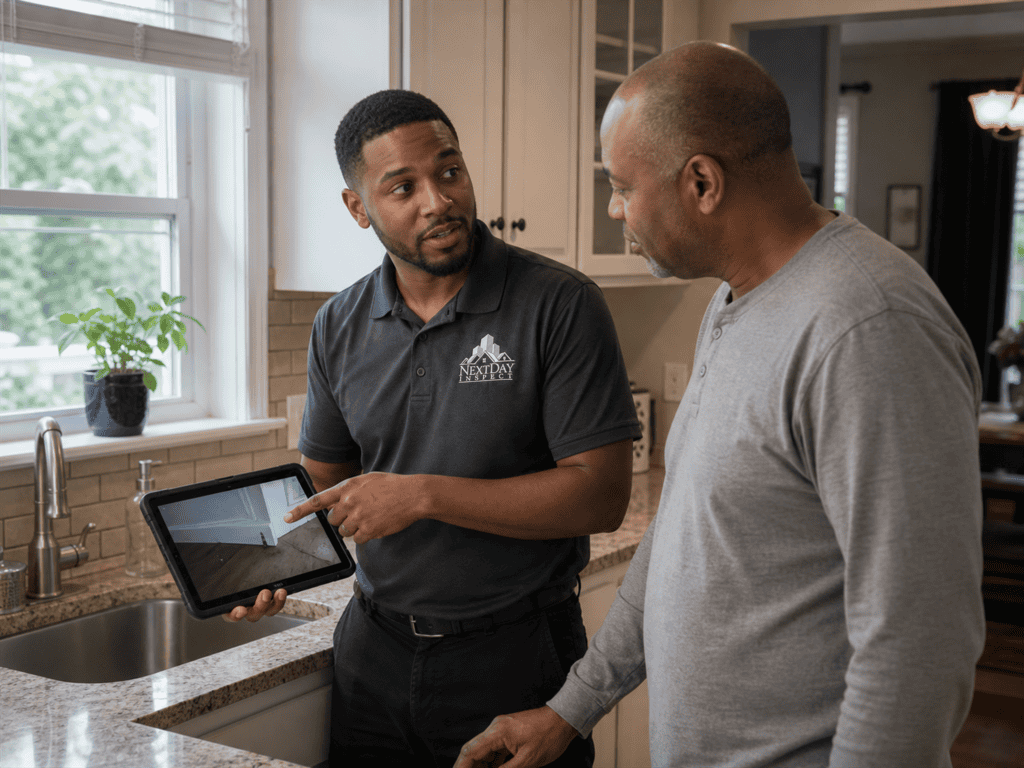
You see the main findings in the house itself. The written report follows online with photos, priorities and what to do about each item.
Centreville pairs a small historic village core with large planned subdivisions such as Virginia Run, Sully Station and Little Rocky Run, built from the 1980s onward in tight rows of similar houses. A finished lower level, a window seal or a shared wall usually matters more here than the subdivision's age, so the inspection starts with the specific area in question.
Virginia Run and Sully Station were built in phases as planned subdivisions, with similar houses repeated block after block and a mix of detached and attached units. The inspection checks a representative number of windows and doors for operation, reads the exterior wall covering and trim, and follows the roof covering, gutters and downspouts around the house. Where two houses share a wall, the inspector notes it, and any finished lower level gets checked for humidity, sump operation and signs of past water at the foundation.
Fairfax County's Land Development Services publishes a free public Site Records Viewer and permit tracker covering Centreville along with the rest of the county, so a buyer can look up a subdivision house's permit history before the visit.
Centreville sits within the county's Cub Run watershed, where several tributaries carry stormwater toward the Occoquan Reservoir. On a lot near any of those streams, the inspection pays close attention to grading and surface drainage around the foundation, checks the crawlspace or basement for signs of past water entry, and traces gutters and downspouts to where they actually discharge. A garage door and its safety sensors are tested where a garage is present, and the attic is opened to check insulation depth and ventilation.
Fairfax County's own stormwater program measures the Cub Run watershed at 55.3 square miles of southwestern Fairfax County, including the Centreville area, draining toward the Occoquan Reservoir that supplies drinking water to part of the county.
Centreville sits in Fairfax County, and the same inspectors cover the whole county. Every place below has its own page.
Direct answers for anyone booking an inspection in Centreville's subdivisions.
No. Centreville is an unincorporated part of Fairfax County, so the county's Land Development Services keeps the permit and site plan records for the address, searchable through its public Site Records Viewer and Development Tracker. There is no separate Centreville permit office, and the same inspectors, packages and pricing apply here as anywhere else in the county. Give the full street address when you book.
Not in scope, only in emphasis. The inspection still covers the roof, foundation, electrical panel, plumbing, and heating and cooling on normal controls, regardless of the decade built. A subdivision house from the 1980s or 1990s is more likely to share a wall with its neighbor or sit on a lot graded as part of a larger phase, so the inspector pays particular attention to that shared boundary and to how water moves across the yard.
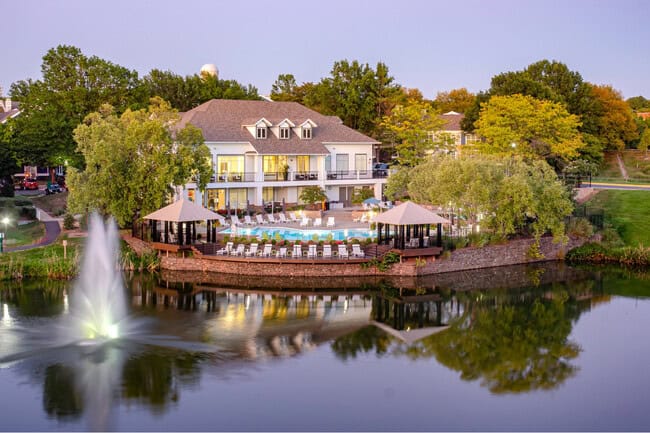
Not for the house itself. The inspection covers your house and lot: roof, foundation, electrical, plumbing, heating and cooling, windows, doors and attic. A clubhouse, community pool, private street or retention pond that the homeowners association owns and maintains falls outside that scope. If a finding involves an exterior feature the association is responsible for, such as shared fencing, mention it when you book so the report can note the boundary clearly.
Fairfax County's health department places the entire county, Centreville included, in the EPA's highest radon potential category, based on county testing of more than two thousand local homes. That is a countywide estimate, not a reading for one address, so a standard inspection does not test for radon; it is available as a separate add-on scheduled for the same visit, with its own result reported on its own timeline.
It helps but is not required. Joining for the end of the visit lets you see findings in the actual room, ask questions about the panel or the attic access in person, and get a feel for the house beyond the written pages. If you cannot make it, the photo report and a follow-up call cover the same findings in full.