

Home/Home Inspection/Chantilly, VA
Home inspection
Whether the address is a Franklin Farm townhouse or a Pleasant Valley property on well and septic, the inspector covers the house itself, top to bottom.
4.9 rating, over 4,000 reviews Licensed and insured inspectors Serving Chantilly and all of Fairfax County
Every inspection covers the same 12 areas, from the roof down to the grounds, and the report is organized the same way. It is visual and non-invasive: nothing is opened up, and nothing you own is moved. Tap any area to see what is checked.
Every inspection follows a written standard of practice. Radon, termite, mold and water testing can be added to the same visit.
Three packages built around the home inspection. Package prices are for the add-on services only and are added to the inspection price. The savings are against booking the same services one by one.
The perfect starting point
Most popular for homebuyers
The ultimate peace of mind
Warranties must be requested when you book, not after the inspection. Radon and thermal imaging can also be added on their own. Read more about each package.
No jargon, no surprises. Here is the whole visit, start to finish, so you know what you are booking before you book it.

Online or by phone, in a few minutes. Your agent can book for you. Add radon, termite or a package at the same time, and we confirm the appointment with you before the visit.
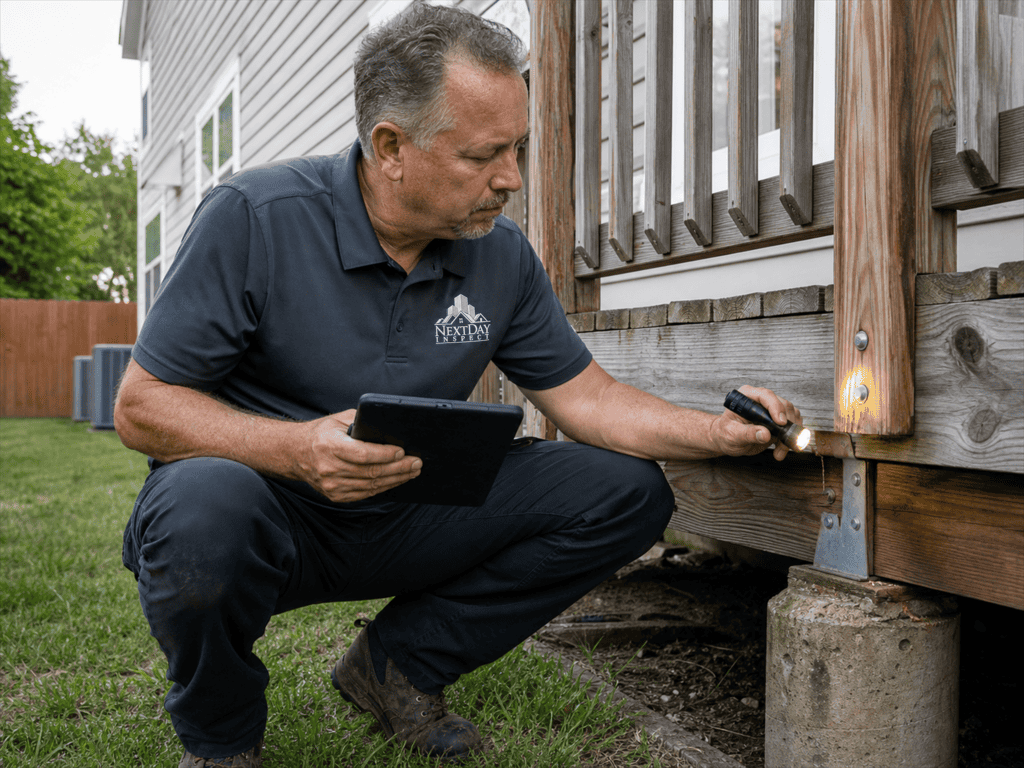
Roof, siding, grading, decks, the garage and the grounds first. The inspector photographs what they find as they go, so the report shows you exactly where each item is.

Panel cover off. Water heater, furnace and air conditioning run with their normal controls. Every fixture, every room, the attic, and the basement or crawlspace.

You see the main findings in the house itself. The written report follows online with photos, priorities and what to do about each item.
Fairfax County's history of Sully Historic Site traces the property to a parcel acquired in 1725, with the house Richard Bland Lee built there in 1794 once standing among farm outbuildings. Sully now sits on a smaller piece of that land at Chantilly's edge, a reminder that most of today's subdivisions replaced working farmland within living memory.
South Riding and Franklin Farm both pair single-family houses with attached townhouses inside one homeowners association, so the first question is which kind of home you are buying. The inspection covers the house itself top to bottom: roof covering, siding and trim, the electrical panel, plumbing fixtures, heating and cooling on normal controls, and the attic and crawlspace or basement. A shared clubhouse, pool building or other common element belongs to the association and falls outside the inspection, though a garage door and its safety sensors are tested wherever the house itself has one.
Fairfax County's own history of Sully Historic Site records that Richard Bland Lee built the house in 1794 on land his family had acquired in 1725, on the same stretch of the county that later became Chantilly.
Closer to Dulles, Pleasant Valley mixes older properties on a private well and septic system with newer construction on public utilities, so identify which applies before booking. The inspection does not test a well's water quality or a septic system's function; those fall outside its scope everywhere we work. What the inspector does note is what is visible near the house, such as a wellhead, pressure tank or septic cleanout, photographed like anything else observed during the walk-around, alongside the grading and drainage in that part of the yard.
Fairfax County's Health Department runs the Onsite Sewage and Water Program, which permits and inspects private wells and septic systems on a schedule separate from a home inspection.
Chantilly sits in Fairfax County, and the same inspectors cover the whole county. Every place below has its own page.
What Chantilly buyers ask about shared amenities, wells and newer construction.
No. A clubhouse, pool building or other shared amenity belongs to the homeowners association, not to any single property, so it falls outside a home inspection. The inspection covers the house you are buying: its roof, foundation, electrical, plumbing, heating and cooling, and every accessible room. If the clubhouse's condition matters to you, ask the association for its own maintenance and reserve records.
The inspector notes what is visible near the house, such as a wellhead, pressure tank or septic cleanout, and photographs it like any other observation. Testing the well's water quality or the septic system's function is not part of a home inspection anywhere we work; Fairfax County's Health Department handles well and septic permitting and inspection separately. Ask about adding a water test if you want that result before closing.
Yes. New construction can still have an unfinished grading slope, a garage safety sensor that needs adjustment, or a window installed slightly out of square. The inspection runs the same full visit regardless of the home's age: roof, foundation, electrical panel, plumbing, heating and cooling, attic insulation and ventilation, and every window, door and garage door on normal controls.
It can affect what the inspector looks for, not what is covered. A shaded, tree-lined lot can hold moisture longer after rain, so the crawlspace ground cover, vent openings and grading near that side of the house get a closer look. The trail or common wooded area itself is not part of the inspection; only how conditions near your property line affect the house are.
Yes. You are welcome for the whole visit or just the walkthrough at the end, when the inspector covers the findings room by room before the written report follows online. Plenty of Chantilly buyers join by that route alone when travel does not allow for the full visit, and your agent is welcome to attend in your place or alongside you.