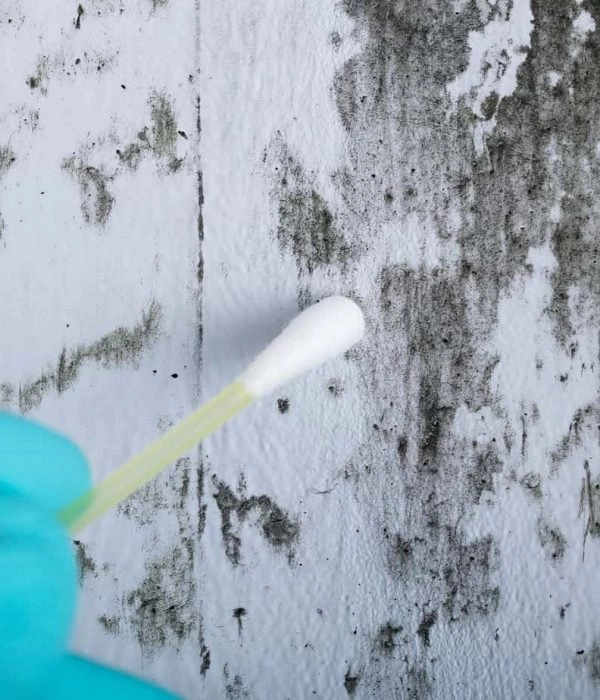

Home/Home Inspection/Randallstown, MD
Home inspection
From Church Lane's century-old bungalows to the split-levels off Allenswood Road, the inspection reads each house on its own construction, not its neighbor's.
4.9 rating, over 4,000 reviews Licensed and insured inspectors Serving Randallstown and all of Baltimore County
Every inspection covers the same 12 areas, from the roof down to the grounds, and the report is organized the same way. It is visual and non-invasive: nothing is opened up, and nothing you own is moved. Tap any area to see what is checked.
Every inspection follows a written standard of practice. Radon, termite, mold and water testing can be added to the same visit.
Three packages built around the home inspection. Package prices are for the add-on services only and are added to the inspection price. The savings are against booking the same services one by one.
The perfect starting point
Most popular for homebuyers
The ultimate peace of mind
Warranties must be requested when you book, not after the inspection. Radon and thermal imaging can also be added on their own. Read more about each package.
No jargon, no surprises. Here is the whole visit, start to finish, so you know what you are booking before you book it.

Online or by phone, in a few minutes. Your agent can book for you. Add radon, termite or a package at the same time, and we confirm the appointment with you before the visit.
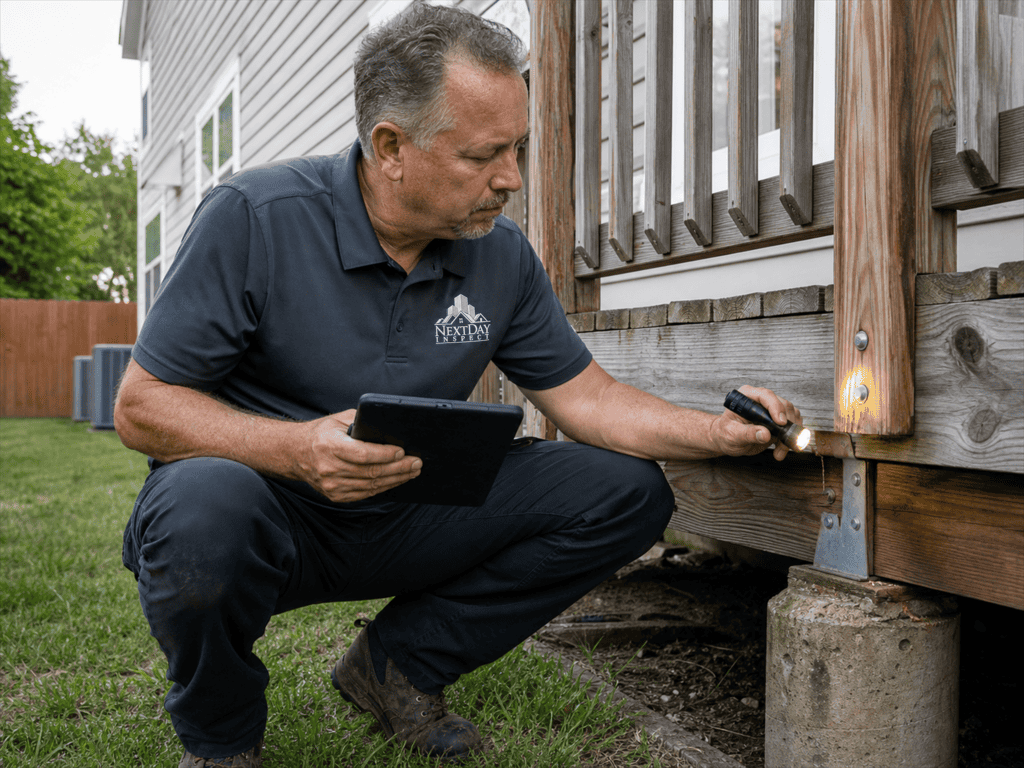
Roof, siding, grading, decks, the garage and the grounds first. The inspector photographs what they find as they go, so the report shows you exactly where each item is.

Panel cover off. Water heater, furnace and air conditioning run with their normal controls. Every fixture, every room, the attic, and the basement or crawlspace.

You see the main findings in the house itself. The written report follows online with photos, priorities and what to do about each item.
Randallstown grew from a crossroads: a Maryland Historical Trust survey of Church Lane records John and Christopher Randall's eighteenth-century settlement, and describes its earliest houses as Four Squares, Cape Cods and bungalows. Ranch and split-level construction filled in around them after midcentury, so a Church Lane block can carry two very different foundation types within sight of each other.
Church Lane's earliest houses, documented as Four Squares, Cape Cods and Craftsman bungalows, have had a century to collect additions, rewired panels and rerouted plumbing, so the inspection reads each system on its own rather than assuming the house's age. A later ranch or split-level nearby sits on a different foundation entirely, often a crawlspace or slab rather than a full basement. Either way, the inspector opens the electrical panel, runs the heating and cooling on normal controls, checks the attic for insulation and ventilation, and traces gutters and downspouts to see where they discharge around the foundation.
The Maryland Historical Trust's survey of the Church Lane district credits John and Christopher Randall with founding the crossroads in the eighteenth century, noting a tavern and a few stores stood along what became Liberty Road by 1850.
Houses built during the postwar expansion near Allenswood Road tend to sit on a crawlspace or slab instead of a full basement, and many have picked up a sump pump or French drain since. The inspection checks that crawlspace for framing and moisture at the sill, runs every fixture and appliance, tests GFCI and AFCI protection at sampled outlets, and opens the attic hatch to record insulation depth. A detached garage, where one is present, gets its vehicle door and safety sensors tested on normal controls.
Maryland Geological Survey mapping puts Randallstown on the Piedmont side of Baltimore County's Fall Line, upland bedrock ground that behaves differently underfoot than the sandier Coastal Plain closer to the harbor.
Randallstown sits in Baltimore County, and the same inspectors cover the whole county. Every place below has its own page.
What Randallstown buyers ask about older bungalows and newer ranch houses alike.
Roofline and foundation are the fastest clues: the earlier Four Squares, Cape Cods and bungalows the Maryland Historical Trust documented tend to have steeper rooflines and a full basement, while the ranch and split-level houses built after midcentury usually sit lower on a crawlspace or slab. The inspection does not date a house for you, but it does report the foundation type and framing it actually finds, which usually settles the question on its own.
Yes, scoped to what you are buying. We inspect your unit's electrical, plumbing, heating and cooling, and finishes, and note where it shares a roof or plumbing stack with the commercial space below. Responsibility for a shared roof or a common stack usually sits with the building owner rather than one tenant, so if you are buying just the unit, tell us who else has access before the visit is scheduled.
The inspector runs a sump pump if its float is accessible, and notes whether it turns on the way it should. What we do not do is predict how the system performs in a major storm or explain why it was added in the first place. Ask the seller for any service or installation records, since those tell you more about the pump's history than a single day's test can.
It is worth at least attending the walkthrough at the end, even if you cannot be there for the whole visit. That is when the inspector walks the findings room by room, and you can ask about anything specific to an older Church Lane house or a newer ranch, such as where an addition ties into the original framing. Your agent is welcome to join as well.
You can add it to the same visit if you want a result before you decide. Radon testing is a separate service with its own monitor, run alongside the inspection rather than folded into it, so choosing it does not change what the standard inspection covers. Ask at booking and we will schedule both for the same appointment wherever the calendar allows it.