
Home/Home Inspection/Washington County, MD
Home inspection
A Washington County visit treats Hagerstown's converted downtown blocks and the valley's older farmhouses the same way, ending in one report ranked by what to fix first.
4.9 rating, over 4,000 reviews Licensed and insured inspectors Serving all of Washington County
Washington County built outward from a single crossroads at Hagerstown into the farmland and small towns of the Cumberland Valley, including Boonsboro and Williamsport. Here is every community we inspect.
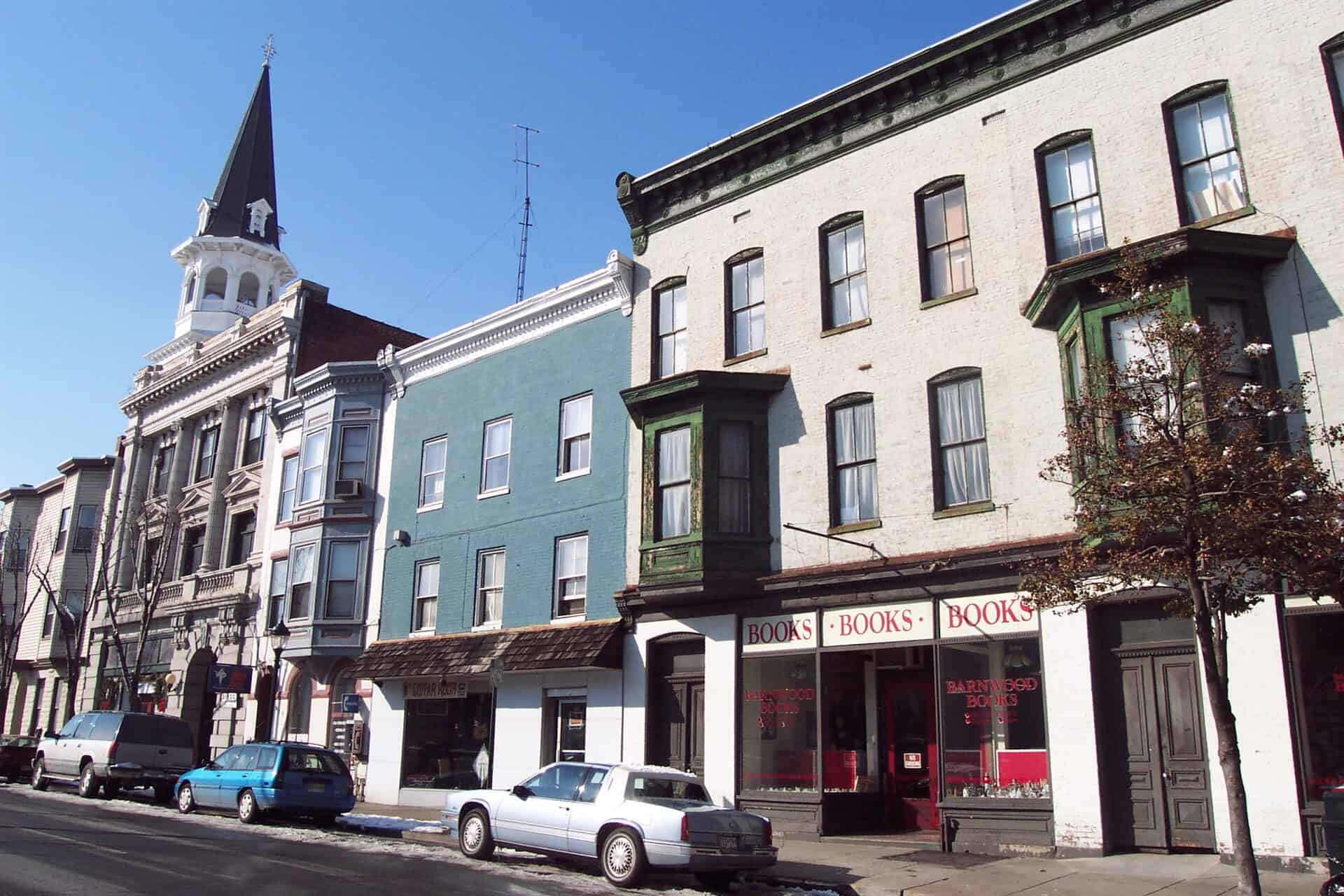
Hagerstown mixes converted rowhouses near the old downtown core with detached houses in Oak Hill and newer streets spreading north.
Many rural Washington County addresses carry a Hagerstown mailing address well outside the city's actual limits.
Three packages built around the home inspection. Package prices are for the add-on services only and are added to the inspection price. The savings are against booking the same services one by one.
The perfect starting point
Most popular for homebuyers
The ultimate peace of mind
Warranties must be requested when you book, not after the inspection. Radon and thermal imaging can also be added on their own. Read more about each package.
No jargon, no surprises. Here is the whole visit, start to finish, so you know what you are booking before you book it.

Online or by phone, in a few minutes. Your agent can book for you. Add radon, termite or a package at the same time, and we confirm the appointment with you before the visit.
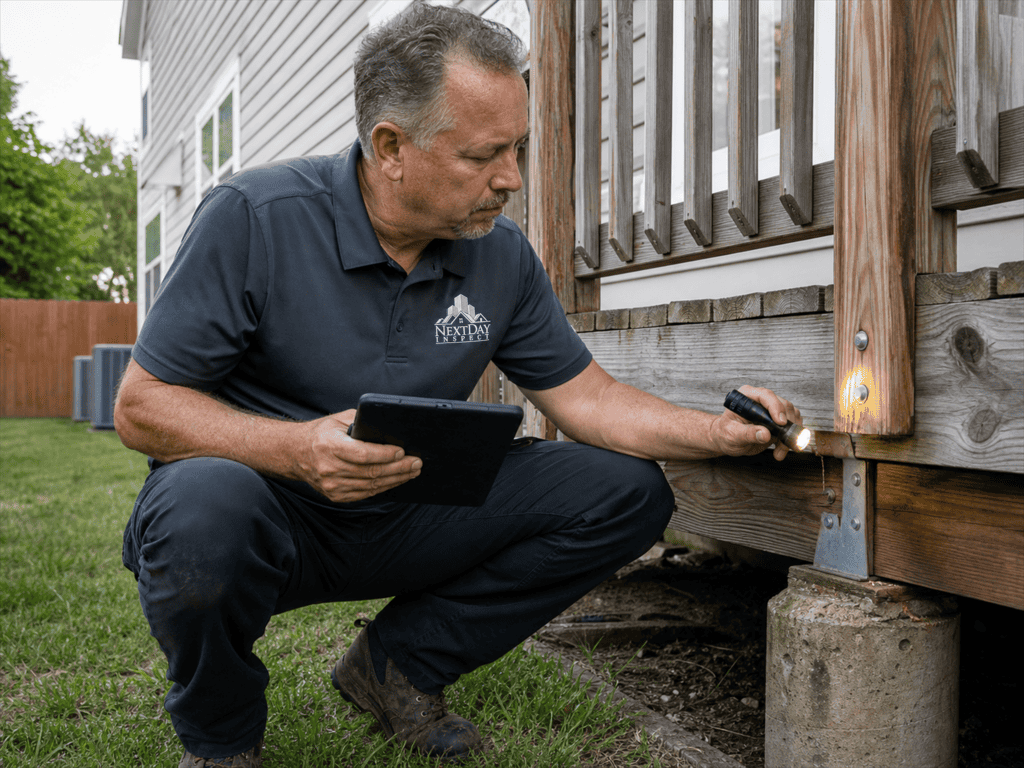
Roof, siding, grading, decks, the garage and the grounds first. The inspector photographs what they find as they go, so the report shows you exactly where each item is.

Panel cover off. Water heater, furnace and air conditioning run with their normal controls. Every fixture, every room, the attic, and the basement or crawlspace.

You see the main findings in the house itself. The written report follows online with photos, priorities and what to do about each item.
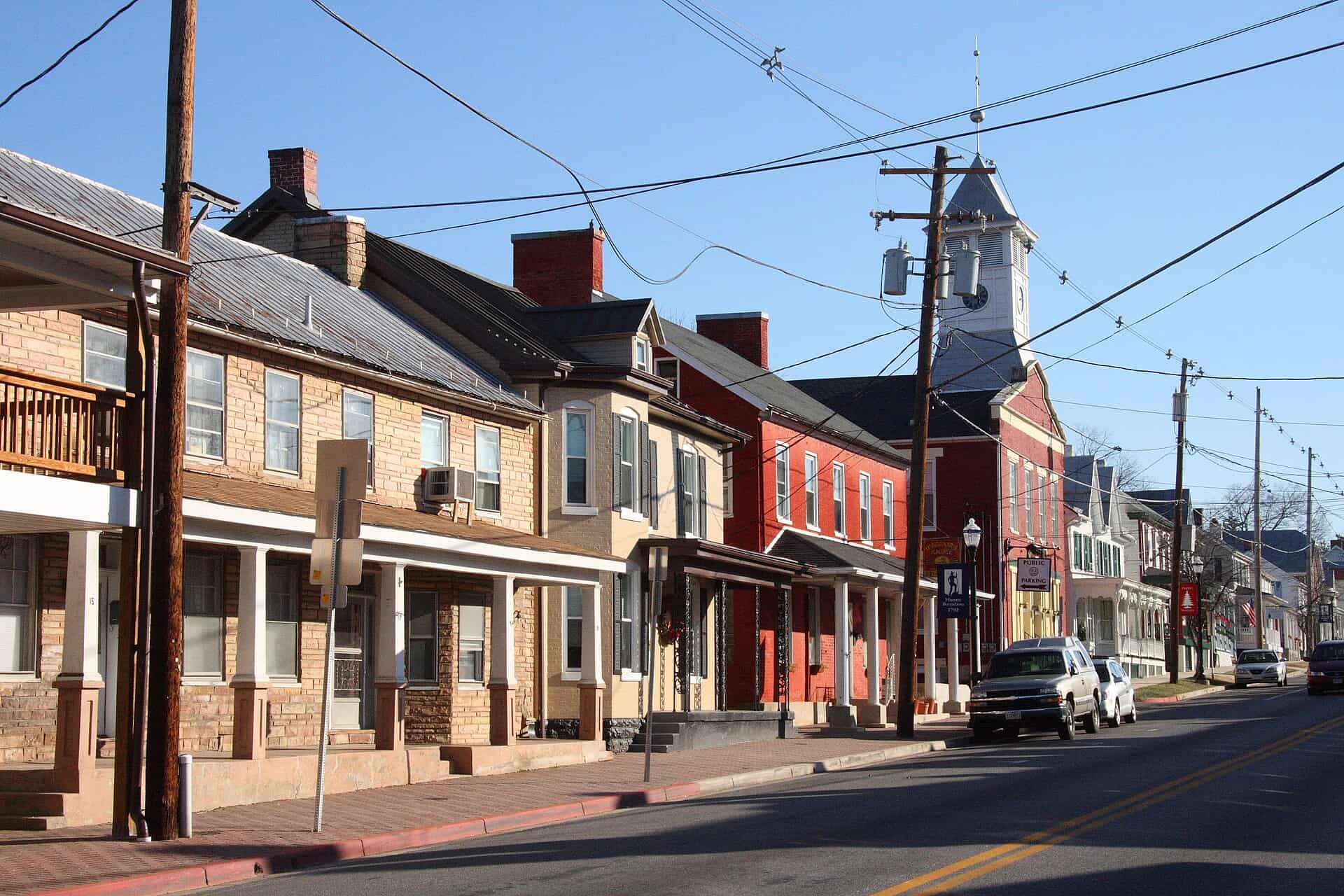
Washington County built outward from a single crossroads. Hagerstown grew up first as the county seat and a rail junction in the Cumberland Valley, its downtown blocks converted and subdivided over more than a century. Farmhouses on the surrounding valley floor gave way to postwar subdivisions along the routes toward Williamsport and Boonsboro, and a house's age here tracks its distance from that original crossroads more closely than its style.
Main Street, Hagerstown. Photo: Preservation Maryland, Wikimedia Commons, CC BY-SA 2.0.
Hagerstown's downtown buildings were largely built as single homes and later divided into apartments, so a roof or a party wall can carry a leak between units that have never shared an owner. The inspection reads the building unit by unit where it is divided, checking the roof covering and flashing, the foundation and any accessible crawlspace, the electrical panel and a sample of outlets, and the plumbing fixtures and drains for each unit in turn. Karst ground under much of the valley floor also settles and drains unevenly, so a slab or a footing that has shifted gets photographed and noted alongside any sign of active water penetration.
Maryland Geological Survey mapping estimates Washington County's karst area at two to three times the size of neighboring Frederick County's, whose own mapped karst ground covers about 35 square miles.
Downtown Boonsboro. Photo: Acroterion, Wikimedia Commons, CC BY-SA 4.0.
Away from Hagerstown, older farmhouses on the Cumberland Valley floor sit alongside postwar and newer subdivisions built along the routes toward Williamsport and Boonsboro. An older farmhouse is more likely to carry a stone or masonry foundation and an addition built decades after the original house, so the inspector treats the two as separate questions: original framing and wiring in one, and the newer wing's own roof, electrical, and plumbing tie-ins in the other. A newer subdivision house instead gets closer attention to grading, downspouts, attic insulation and ventilation, and a garage door's automatic opener and safety sensors.
The EPA's map of radon zones places Washington County in Zone 1, its highest-potential category, matching most of the rest of western and central Maryland, though every home should still be tested.
Washington County is one of 11 Maryland counties we cover, and the same inspectors work all of them. Every county below has its own page.
What Washington County buyers ask about Hagerstown and the valley.
Washington County runs an online Citizen Access portal for permit applications, trade licenses and registrations, though a first-time user generally needs to register and be approved before searching or applying. For ownership and assessment history on any Washington County parcel, the state's SDAT real property search works by address or account number and does not require an account at all.
They are related but separate questions. The EPA places Washington County in Zone 1, its highest radon-potential category, largely because of the same underlying geology that produces the county's karst features. Radon is not part of a standard home inspection; it moves through soil and rock into a house regardless of whether that ground also happens to be prone to sinkholes, and it is tested separately with its own equipment.
Outside Hagerstown and the other towns, yes, most properties in the Cumberland Valley run on a private well and a septic field rather than public utilities. A well or septic system sitting over karst ground can behave differently than one on ordinary soil, so the inspector notes their location relative to the house before the visit, though a standard inspection does not test either system. The county health department sets requirements for a well or septic system tied to a sale.
Often, yes. A stone or masonry farmhouse may carry a foundation type the inspector sees less often than poured concrete or block, plus one or more additions built in a later era, so describing the building's approximate age and layout when you book helps the visit get scoped correctly. A newer house in a Williamsport or Boonsboro subdivision mainly needs its grading, attic insulation, and recent systems checked closely. Either way the full standard walk-through still applies from roof to foundation.
It can be confusing, since many rural Washington County addresses carry a Hagerstown mailing address without sitting inside the actual city limits. Give the full street address, not just the city name on your mail, when you book, so the report and any permit lookup reference the correct jurisdiction, whether that is the City of Hagerstown or the surrounding county. The visit, the team, and the pricing are the same either way.