
Home/Home Inspection/Harford County, MD
Home inspection
Home Inspection in Harford County, MD
A Harford County visit covers Bel Air's older streets and the lower ground toward the bay the same way, ending in a photo report ranked by priority.
Read client reviews Licensed and insured inspectors Serving all of Harford County
Where we inspect in Harford County
Harford County stretches from the Pennsylvania line down to the Susquehanna River and the Chesapeake Bay, with Bel Air's older Main Street core at its center. Here is every community we inspect.
- Bel Air
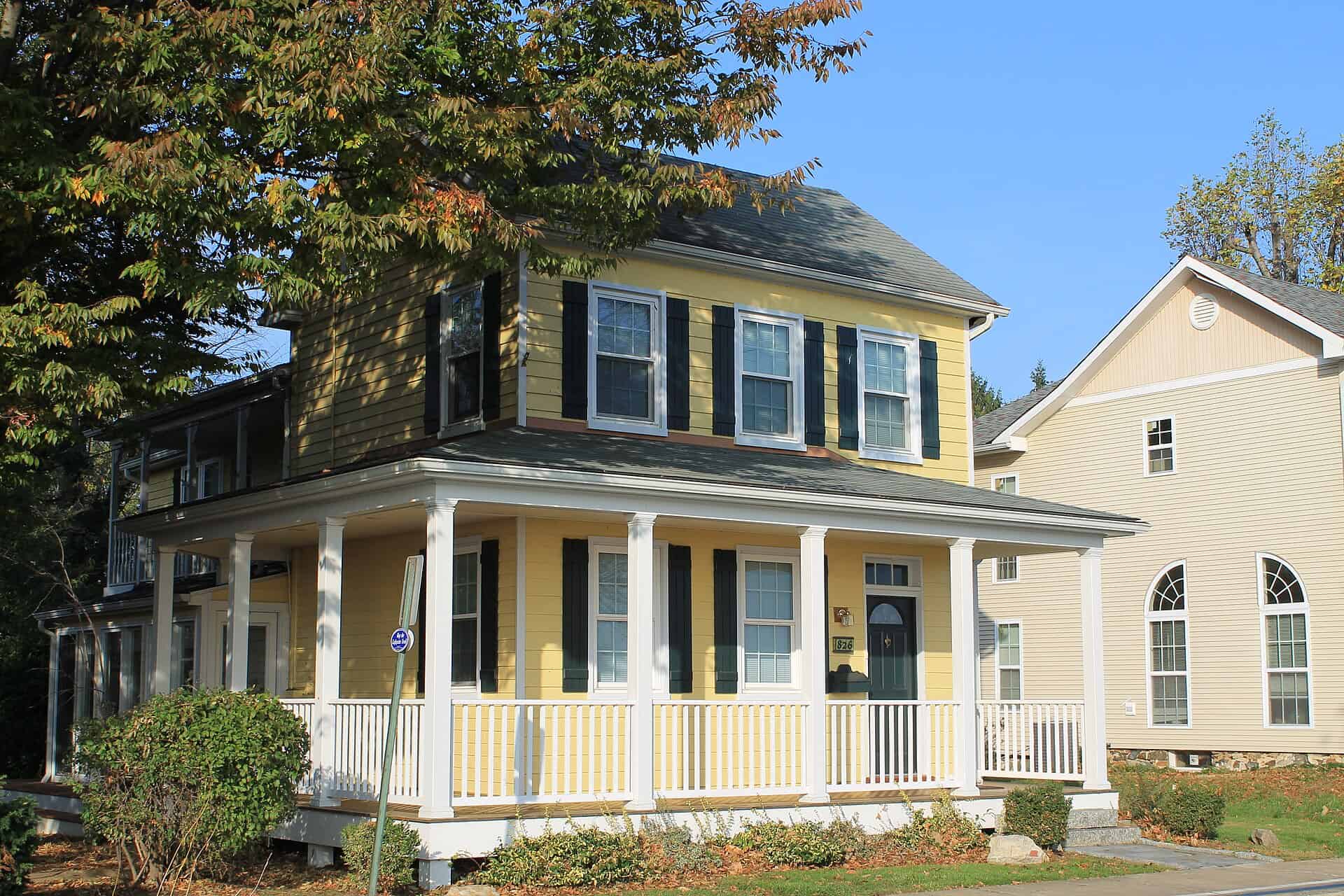
Older houses cluster around Main Street, Bond Street and Broadway, with later residential streets ringing that historic core.
Bel Air, Havre de Grace and Aberdeen each run their own building permits separately from the county.
Add a package to the inspection
Three packages built around the home inspection. Package prices are for the add-on services only and are added to the inspection price. The savings are against booking the same services one by one.
Home Essentials
The perfect starting point
Home Advantage
Most popular for homebuyers
Home Enhanced
The ultimate peace of mind
Warranties must be requested when you book, not after the inspection. Radon and thermal imaging can also be added on their own. Read more about each package.
What a home inspection actually involves
No jargon, no surprises. Here is the whole visit, start to finish, so you know what you are booking before you book it.

You book, we confirm
Online or by phone, in a few minutes. Your agent can book for you. Add radon, termite or a package at the same time, and we confirm the appointment with you before the visit.
The walk-around
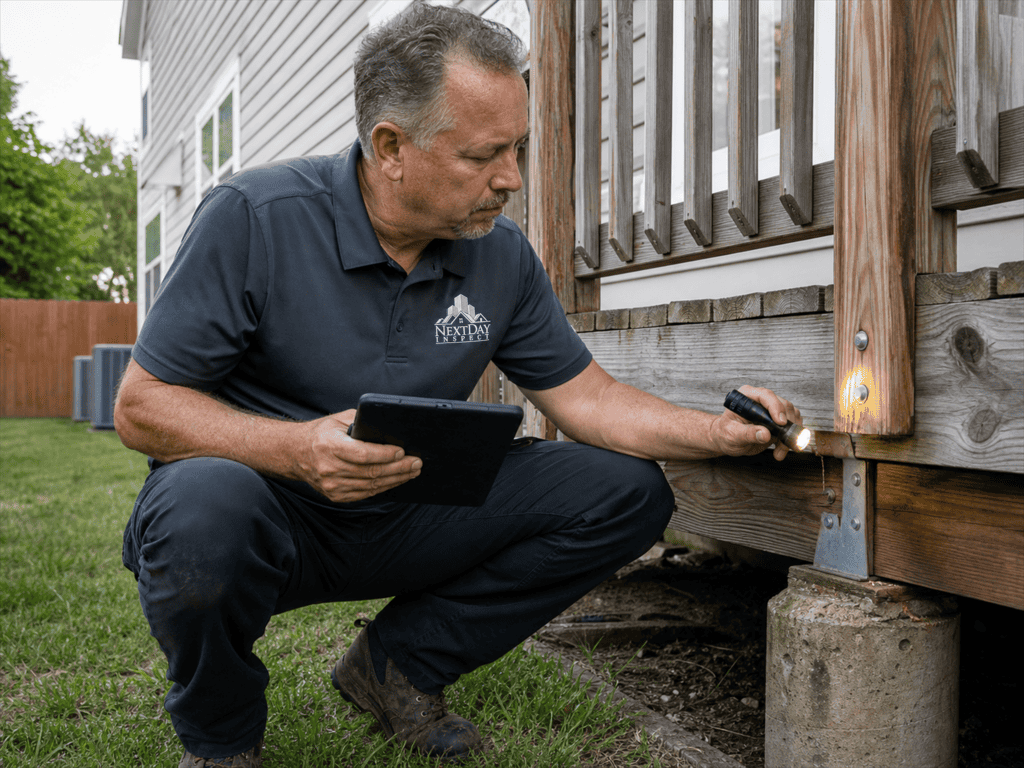
Roof, siding, grading, decks, the garage and the grounds first. The inspector photographs what they find as they go, so the report shows you exactly where each item is.

Systems and accessible spaces
The inspector checks accessible electrical, plumbing, heating and cooling components and operates equipment with normal controls when conditions allow. The report identifies areas that could not be inspected and any recommended follow-up.

The walkthrough and the report
You see the main findings in the house itself. The written report follows online with photos, priorities and what to do about each item.
Harford County, river to bay
Harford County was cut from Baltimore County in 1773 and still carries that boundary today: Pennsylvania to the north, the Susquehanna River to the east, the Chesapeake Bay to the south, and Baltimore County along its western edge. Bel Air became the county seat, and its Main Street, Bond Street, and Broadway grew first, with newer residential streets filling in around that older core.
Harford County Courthouse, Bel Air. Photo: Farragutful, Wikimedia Commons, CC BY-SA 4.0.
Main Street houses, layered on
A house near Main Street, Bond Street, or Broadway in Bel Air often carries a rear addition or a finished cellar built long after the original construction, so the inspection treats the older structure and the newer wing as separate questions. The inspector checks the roof covering and flashing, the foundation and any accessible crawlspace, the electrical panel and a sample of outlets, and runs the plumbing fixtures and the heating and cooling systems on their normal controls. Wells here draw water from fractures in the Piedmont bedrock rather than a sand aquifer, so a crawlspace cut into that rock gets checked for standing water and condensation.
Maryland Geological Survey Bulletin 17 places Harford County in two physiographic provinces, Piedmont bedrock to the northwest and Coastal Plain sediment to the southeast, the same boundary state geologists call the Fall Line.
Havre de Grace. Photo: Patrick Nouhailler, Wikimedia Commons, CC BY-SA 3.0.
Lower ground, closer to water
The southeastern part of Harford County flattens out toward the Susquehanna River and the Chesapeake Bay, where the land sits closer to sea level than the Piedmont interior around Bel Air. A lower level or a crawlspace in this part of the county can hold moisture a hilltop house never sees, so the inspection pays close attention to grading and drainage at the foundation, the sump pump if one is present and its float is accessible, and any sign of past water penetration on a foundation wall. The roof, attic insulation and ventilation, and every major system still get the same full walk-through as anywhere else in the county.
The EPA's map of radon zones places Harford County in Zone 1, its highest-potential category, the same rating as most of the Piedmont side of the state, though every home should be tested regardless of its zone.
Home inspections around Harford County
Harford County is one of 11 Maryland counties we cover, and the same inspectors work all of them. Every county below has its own page.
Home inspections by county
Maryland
Virginia
Washington DC
Harford County home inspection, questions settled
What Harford County buyers ask before booking a visit, answered directly.
Can I search Harford County permit records online the way I can in other counties?
Not quite. Harford County's Department of Inspections, Licenses and Permits handles most requests through an online form rather than a live public search tool, and it generally reviews files going back to 1988 with a copy fee attached to printed pages. For ownership and assessment history on any Harford County parcel, the state's SDAT real property search works by street address or account number and is available immediately.
Should a Harford County buyer test for radon before closing?
The EPA places Harford County in Zone 1, its highest radon-potential category, which covers most of the Piedmont side of Maryland. That is a county-level estimate rather than a reading for any specific address, and the EPA recommends every home be tested regardless of its zone. A standard home inspection does not include radon testing; it can be added as a separate service for the same visit.
Is a Harford County well going to affect the inspection?
It changes what the inspector asks about beforehand more than the visit itself. Most Piedmont wells here draw from fractures in the bedrock rather than a sand aquifer, so knowing where a well and a septic field sit relative to a damp crawlspace helps rule a drainage source in or out before the visit starts. A home inspection does not test the well or the septic system; the county health department handles those requirements separately.
Does a Harford County house near the Susquehanna or the bay need extra attention?
The inspection covers the same items everywhere in the county, but a house closer to the Susquehanna River or the Chesapeake Bay sits on lower ground where a crawlspace or a basement can hold water longer after a storm. The visit checks grading, drainage, and any waterline or staining visible on a foundation wall, and the report notes what was found. A flood zone designation is a separate question best checked through FEMA's own maps.
Does it matter whether a Harford County address is inside Bel Air, Havre de Grace, or Aberdeen?
Not for the inspection itself; the same team, scope, and scheduling apply everywhere in the county. It matters for permit history, since Bel Air, Havre de Grace, and Aberdeen each run their own building permit process separately from the county government, while the county still keeps their plumbing, electrical, and HVAC trade permits. Give the full address, town included, when you book, so any permit lookup goes to the right office the first time.
Explore Our Inspection Reports
- HD Photography
- Commentary & Recommendations
- Grading Scale
- Repair, Safety & Maintenance