

Home/Home Inspection/King George County, VA
Home inspection
A licensed inspector spends the visit on the house itself, from crawlspace to roofline, then hands you a photo report that ranks what to fix before you close.
4.9 rating, over 4,000 reviews Licensed and insured inspectors Serving all of King George County
King George County runs from the Courthouse crossroads out to the Potomac and Rappahannock necks and the Dahlgren area, and the same team and pricing reach every community listed below.
King George's Courthouse crossroads sits between two tidal rivers, with wooded lots on well and septic reaching toward Dahlgren.
Dahlgren and Fairview Beach are settlement names inside King George County, not separate towns; the county has no incorporated municipality of its own.
Three packages built around the home inspection. Package prices are for the add-on services only and are added to the inspection price. The savings are against booking the same services one by one.
The perfect starting point
Most popular for homebuyers
The ultimate peace of mind
Warranties must be requested when you book, not after the inspection. Radon and thermal imaging can also be added on their own. Read more about each package.
No jargon, no surprises. Here is the whole visit, start to finish, so you know what you are booking before you book it.

Online or by phone, in a few minutes. Your agent can book for you. Add radon, termite or a package at the same time, and we confirm the appointment with you before the visit.
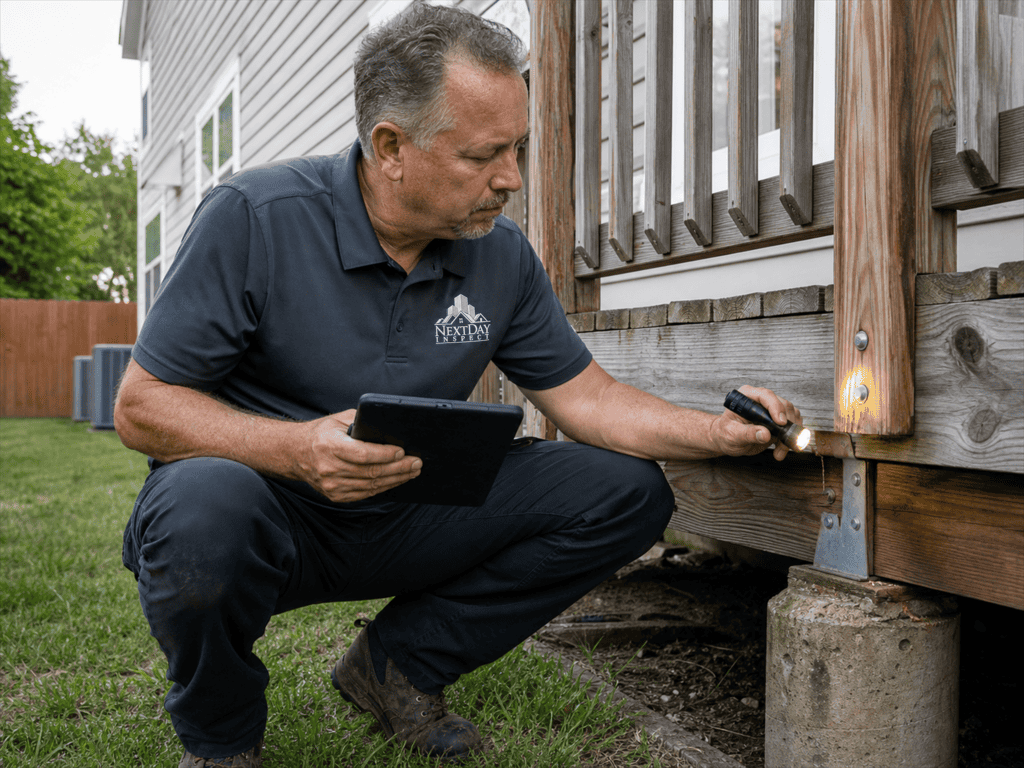
Roof, siding, grading, decks, the garage and the grounds first. The inspector photographs what they find as they go, so the report shows you exactly where each item is.

Panel cover off. Water heater, furnace and air conditioning run with their normal controls. Every fixture, every room, the attic, and the basement or crawlspace.

You see the main findings in the house itself. The written report follows online with photos, priorities and what to do about each item.
King George grew up around three places at once: the Courthouse crossroads, old landings on the Potomac and Rappahannock, and the Dahlgren installation. Farmhouses sit inland on large wooded lots, while waterfront necks carry cottages built for summer and later closed in for year-round living. That mix means the inspection starts by confirming the foundation type before anything else.
Growth near the county's federal installation at Dahlgren added ranch houses and additions built on slab and crawlspace foundations that sit apart from the older farmhouses further inland. Before anything else, the inspection confirms which foundation type is under the house, since a slab and a crawlspace call for a different look at grading and drainage outside. Where a later addition meets the original framing, the inspector checks how the two sections tie together, tests the electrical panel and heating and cooling on their normal controls, and opens a representative sample of windows and doors.
The county's own Water and Sewer Service Area Map lets a buyer search an address to see whether King George's public system reaches it, a first step in confirming whether a home relies on a private well and septic system instead.
Land between the Rappahannock and the Potomac sits low and close to both rivers, and the water table under a crawlspace here can sit only a few feet down. The inspection pays close attention to the crawlspace vapor barrier, any staining on the framing above it, and how the grading and gutters carry water away from the foundation. Cottages that were built for seasonal use and later closed in for year-round living often carry a mix of original framing and later additions, so the inspector looks closely at where the two meet and tests the heating system on its normal controls.
King George County has required septic systems to be pumped out on a five-year cycle since 2008, and names failing systems as a leading source of local groundwater pollution.
King George County is one of 10 Virginia counties we cover, and the same inspectors work all of them. Every county below has its own page.
The questions King George buyers ask before closing on a river-neck or inland property.
Away from the Route 3 corridor, most of King George County runs on private wells and septic systems rather than public utilities. A home inspection does not test the well or the septic field; the inspector notes what is visible near the foundation and crawlspace and leaves well and septic evaluation to a separate specialist. The county has required septic systems to be pumped out on a five-year cycle since 2008, so ask the seller for pump-out records before you close.
The EPA's original radon map lists King George as a low-risk county, but Virginia's own health department has flagged that map as outdated here: it says King George and the other low-risk counties along the I-95 corridor that border high-risk ground to the west should actually be rated moderate risk. A home inspection does not test for radon; it is offered as a separate add-on you can book alongside the visit.
The county's My Property page links its GIS database, its land records division, and the public water and sewer service area map in one place, and county staff will help a first-time user get started. For older or unusual permits, the King George County Community Development department keeps its own paper and digital files and can be reached directly. Give the full parcel address so the right record comes back.
Yes, but each structure needs to be named at booking. The main house is inspected under the standard scope: roof, foundation, crawlspace, framing, electrical, plumbing, and the heating and cooling systems. A detached shed, barn, or garage is a separate structure; name it when you book and we will tell you what the visit can cover. Mention any additions built onto an older farmhouse too, since that seam is where the inspector looks closest at how the framing ties together.
You are welcome for the whole visit, and many King George buyers come out given the drive from Northern Virginia or the District. If you cannot make the whole appointment, plan to arrive for the walkthrough near the end, where the inspector covers the main findings in the house itself before the written report follows online. Your agent is welcome to attend as well, and either of you can ask questions as the inspector works through each system.